

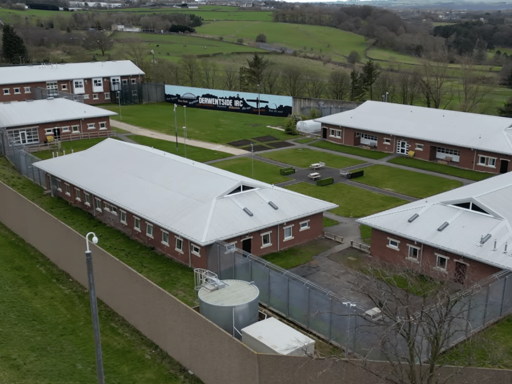
A new reported has highlighted the human cost of the only female UK immigration detention centre — which campaigners have long been saying is “cruel, isolating and unnecessary”.
The facility in question, Derwentside Immigration Removal Centre, was visited by the HM Inspector of Prisons in an unannounced visit — the first in three years. It reveals a catalogue of failures, putting vulnerable women at grave risk.
Women’s detention centre is “cruel, isolating and unnecessary”
The latest findings from the HM Inspectorate of Prisons back up what campaigners from No to Hassockfield have been arguing for years, that practices at the centre are deeply problematic and harmful to women.
The report shows that a large proportion of the women detained at Derwentside were ultimately released:
Of the 723 women who left Derwentside Immigration Removal Centre (IRC) in Consett, County Durham, during a six-month period in 2025, 59% had been let go and 41% sent to other centres.”
This means a high number of the detained women should never have been in the first place. It’s not clear from the report how many of the women sent to other centres were later released too. The average detention was 25 days, and the centre processes on average 28 women each week.
The press release accompanying the report says Derwentside has:
a clear focus on women’s welfare driving positive outcomes
However, the actual report tells a different story. Whilst they attempt to big up the range of “purposeful activities”, it’s increasingly clear that Derwentside doesn’t care about these women’s welfare. Arguably, anywhere that detains innocent women never really gives a fuck about their welfare in the first place.
Lack of female staff for vulnerable women
The key concern, the report says, is that there are not enough female staff. This meant that important duties, which require support from another woman, were performed by men. This included first-night check-ins on vulnerable sleeping women. Female detainees told inspectors some of the night-time checks were “excessive” or “not based on a reasonable assessment of risks”. They were, coincidentally, sometimes conducted by men.
This is particularly significant as many of these women are victims of male violence. One woman had been assessed and checked by male officers and was then assigned a male key worker. This is despite her having informed the staff that men were a trigger for her suicidal thoughts.
However, the report did find that, despite this, 80 percent of women said they felt safe at the centre.
Overnight transportation puts women at risk
The second concern raised in the report was that, despite pledging to do better, detainees are still being transported overnight on long journeys. Around a quarter were transported overnight; these included suicidal and pregnant women. The report said:
In these cases, we saw little evidence of consideration of the impact the journey might have on their health and well-being.
One woman who was at risk of self-harm told the inspectors she was originally detained in Croydon. She was moved overnight to the Manchester short-term holding facility, then finally sent to Derwentside in County Durham. This journey is over 350 miles long. The woman reported that due to the distance, she did not sleep for over three days, which greatly affected her mental health.
Restricted contact to the outside world
Another concern raised was women’s ability to contact their families. Just 17% of women had been visited by a family member or friend, which is less than 1 in 5.
The remoteness of the site makes it hard to reach, and although staff are able to collect visitors from train stations, it remains difficult for family and friends to visit. Although detainees are given a mobile phone, the signal at the centre is bad due to the location. This not only hindered women from contacting their families but also created barriers to legal representation. Women are also required to open all post in the reception in front of staff.
Video phone calls are available in private rooms, but these have to be booked 24 hours in advance and require staff approval. This caused further obstacles to contact, including one woman whose request was deferred for 6 hours. Another struggled to reach her son in hospital. The centre has pledged to rollout wifi and switch to smartphones, though social media is not allowed.
Home Office failing vulnerable women
A huge concern is that the Home Office had not identified or sufficiently documented the level of vulnerability when detaining a number of the women. These included women with mental illness and victims of gender-based violence. Some of the women who told officials they were pregnant were simply ignored. The report also highlighted cases of women who were not assessed as being at the highest risk, despite evidence to the contrary.
The inspectors found evidence of women being assessed as having no health problems when they did. There’s also evidence of women being detained despite experiencing sexual exploitation and trafficking in the past. Despite evidence being sent to the Home Office, they ruled there was no risk to them being deported.
It also found that Rule 35 reports about the health and safety of detainees were not submitted promptly. In one case, it took three weeks. 79 reports were made in the six months before the inspection, 69 of them related to torture. There were six for suicidal thoughts, but the report said there’s evidence that some women who were on suicide watch didn’t have reports.
And even when there was a report, it was fucking shoddy:
The quality of Rule 35 reports was worse than we usually see. Fo example, some particularly traumatic incidents were described with none of the detail required in the reporting process and comment on the impact of further detention was generally weak.
Further failures
Other areas of concern identified in the report included problems with inclusion. Whilst LGBTQ women were offered support, religions were observed, and translators were available, disabled women, who were not adequately supported, were failed. The report found:
a lack of systematic identification and support for women with disabilities or neurodivergent conditions, and for younger and older women.
Annoyingly, however, this is not discussed in any depth in the report, as disability is frequently neglected.
Despite there being translators and the staff speaking 20 languages between them, detainees struggled to receive information in their own language from the Home Office. This meant they did not receive or understand the response to their complaint. There were also issues with the quality and quantity of food, as well as a lack of risk assessment for vulnerable women.
Report shows Dermentside should be shut down
The report confirmed what campaigners have saying since it opened in 2021 — that it should not exist.
Dr Helen Groom, chairperson of No To Hassockfield ,said:
The figures contained in this report prove many women are being held unnecessarily, as a majority are released on bail. It’s also not clear how many of those moved to other centres also ended up remaining in the UK.
As our campaign has said since before it opened, Derwentside IRC is cruel, unnecessary and isolating. We ask people to consider how they would feel if they were unable to visit their mother, daughter, sister, friend when they are locked up hundreds of miles away. This centre needs to close.”
No to Hassockfield campaign will once again be protesting for the release of all female prisoners at Derwentside. Join them from 12-2 on Saturday, 17th January, to show those inside that they still have a voice.
Featured image via the Canary/YouTube
From Canary via This RSS Feed.