


This article by Alejandro Páez Varela and Álvaro Delgado Gómez originally appeared in the January 11, 2026 edition of Sin Embargo.
Mexico City. Hugo Aguilar Ortiz , Chief Justice of the Supreme Court of Justice of the Nation (SCJN), believes it is unlikely that the Mexican people will want to reverse the Judicial Reform and return to the model that the country’s highest court previously had, in which justice was administered behind closed doors, rigid and indifferent to the reality outside the SCJN headquarters.
“I have no doubt that there are people who believe that justice should be reduced to a mathematical model, a model of exact sciences, and that sensitivity and interaction with people should be disregarded. But I believe that this is an outdated exercise, as we say in the Indigenous community, these are dreams, that has already happened and it is unlikely to return,” said the Chief Justice in an interview for the program Los Periodistas, which airs on Channel 11.
“I believe that the people of Mexico will hardly want to return to a rigid justice system, a justice system behind closed doors, with zero empathy for the citizens, a justice system that doesn’t even want to look at the reality that is here outside the main door of this Supreme Court of Justice of the Nation,” Aguilar Ortiz added.
“People support the Reform”
In this regard, he stated that he has received testimonials from many people who have expressed the positive change the Court has undergone since the approval of the Judicial Reform. These testimonials indicate that the Supreme Court is now closer to the people, and that 2027 will be an opportunity for the public to consolidate this new model that is being built. “I have testimonials from authorities who visit me, from people who send me messages, who feel the change in the Court,” said the Chief Justice of the Supreme Court.
“In the coming years, we will consolidate this vision. 2027 will be another very important year. To a large extent, we will see how the public reacts to this process. I think it’s the best thing that could have happened to the country. I say this because I was a direct witness to the injustices in communities, and today people like me, who lived in those conditions, can come here to talk about their needs, their aspirations, and their dreams, and together build a different model,” he added.
“We are in a vibrant, active court, deeply committed to delivering real justice, to delivering justice for ordinary people,” reiterated Aguilar Ortiz, who recalled the difficulties he faced a few years ago upon arriving at the Court and how he always considered ways to change the situation. “I was right here where we are now, I entered through this door many times to this Supreme Court, I submitted documents here at our Clerk’s Office, I sought audiences with the justices, I sought to speak with the secretaries, and it was difficult, very difficult,” he said.
“Everyone who comes to the Court, whether they bring a specific personal problem or come as a lawyer, as an advisor, which is how I first came to this building. We all bring dreams, we all perceive the treatment, the institutional design, the procedure that is followed, and we dream about how the system can be improved, and that was my situation for a long time, both individually and collectively,” he commented.
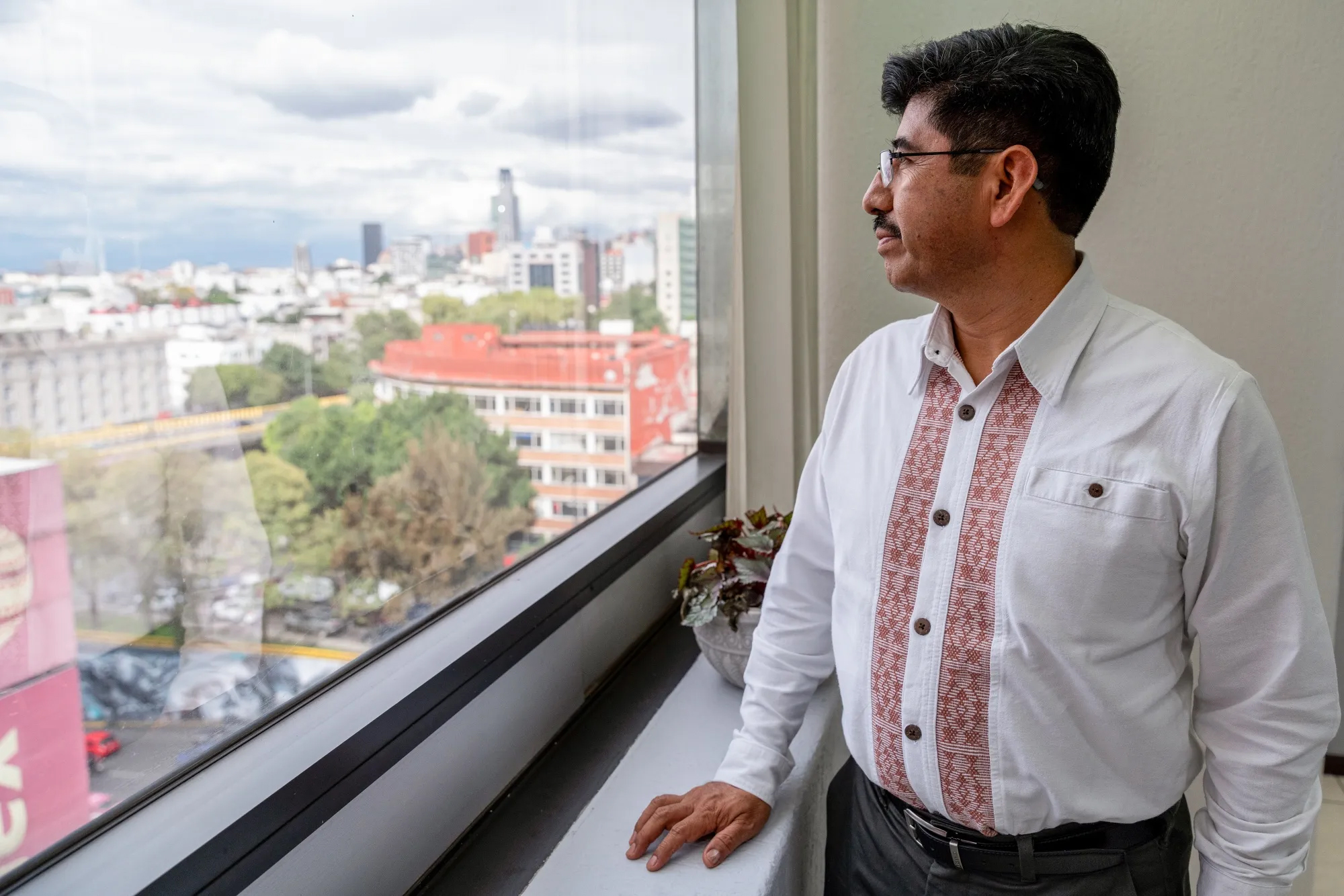
“We will not lose our footing in court.”
“With the lawyers, with whom we grouped together to support indigenous communities, farmers, and women, we thought about how to improve justice, and a fundamental aspect is the human touch, that the public servant, from the guard who receives the documents, to the Minister, does not lose focus and the human sense; they are procedures, they are laws, they are decisions, but it is still human,” he added.
Therefore, he emphasized that the new Judicial Reform changed that model, which was distant from the citizens, into one of open doors, in which the ministers are close to the reality experienced by ordinary citizens, whom he called upon to help them build a better system of justice.
“So, the Judicial Reform has meant that we are now at the head of the Court, ordinary citizens, citizens who are grounded, who know our human and intellectual limitations, and who know the challenge the country has to build a more just society, and we have made an open call to the citizens to help us build it day by day, in all spaces,” said Aguilar Ortiz.
“Clearly, we have the capacity, the knowledge, and the experience from working daily with the justice system to transform the institution, but, as I have pointed out, that is not everything. To build a just society, we need to go beyond the case files, beyond the building, to every corner, and the people of Mexico can be absolutely certain that this is now being led by someone who comes from humble beginnings, from a Mixtec community in the state of Oaxaca, convinced that we can achieve a new scenario for justice in Mexico,” he concluded.
-

Mineros leader Gómez Urrutia says There are Those Who Want to Eliminate Unions
January 12, 2026January 12, 2026
The trade unionist, who lived in forced exile in Canada for 12 years, discussed the necessity of international working class solidarity in defense of unions.
-

Supreme Court’s Aguilar: Reversing Judicial Reform is “just wishful thinking”
January 12, 2026
Mexico’s Chief Justice of the Supreme Court indicated that the people of Mexico are unlikely to want to return to a “justice system behind closed doors.”
-

Café Bienestar Supports Only 1% of Coffee Farmers
January 12, 2026
Coffee producers are hoping that 2026 will be a year where the government expands support for the industry and ensures fair prices.
The post Supreme Court’s Aguilar: Reversing Judicial Reform is “just wishful thinking” appeared first on Mexico Solidarity Media.
From Mexico Solidarity Media via This RSS Feed.