

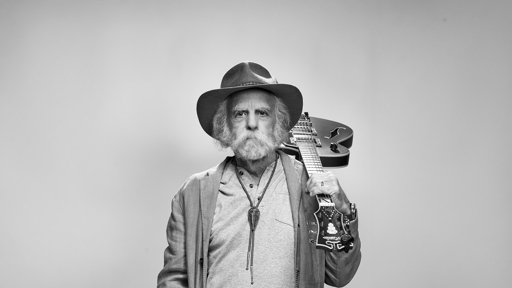
Bob Weir, who died yesterday, January 10th, was best known as a founding member of the Grateful Dead. For decades he was also an unusually persistent environmental advocate, one who treated land, forests, and climate not as metaphors but as material systems under pressure. His activism ran alongside his music for most of his adult life and often demanded more from him than the comfortable alignment of celebrity and cause. Weir’s environmental engagement sharpened in the late 1980s and early 1990s, when the destruction of tropical rainforests and old-growth forests entered public debate with new urgency. In 1988, the Grateful Dead helped convene a press conference at the United Nations to draw attention to rainforest loss, working with Greenpeace, the Rainforest Action Network, and Cultural Survival. Weir spoke plainly about the issue. It was, he said, “not really an aesthetic issue,” but one of survival. Forest loss, he argued, was already reshaping climate and weather systems, whether people lived near rainforests or not. In 1992, his concern became more pointed. While on tour, Weir wrote an op-ed for The New York Times opposing a bill that would have opened millions of acres of Montana national forest to logging, mining, and road-building. He called it a public land giveaway and challenged claims that industrial logging protected jobs. “Two or three guys can clear-cut a forest in a day,” he said later, describing a system that stripped land quickly while leaving communities poorer. He followed the article with lobbying visits to Capitol…This article was originally published on Mongabay
From Conservation news via This RSS Feed.
he added more smoke to the environment than 10,000 chimnies
