

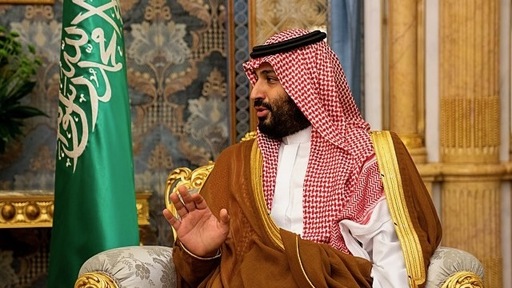
The past few days saw a crucial development in the complex conflict in Yemen after clashes erupted between the Saudi-backed government, known as the Presidential Leadership Council (PLC), and the UAE-supported Southern Transitional Council (STC), apparently over territorial control.
A military official from STC reported on Sunday, January 4 the killing of dozens of his group’s fighters in clashes with the PLC, who have, for long, been deployed in the central and southern areas of the county.
The clashes, which started on Friday, January 2 and continued for days, also left 152 fighters wounded, while 130 others were taken captives.
The fighting between the PLC and the STC raged, when the latter seized control of Yemen’s east-central governorate of Hadhramaut, and the eastern governorate of Al Mahra in early December 2025.
This unprecedented escalation entailed a reaction by Saudi Arabia, which considered the advancement of STC troops a threat to its security because Hadramaut borders its territories.
The largest oil field in Yemen and the Dhabba oil terminal on the Arabian Sea are located in the governorate as well, making it of strategic importance in terms of the regional power struggle between Saudi Arabia and the UAE.
Regarding Al-Mahra, its significance lies in the fact that Saudi Arabia has for years sought to develop it as an oil pipeline route that would work as an alternative to the Strait of Hormuz.
In what seems like an effort to protect interests, Saudi warplanes launched airstrikes on Tuesday, December 30, on the southern Yemeni port of Mukalla, in Hadramout. The aerial attacks, which lasted for days, are said to have been waged after a weapons shipment from the UAE arrived for STC forces.
Consequently, STC troops withdrew from areas held by it last month, allowing the PLC to take over them again in a bid to contain the situation. Yet, tensions between the two Gulf allies inside Yemen still loom.
It is worth noting that Saudi Arabia and the UAE have been jointly fueling the civil war in Yemen – as allies – since 2015, after Ansar Allah captured the capital Sanaa in 2014 and later expanded their control over northern Yemen, following the Arab revolts.
However, it seems that yesterday’s allies, who have endeavored to eliminate Ansar Allah as an integral part of the Axis of Resistance, in an attempt to weaken Iran’s regional influence, have become today’s frenemies due to conflict of interests.
The post Tensions in Yemen: Are Saudi Arabia and the UAE becoming frenemies? appeared first on Peoples Dispatch.
From Peoples Dispatch via This RSS Feed.