

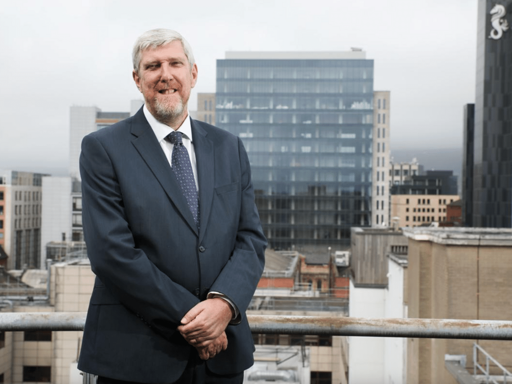
On 6 January, Northern Ireland’s Finance Minister, John O’Dowd, revealed a three-year budget proposal. He heralded it as enabling Stormont — which seats parliament — to “transform public services moving forward”.
In an X/Twitter post shared the same day, First Minister Michelle O’Neill welcomed the Sinn Féin budget as a catalyst for transformative projects and essential public services.
Nevertheless, this lukewarm statement failed to drum up enthusiasm for an unmistakably underwhelming plan marked by Sinn Féin’s lack of ambition and stifling ‘British government underfunding’ as O’Neill highlighted.
The proposal relies on an unaffordable 15% increase in the regional rate for households from 2026 to 2029/30. In contrast, the regional rate for business will only increase by 3% each year. The current rate of inflation across Britain and the North of Ireland is 3.2%.
Sinn Féin budget funded by those unable to afford it
These proposals have also attracted criticism across the board, with much of it focused on how little will change. ‘Financial expert’ Paul Gosling declared that:
We really need to be talking about each household paying around an extra £1,000 a year.
He said O’Dowd’s draft budget was ‘completely inadequate’ for improving services. Despite his financial expertise, he does not realise that the average household in a region more deprived than anywhere in England, Scotland and Wales, is not going to magic up an extra £1,000 every 12 months during a cost-of-living crisis.
People Before Profit’s (PBP) *Twitter-*based assessment of O’Dowd’s funding methods made more sense. They proposed the following three priorities for the finance minister:
– Abolish industrial derating – stop giving rates breaks to hugely wealthy multinational corporations that pollute the local environment, mistreat their workers and act in complicity with Israeli apartheid
– Complete the devolution of income tax and then increase it for high earners;
– Create a fairer rates system where bills are calculated based on ability to pay.
Industrial derating is a policy that allows massive multinational companies to escape paying rates, a practise that has long been abolished in Britain. Among those getting breaks are genocide participant and profiteer Caterpillar. More commonly known as ‘Caterkiller‘ among Palestine activists, the firm supplies bulldozers used to tear down Palestinian homes.
Income tax remains controlled by Westminster, with Northern Ireland being the only devolved region not to have local powers over this crucial fundraising mechanism. The PBP statement went on to state the universal truth under capitalism:
The money has always been there. It’s just in the wrong pockets.
Greens hammer the plan’s climate failings
Sinn Féin appear to lack the will to raid those pockets, a point which is not lost on the Greens. They have slammed the budget for failing to address the cost-of-living crisis and rising inequality, noting in a statement that:
Sinn Féin’s multi-year budget isn’t “transformation” – it’s just more managed decline, more austerity dressed up as stability, not actual reform.
They went on to lambast the climate failures of O’Dowd’s plan, citing:
Cash [poured] into airport subsidies […]expensive roads like the A5 [alongside a shortfall in] rail ambition.
Climate wasn’t the only area lacking in ambition. The BBC reported that:
Under the draft budget for 2026/27, only four departments would see a mild increase in their budgets for next year – education, health, justice and infrastructure.
Democratic Unionist Party (DUP) Education Minister claimed that his department would in fact have to make:
…savings of £826 million in 2026-27, rising to over £1.15 billion by 2028-29.
He laid out extreme options for dealing with the alleged shortfall, raising the prospect of deeper cuts to public services.
…ending support for Sure Start and youth services, withdrawing school transport, or cutting funding to key educational bodies…
Alongside this, he threatened the possibility of ruthless job cuts:
…approximately 6,700 teachers and 3,100 non-teaching staff redundancies…
Some will view these threats as a classic case of scaremongering. Still. the fact they can be mooted shows the inadequacy of the budget’s proposals. Similarly, the tiny increase in health funding is unlikely to make a meaningful dent in waiting lists, which are again among the worst across the four nations under Westminster’s control.
The budget will go through an 8 week public consultation phase, with O’Dowd entering as he says, ‘listening mode’.
However, the cacophony of criticism of a budget deaf to ordinary people’s concerns, means he won’t necessarily enjoy what he hears.
Featured image via Northern Ireland Government website
From Canary via This RSS Feed.