

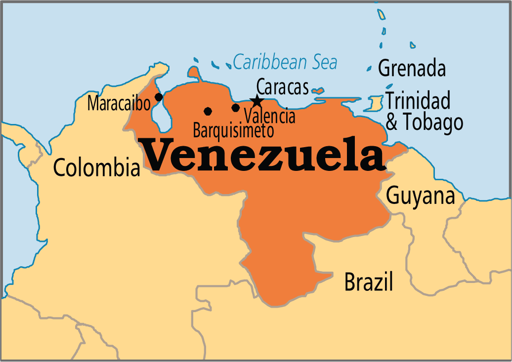
SAN PABLO, Laguna – Filipino progressives have condemned the United States’ invasion of the Bolivarian Republic of Venezuela, calling it a “desperate attempt” to maintain hegemony in the region.
In a statement, the National Democratic Front of the Philippines called the attack as a “blatant violation of Venezuelan sovereignty” and described US imperialism as facing “strategic decline and overlapping crises.”
“The real objective of US aggression against Venezuela is not the fictitious ‘war on narcotics’,” the NDFP said. “What US imperialism seeks is control over Venezuela’s vast oil reserves and strategic resources, control over its political orientation, and control over the direction of [Latin America and the Caribbean] as a whole.”
The League of Filipino Students also pointed out that the aim of the US is to control Venezuela’s oil reserves in an attempt to salvage the US economy. Venezuelan oil reserves are the largest in the world, with over 300 billion barrels of proven crude oil reserves.
“Far from a display of strength, the military attacks against Venezuela is a sign of a desperate dying empire as it relies on violence and coercion to enforce their power on the people of the world that continue to rise against imperialism,” said the League in its statement.
The United States struck military and civilian targets in the cities of La Guaira, Higuerote, El Volcan, and the capital of Caracas, January 2. Over 150 aircraft were used to drop bombs and deploy ground troops, resulting in at least 80 casualties and the abductions of Venezuelan President Nicolas Maduro and his wife Cilia Flores.
The attack was the culmination of months of vitriol from Washington, who has repeatedly accused Maduro of being a “narco-terrorist” since 2020. US President Donald Trump has claimed that Venezuela was “exporting drugs to the United States” and declared Maduro to be the leader of Cartel de los Soles while also providing “material support” to Tren de Aragua. The US Department of Justice has since admitted that “Cartel de los Soles” does not exist.
Trump ordered strikes against Venezuelan vessels starting September 2, killing at least 115 people in 35 boat strikes justified as being targeted against “terrorists.” By December 2025, US actions in Venezuela included drone strikes and an oil blockade to put economic pressure on the country.
“Venezuela’s continuing assertion of national sovereignty, its potential alignment with the US government’s imperialist rival, its refusal to submit to US economic and military domination there make it a prime target for destabilisation and attack,” the NDFP added.
Tense history
Tensions between the US and Venezuela have existed since 1999 when Hugo Chavez assumed the presidency. Under Chavez, Venezuela shifted towards progressive policies and took a firm anti-imperialist stance, sparking a “Red Tide” of socialist-oriented and anti-imperialist development in Latin America.
Sanctions against Venezuela began in 2006 under former US president George W. Bush, who called Chavez “uncooperative” in the war against terrorism. The Barack Obama administration imposed additional sanctions in late 2014 and early 2015, citing Maduro’s human rights violations.
The first Trump administration tightened sanctions in 2017 and openly talked of using a “military option” in Venezuela. In 2019, the US recognized Juan Guaido as the “legitimate” president of Venezuela, following an unsuccessful coup attempt. Washington slapped an embargo on Venezuelan oil that same year, and charged Maduro of “narco-terrorism” with a $50 million bounty on his head.
Maduro’s victory in the 2024 Venezuelan presidential elections reignited tensions between the two countries, with the US insisting that Maduro failed to hold fair elections in the country. In January 2025, Trump initially supported Venezuelan opposition activist Maria Corina Machado, who described her country as a “$1.7 trillion opportunity” for privatization, before claiming that she did not have the “support of the Venezuelan people” following Maduro’s capture.
Greater American strategy
Outside of Venezuela, the US has continuously sought to browbeat other Latin American countries into submission. Washington also imposed economic sanctions against Colombia in October 2025, citing. Elections in Honduras and Argentina were also marred by American electoral interference, destabilizing both countries. Trump has also threatened military intervention against Mexico over the issue of drug cartels, which the Mexican government has downplayed.
The International League of Peoples’ Struggles Philippines said that the same factors that drove the US into assaulting Venezuela are also driving its strategy in the Asia-Pacific. “As part of its strategy to contain China, the US has been expanding its military presence, transforming countries like the Philippines into forward bases in a looming great-power confrontation,” the group said. “US imperialism has been aggravating and exploiting tensions over the West Philippine Sea and the Taiwan issue to justify increased troop deployments, war exercises, weapons stockpiling, and deeper military entanglement.”
Bagong Alyansang Makabayan also called the US attack a “stark reminder” for Filipinos. “The same imperialist power that bombs Caracas maintains military forces, rotational troops, and access to bases on Philippine soil,” the group said. “This reality endangers our own people and entangles the country in wars that serve only US interests.”
The NDFP also said that ongoing efforts by the US to strengthen its military presence in the Philippines is in line with the US’ First Island Chain strategy, which is designed to “position the Philippines as a forward operating base in a potential war against China.”
The group noted that aside from war materiel, the US has “escalated the scale and aggressiveness of the Balikatan war exercises” over the past few years. Research think-tank IBON Foundation noted that 2025 Balikatan war exercises were the “largest ever”, with 14,000 troops and 20 countries participating in live-fire exercises and war games. Additionally, IBON noted that there are at least 34 US military installations in the country, including nine military bases under the Enhanced Defence Cooperation Agreement.
Bayan condemned Ferdinand Marcos Jr. for “recklessly and treasonously promoting the US geopolitical agenda” to the detriment of the Filipino people. “The presence of US troops, facilities, and military agreements such as the Enhanced Defense Cooperation Agreement (EDCA) only strengthens US capacity to wage wars of aggression and drags the Philippines deeper into imperialist conflict,” said Bayan. “Genuine national sovereignty and lasting peace are impossible while foreign military forces operate freely in our country.” (RVO)
The post US attack on Venezuela, ‘desperate’ attempt to secure hegemony – PH groups appeared first on Bulatlat.
From Bulatlat via This RSS Feed.