

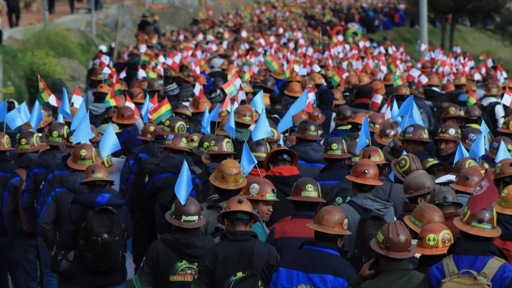
Several weeks have passed since the right-wing government of Rodrigo Paz announced the end of hydrocarbon subsidies in Bolivia. The measure, implemented through Decree 5503, has sparked protests across the country demanding an end to a measure that they believe will make life more expensive.
For several decades, the Bolivian state has imported fuels necessary for production and domestic trade, and then subsidized their cost in the hope that this would prevent product prices from rising.
Neoliberal measures
Paz’s decision, popularly known as the “Gasolinazo” (Gasoline hike), has doubled the price of fuel. A liter of gasoline, which previously cost 53 cents, now costs 1 USD. Diesel has reached a record high of 1.40 USD.
Although Paz has claimed that the measure is necessary to balance the state’s accounts, he has simultaneously eliminated several taxes on large capital. In addition, he has implemented several reforms that pave the way for new foreign investments, which will now be able to operate in Bolivia in a record 30 days. He has also legally guaranteed protection for transnational companies from lawsuits and tax burdens, especially those engaged in mining and energy.
Read more: Bolivia quickly returns to the path of neoliberalism
According to several economists, the decree was implemented after several meetings between the government and delegations from large companies and foreign organizations, such as DFC, EXIM Bank, USTDA, and the US Department of State, which would confirm a complete alignment with the economic interests that several foreign groups have in the country’s natural resources, such as natural gas, lithium, tin, silver, etc.
Barricades and repression
Protests quickly erupted. Led by the Bolivian Workers’ Union (COB), thousands of Bolivian workers and peasants have joined an indefinite strike. They say the protests will continue until Supreme Decree 5503 is repealed.
The COB asserts that the elimination of the subsidy will increase the cost of living and pave the way for the plundering of the Andean country’s natural resources, which it claims are coveted by large international capital.
On December 22, thousands of miners marched in the capital, La Paz, shouting against the Paz government and blocking roads near the Murillo Palace, where the government headquarters are located.
The police launched a harsh crackdown against the miners that lasted several hours, using tear gas to try to destroy the barricades where miners, teachers, factory workers, and members of neighborhood committees were gathered.
The protests have also spread to other parts of Bolivia, such as Cochabamba, El Alto, and other smaller towns, whose residents have taken to the streets to block roads and highways.
For its part, the government has attempted to break the unity of the protesters by negotiating separately with transport workers, mining cooperatives, and middle-class associations. It has also launched a huge media campaign to discredit the protesters.
Read more: Beyond defeat in Bolivia: the limits of left electoral strategy in Latin America
However, protesters have stated that they will not end the strike unless the decree is repealed. For now, it remains to be seen who will exhaust their strength first: the workers who are resisting the actions of the security forces and facing an administration enjoying relative popularity after its recent inauguration, or the Paz government, which is already beginning to feel the force of the social and political organization of Bolivian workers.
The post The Bolivian proletariat resists appeared first on Peoples Dispatch.
From Peoples Dispatch via This RSS Feed.