

Although we are in the midst of events and, as they say, “the fog of war,” in my opinion, while the technical-military means deployed by Trump played a role, the key to understanding what happened is that large sectors of the Venezuelan army and regime saw that getting rid of Maduro would represent a partial surrender to Trump and U.S. imperialism that would allow them to maintain their ideology and their businesses.
In short, I believe that what predominated was surrender from within. They say that U.S. planes and even helicopters were seen flying very low in the face of virtually total inaction by Venezuelan anti-aircraft defenses, not to mention the modern Russian weapons systems that many analysts say the Venezuelan armed forces have at their disposal. At this point, the question is why, despite everything, the braggart Trump acted with such “political prudence” by leaving Venezuela in the hands of resilient sectors of the Chavista regime (albeit with a gun to their heads, as our colleague Ángel Arias points out).
I believe the answer lies in the clear limits set by the balance of power. No matter how excited Trump and Rubio may be, they do not dare to unleash an invasion and/or promote a generalized civil war in a territory almost three times the size of Vietnam. Even less are they willing to take responsibility for the domestic consequences of these actions in the United States. As we discussed at the CPR-FI Conference last month, the United States has been retreating, due to numerous problems, from a unipolar project toward a division of the world into spheres of influence.
For us the lessons are clear: The United States wants to discipline the hemisphere and, above all, Latin America. It will not be easy, despite the capitulationist policy of the region’s bourgeoisie. Looking at it historically, the Latin American bourgeoisie had some politicians who went quite far in the confrontation with U.S. imperialism — but even the most radical of them ultimately capitulated to U.S. imperialism. In the 1930s, Mexican president Lázaro Cárdenas peacefully handed over power to his pro-U.S. political adversaries. Getúlio Vargas in Brazil, under pressure, ended up committing suicide, despite having left his “testament” which, according to many, contributed to postponing the 1964 military coup for a decade. Juan Perón of Argentina spent 18 years in exile and returned to stop the popular uprising of 1969 known as the Cordobazo; he returned, not as an enemy of U.S. imperialism, but as one of its instruments. Following the military coups against processes of proletarian revolution, in 1973 in Chile and Uruguay, and in 1976 in Argentina (not to mention the previous coup of 1964 in Brazil), the “national” bourgeoisies became increasingly submissive and cowardly.
As a result of that series of defeats, the proletariat could not be an alternative. But what about the semi-colonial bourgeoisie and petty bourgeoisie in the post-neoliberal wave — the so-called Pink Tide of the 2000s? Beyond demagogic posing, taking advantage of the rise in the commodity prices at the beginning of the 21st century and offering some limited improvements to the working class — starting with Chávez, the most “radical” of all — they played a sad role. They awarded enormous compensation payments to bourgeois figures — Chávez paid out the Italian-Argentinian family Rocca when he nationalized the steelworks Sidor, just as Cristina Kirchner of Argentina paid out the Spanish multinational Repsol for its shares of the Argentinian energy company YPF. They did not dare to harm any major bourgeois interests, reforming financial laws and losing almost all the lawsuits in U.S. courts where economic disputes over privatizations were transferred. The same can be said about Evo Morales and the MAS in Bolivia, with their fight to the death with Luis Arce, after having carried out a constitutional reform in plurinational terms that some Marxists (mistakenly) defined as a change more profound, in certain aspects, than that produced by the proletarian revolution of 1952.
We should not rule out the theoretical possibility that, after this neocolonialist assault by Trump and U.S. imperialism, sectors of the bourgeoisie or petty bourgeoisie in the region could radicalize again. But just as Trotsky, from his exile in Mexico, spoke at the time of a “young Latin American proletariat,” today we must speak of the old comprador [cipayo] bourgeoisie of Latin America and a proletariat with greater historical experience, including revolutions and counterrevolutions of all kinds.
Neoliberalism caused new defeats, no longer through direct action but through battles not fought, not only in Latin America (in addition to the harsh physical and moral defeats on the proletariat from the 1960s onwards, as I mentioned above), creating the illusion that with the “globalization” of the productive forces everyone would come out ahead. As a result, the working class entered an “unpolitical” period, based on economism and consumerism, with many of its sectors becoming precarious. Even in countries such as Brazil, where it managed to build a Workers Party and a new trade union federation (CUT) that was anti-bureaucratic in its early days, the working class was unable to escape the reformist climate created by a combination of major defeats and battles not fought, under the domination of trade union bureaucracies that were increasingly stagnant and useless for class struggle.
Nonetheless, Trump’s return to office and the arrival of right-wing governments in several countries is more of a preventive action and a threat, and less a demoralizing or outright fascist defeat like those of the 1970s.
Latin America Cannot Be Understood as Separate Countries
Only by uniting the demographic and productive power of Brazil and, despite recent setbacks, also of Argentina, with the enormous experience of class struggle of Bolivia, Peru, Chile, and even Uruguay, can we face the great tasks that lie ahead. These include putting an end to the national and foreign debt, the plundering of common goods, structures such as soybean monoculture, and the imperialist military threat expressed by the attacks on Venezuela.
The Chavistas managed to transform what was once an important and quite powerful Venezuelan proletariat into a disorganized and semi-indigent class. In other words, the supposedly “emancipatory” national bourgeoisie has acted as a factor of decomposition, yielding to all the pressures of the various imperialist powers. However, this balance of forces is still partial. Large sectors of the working class and the poor in the United States will be great allies in our struggle. Trump’s brutal fall in the polls, the “No Kings” protests that brought together millions of people, and the growing refusal to participate in foreign wars make these masses objective allies of our proletariat and, increasingly, subjective partners. We Trotskyists believe that only a Federation of Soviet Republics of Latin America can be a solution. How powerless would the enormous U.S. mercenary army, armed to the teeth with high-tech weapons, be in the face of hundreds of millions of poor people led by the proletariat? These poor people can also ally with the hundreds of public universities on the continent, powerful movements of students, intellectuals and artists, and no less powerful feminist and environmentalist movements.
In order to unite the workers with all these enormous subaltern forces that have developed in almost every country, we must build a revolutionary Marxist party (we as the CPR-FI are already an embryo of it). We must build bastions, centers of gravity, concentrations of force, from which to develop different “gears” to effectively confront the bourgeoisie. Our goal is not only to accumulate individual militants in order to surpass this or that left group, nor to fight only on the ideological or electoral political terrain and on social media, although these tasks are key.
Building parties and an International based on class struggle is not synonymous with building parties in order to wait for the struggle to arise spontaneously. We must distinguish between parties based on class struggle and parties that only participate in struggles, at whatever level they may be. Worse still, when a party joins the struggle when it is already underway, it will probably do so too late and poorly, and will not play any decisive role. Continuing with what I proposed at the CPR-FI Conference last month, it is a question of building institutions, bastions, action committees, communities, workers’ united fronts, anti-imperialist and/or democratic coalitions. In other words, we must use the extremely rich lessons in strategy and tactics from the Third and Fourth Internationals so that our organizations can pave the way to the vanguard and to the broad masses. In this way, we will move forward in building coordinating committees and, eventually, workers’ councils (soviets) and, at the same time, a revolutionary party.
Where Are We in the Struggle to Build a Party?
Our international organization, the CPR-FI, has a long history of fighting to build revolutionary Marxist parties in different countries and to reconstruct the Fourth International.
Without mentioning everything, in the Chilean uprising of 2019, we helped found the Emergency and Protection Committee in Antoremovedasta, a copper mining city in one of the regions that concentrates a large part of the country’s productive forces. It was the most advanced experience of self-organization at the time, bringing together teachers, public sector employees, dockworkers, students, tenants, human rights organizations, artists, journalists, social movements, and political organizations. During the strike on November 12 of that year, which was a turning point in the uprising, the Emergency and Protection Committee helped us form a united front with sectors of the CUT (Chilean union federation), which led to a mobilization of more than 25,000 people (in a city of 400,000 inhabitants) and picket lines to defend the strike.
In Bolivia, we participated in the heroic struggle of the workers and peasants of El Alto in 2019, including the blockade of the main fuel distribution plant in Senkata, against the civil-military coup led by Jeanine Áñez and the racist and clerical oligarchy of the East. We were part of the massive open assembly in Senkata, and contributed to the self-organization of El Alto’s youth who refused “negotiations with our dead.” We promoted an independent program through La Izquierda Diario Bolivia, which was one of the only media outlets that continuously covered the struggle in El Alto.
We have developed our organization in Brazil in seven of the largest states of the country: São Paulo, Rio de Janeiro, Minas Gerais, Rio Grande do Sul, Brasília, Rio Grande do Norte, and Pernambuco. In Rio de Janeiro, for example, we are proposing a struggle to unite the huge oil workers’ union there (Sindipetro-RJ, where our comrade Leandro Lanfredi is part of the leadership) with the movement of mothers, relatives, and victims of brutal police violence (several of whom were present at the event we held in São Paulo). This struggle can be organized via new institutions. We do the same thing at SINTUSP, the union for non-academic workers at the University of São Paulo, where, through the union’s Black Secretariat, we fight every day for unity with the sectors most affected by racist oppression, such as outsourced workers, Black people, and African and Haitian immigrants, as was also powerfully expressed in the great event on December 14 at the opening of the 14th Conference of the Trotskyist Faction.
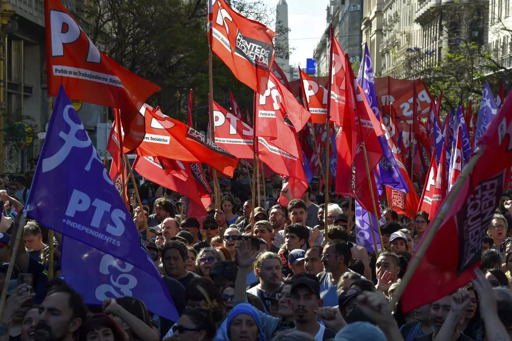
In Argentina — where the PTS has a national presence and militant forces with important roots in the labor and student movements, with influence in the feminist movement and among artists and intellectuals, and has been developing an experience of revolutionary parliamentarism and intervention in the different phenomena of organization and class struggle, etc. — our task is to unite the battle against the labor reform that Javier Milei wants to implement with the fight against the strengthening of the state intelligence apparatus that the government launched at the end of last year and, now, also with the struggle against the imperialist attack in Venezuela.
These examples, from just a few of our Latin American organizations, are only to illustrate, in very general terms, the moment we are at in the struggle to build a party. This struggle can be followed on a daily basis through our international network of online newspapers, currently made up of 14 websites in seven languages, which we have developed by taking advantage of new technologies that offer possibilities Lenin could hardly have dreamed of when he called for a monthly newspaper to reach all of Russia at the beginning of the 20th century. This struggle is also reflected in our fight in the realm of ideas, with our theoretical elaborations that can be read in the different magazines of the CPR-FI’s organizations, in the books we publish, etc.
We are only a few thousand, but no less than the vanguard that suffered under the Tsarist Empire and forged Bolshevism. The attacks by Trump and all the right-wingers who emulate him harden us as revolutionaries. We are inspired by the great leaders of the independence struggles of our region, José de San Martín and Simon Bolívar, the struggles of the insurrectionary slaves of Haiti and Brazil, and all our glorious heritage of proletarian insurgency. As Che Guevara said, if the present is one of struggle, the future is ours.
First published in Spanish on January 5 on La Izquierda Diario.
Translated and adapted by Ximena Goldman and Nathaniel Flakin
The post Our Anti-imperialist Struggle in the Face of Trump’s Attack on Venezuela appeared first on Left Voice.
From Left Voice via This RSS Feed.