

“Military presence is repeatedly being used not to protect the people but to secure disingenuous projects like mining, renewable energy projects, and eco-tourism that only serves the interests of the few.”
SAN PABLO CITY, Laguna – While most Filipinos greeted 2026 with fireworks or a festive meal, the Armed Forces of the Philippines (AFP) did so with artillery shells and bullets.
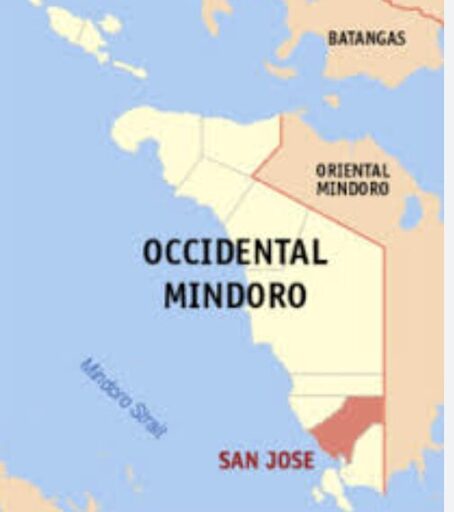
At least 1,200 soldiers from the AFP’s 203rd Infantry Brigade, 76th Infantry Battalion, and 1st Infantry Battalion flooded barangay Cabacao, Abra de Ilog, Occidental Mindoro and shelled its foothills, January 1, ostensibly to conduct an “intelligence-driven defensive operation” against the revolutionary New People’s Army.
According to reports, the AFP and the NPA had an armed encounter that began at 6:30 a.m. At least four attack helicopters were used to conduct strafing operations from 9:30 a.m. to 12:30 p.m., and at least 12 bombs were dropped in the area.
The operation resulted in at least three Mangyan-Iraya children being killed during the bombing while their mother was injured. Mindoro’s Provincial Social Welfare Office also stated that 769 individuals from 188 families were forced to evacuate their homes and flee. The evacuees are currently in Cabacao High School while 59 others are staying with relatives.
Aside from the indigenous Mangyan, Pamantasan ng Lungsod ng Maynila student Jerlyn Rose Doydora was also killed while fleeing from the scene. Another student was reportedly hit by bombs and killed. The two students were investigating the conditions of peasant communities in Mindoro and why some would choose to join the armed struggle.
Neither the AFP nor the NPA reported any casualties from their respective sides. The NPA however claimed that they killed two soldiers and injured two more during the encounter.
Human rights watchdog Karapatan Southern Tagalo stated the events in barangay Cabacao are “clearly a massacre instigated by the AFP,” asking “if the operation was truly ‘intelligence-driven and had the support for the community, why did 5 civilians die including children?”
“This overkill is proof of the AFP’s failure, lack of a clear target, and lack of real support from the people in their operation,” they added. A fact-finding mission is currently underway to investigate the situation on the ground.
Kabataan Partylist also condemned Doydora’s death, stating that she was a victim of the “gross militarization heavily affecting the indigenous people and communities in Mindoro.” “[The ongoing militarization in Mindoro] is a counter-insurgent war that wastes billions of pesos in people’s taxes yearly, and in the end takes the lives and livelihoods of ordinary Filipinos.”
Defensive action?
Official statements from the AFP claim that the bombing was a “defensive action” against mounting NPA attacks.
Marco Valbuena, the Communist Party of the Philippines’ information officer, disputed this, stating that the NPA guerrillas were conducting a medical mission in the area when the bombing began. He said that the NPA was observing the holiday ceasefire declared last year, which ended on 11:59 p.m. of January 1.
Civilians are nominally protected by international laws governing the rules of warfare. The Philippines is signatory to the United Nations Geneva Conventions which explicitly states that civilians are not valid targets in war.
Particular to the armed conflict between the Philippine government and the NPA, both parties have agreed to the Comprehensive Agreement on the Respect for Human Rights and International Humanitarian Law in 1998.
The AFP has oftentimes stated its position that they are not “bound” by CARHRIHL despite it being an agreement signed by the Philippine government. The agreement is part of the on-and-off peace talks between the Philippines and the National Democratic Front of the Philippines, which represents both the NPA and the people’s democratic government being established in the countryside.
Continuing harassment
Karapatan ST’s attempts to conduct their fact-finding mission have resulted in difficulties, mostly owing to the military’s continued harassment and militarization in the area. The 203rd Ibde has instructed all churches to refuse the humanitarian team any accommodation.
Karapatan ST also stated that they caught elements of the 76th IBPA “intimidating people to refuse accommodation to the humanitarian team” during the night. A police mobile was also spotted surveilling the team’s accommodations “every 5 to 7 minutes.”
Barangay officials were also coerced into non-cooperation. As part of the fact-finding mission, the team attempted to visit Cabacao High School to interview evacuees, but was denied entry by the military.
Attempts to start a dialogue with Brgy. Captain Roche Gutierrez was also frustrated, with local officials claiming that no military abuses took place. Instead, the barangay issued an “anti-dayo ordinance” which requires all visitors to present identification to barangay officials.
The remains of all casualties have yet to be released from military custody, citing “security protocols.” Karapatan ST lambasted this, saying that refusal to release the remains to their families “not only denies the victims dignity, but is also an additional crime and evidence of a cover-up.”
Ongoing campaign
The January 1 strike is only the latest in the AFP’s series of military operations in Mindoro island. According to the group Mindoro Youth for Environment and Nation, the AFP is the “main threat to Mindoro’s environment and people.”
“Militarization is a grave attack on the people’s rights for a safe, balanced, and sustainable environment,” the group said in its statement. “Military presence is repeatedly being used not to protect the people but to secure disingenuous projects like mining, renewable energy projects, and eco-tourism that only serves the interests of the few.”
MYEN claims that the AFP’s activities are linked to the wave of land-grabbing attempts and urban development targeting indigenous communities. In Brgy. Cabacao, an eco-tourism project is threatening to turn the Luyang Baga Cave into a tourist spot. Construction of roads to the area will result in the destruction of farmland and fishing grounds for the local community.
Elsewhere in Abra de Ilog, Mangyan communities are the first victims of development aggression. In Sitio Malatabako, Brgy. San Vicente, Pieceland Corporation has placed the Mangyan community under siege, cutting off their food supplies and hamletting them in their homes in order to drive them out. Likewise, the mining firm Agusan Petroleum is set to resume mining operations in the area following the government’s cancellation of the 25-year mining moratorium in the island.
According to Defend Mindoro, there have been 16,733 victims of human rights violations in the island from January to November 2025. At least 1,080 individuals were affected by four bombing and strafing operations in the island last year affecting the towns of Baco, Pola, and Mansalay; all in Oriental Mindoro and all targeting Mangyan communities.
The military has also targeted specific community members and leaders, such as former Abra de Ilog mayor Monet Alcantara who was arrested by the 76th IB last November 26 on trumped-up charges, and Dolores Solangon who was tied to a tree and blindfolded before being forced to dig their own grave while being forced to state that they were a member of the NPA.
KPL stated that situations of rampant militarization and abuse are what drives people like Doydora to “seek radical change” and “look for it on the streets, in communities, and through research with revolutionary groups.”
“The state can twist the narrative, but the corrupt and rotten system is what takes away the youth’s future and pushes them to look for genuine alternatives,” the youth group said in a statement. (RVO)
The post Philippine military kicks off year with terror campaign in Mindoro, kills 5 appeared first on Bulatlat.
From Bulatlat via This RSS Feed.