


Bidding farewell to 2025 is not possible without a thorough review of US policy in West Asia, which has turned the region into a flashpoint for over two decades, since the invasion of Iraq, in order to maintain its geopolitical interests.
Peoples Dispatch spoke to Dr. Emad Al-Hatabeh, a member of the central committee of the Jordanian Communist Party, who shared his reflections on the Trump administration’s role in shaping one of the bloodiest years for the region.
The importance of West Asia as part of the Indo-Pacific to the Trump administration
Although West Asia possesses only small swathes of the Indo-Pacific region, which US President Donald Trump has long focused on as a main global sea route, it still matters for US foreign policy due to crucial passages, including the Strait of Hormuz, the Bab el-Mandeb Strait, and the Suez Canal.
Controlling these sea passages, alongside the entire Indo-Pacific, has been of prime importance to Trump and his administration, because they constitute principal sea roads through which energy, technology, and critical minerals that underpin global semiconductor production are transported.
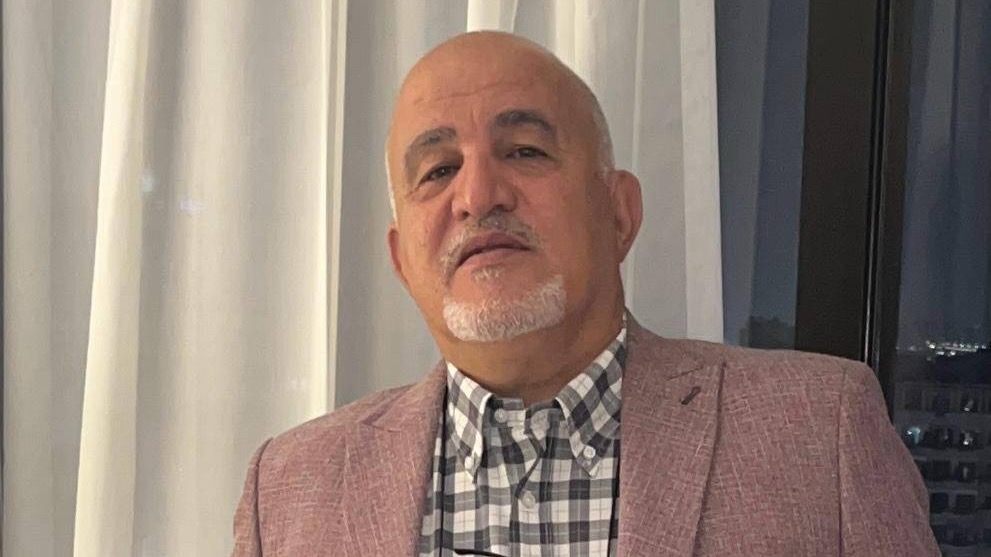
Dr. Emad Al-Hatabeh spoke with Peoples Dispatch about US strategy in West Asia. Photo: Dr. Al-Hatabeh
The shift in US security doctrine in the region
Dr. Emad suggests that the Trump administration has shifted US foreign policy in West Asia, relinquishing the sacredness of the colonial border lines that were defined according to the 1916 Sykes-Picot agreement and the 1920 San Remo conference.
“Each time countries of the region attempted to eliminate the border demarcation outlined by western colonial powers, the US reacted by moving its warships and troops to intervene in order to prevent that,” Dr. Emad said.
He cited the US Marines’ arrival in Lebanon, when the factions opposing the US-led Lebanese government called for joining the United Arab Republic (formed by Egypt and Syria) in 1958.
“The empire also intervened when Iraq tried to annex Kuwait to its territories,” Dr. Emad added.
The Jordanian communist leader argues that Washington intervened not only to impede any endeavors for unity between countries in the region, but to actively fragment them into sectarian and ethnic-based statelets.
Read more: Three killed, dozens injured in protests over sectarian violence in Syria
“By dividing the nations of West Asia into smaller areas, and inciting civil war between different sects, ethnicities and parties, the US has been able to weaken the national army in each country,” Dr. Emad said.
Under Trump, the colonial borders are no longer treated as stable frameworks to be defended, but as structures that can be hollowed out, bypassed, or informally dismantled through internal fragmentation.
Al-Hatabeh noted that the Syrian army was already eradicated by the time former Hayat Tahrir al-Sham leaders rose to power in Syria, overthrowing ousted president Bashar Al-Assad.
He also indicated that the Lebanese army has never been strong, while the capabilities of the Sudanese and the Iraqi armies were already undermined by the civil conflicts that wrecked Sudan and Iraq.
“The official national armies in the rest of the Arab countries are unfortunately led by governments known for their absolute allegiance to the United States,” Dr. Emad stated.
He further asserted that the Egyptian army is the only standing powerful army, when it comes to Arab nations in the region.
The extermination of the Axis of Resistance has been a must for the Trump administration
In the absence of strong national armies across West Asia, the Axis of Resistance emerged as the only force that has threatened US imperial ambitions in the region.
Therefore, undermining Iran’s military and nuclear capabilities, and eliminating other regional actors affiliated with the Axis of Resistance, which the Islamic Republic leads, was inevitable.
To achieve these goals, the US has supported Israel in its multi-front war across the region that lasted for over two years, and killed tens of thousands in Gaza, and hundreds in the occupied West Bank, Lebanon, Syria, Yemen and Iran.
The US has supported Israel’s all-out aggression in different parts of West Asia on the pretext of maintaining peace, forcing its rivals to negotiate “under fire”.
The Trump administration is also seeking to deploy international forces in some areas of West Asia, tightening its grip on the region. The deployment of the so-called International Stabilization Force (ISF), set out in Trump’s 20-point Gaza ceasefire proposal, represents a prospective model of such forces.
Meanwhile, Washington’s number one regional ally, Israel, is expected to take charge of guiding these forces in line with both countries’ interests.
The post “Peace through strength” was the US motto for West Asia in 2025, says Dr. Emad Al-Hatabeh appeared first on Peoples Dispatch.
From Peoples Dispatch via This RSS Feed.