

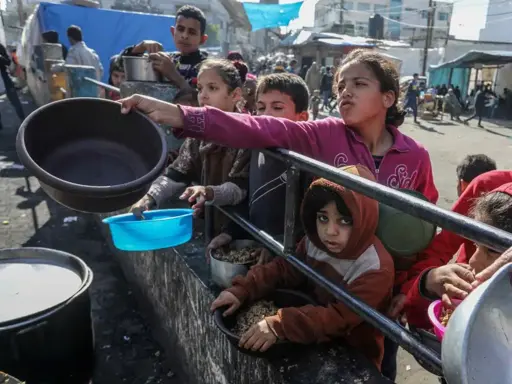
In a winter that grows harsher year after year, families’ tables in the Gaza Strip are not only lacking in variety but also devoid of the most basic food sources, chief among them meat, poultry, and eggs. These items, which were once a natural part of daily life, have now become postponed wishes and heavy dreams for families exhausted by Israel’s genocide and poverty.
Gaza’s markets are experiencing a severe shortage of frozen meat and poultry. This is not because of a lack of demand. This is due to the collapse of refrigeration and storage systems and the absence of logistical capabilities that would enable these goods to be supplied in reasonable quantities and at reasonable prices.
With the destruction of a large number of commercial refrigerators and continuing restrictions on the import of equipment and maintenance materials, meat storage capacity has been reduced to a minimum, resulting in limited supply and exorbitant prices.
Missing food in Gaza
With chronic power cuts, operating commercial refrigerators has become an almost impossible challenge, as alternative generators cannot provide enough power for long hours to ensure safe freezing. This situation has prompted traders to reduce the quantities they import for fear of spoilage and losses, leading to higher prices, lower consumption and a widening gap between actual needs and purchasing power.
Field indicators show that meat, poultry and eggs have virtually disappeared from the daily diet of thousands of families, who have been forced to rely on canned goods and foods of low nutritional value in an attempt to survive.
This forced shift reflects not only a change in consumption patterns, but also threatens food and health security, especially among children, who need protein to build their bodies in an environment already suffering from the effects of war and malnutrition.
The gap is clearly evident when comparing meat prices in Gaza with those in the West Bank and neighbouring areas, where it is sold at much lower prices, at a time when the Strip’s population is suffering from limited income and a stifling economic reality. This paradox makes obtaining a complete meal psychologically and financially stressful, turning food shopping into a daily struggle between need and ability.
The crisis is not limited to meat alone, but extends to all goods that require refrigeration, leaving families with limited and painful choices and deepening their anxiety about securing food, especially in winter when the need for balanced food that provides warmth and energy increases.
Food crisis
Experts warn that the continuation of this situation without radical solutions will lead to an exacerbation of the food crisis in Gaza, stressing that addressing the shortage of commercial refrigerators, providing stable energy sources, and allowing the entry of storage and refrigeration supplies are essential steps to alleviate suffering and restore a minimum level of food stability.
In Gaza, the demands are no longer excessive, nor are the dreams unattainable. Today, the discussion is not about luxury, but about the basic right to food.
Meat, chicken and eggs: simple items anywhere else, but in Gaza they have become a symbol of daily suffering and a silent witness to an increasingly harsh humanitarian reality, as families wait for warmth that cannot be provided by heaters alone, but by tables that are not empty.
Featured image via the Canary
By Alaa Shamali
From Canary via This RSS Feed.