

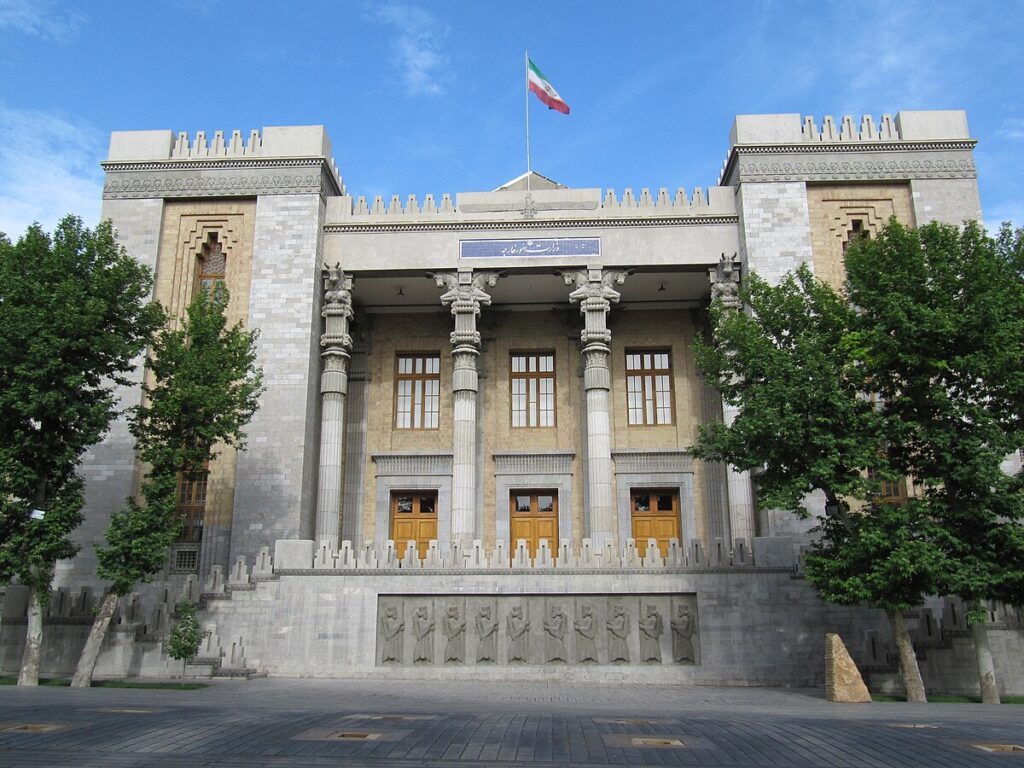
Iran condemns US attack on Venezuela as illegal aggression violating UN Charter and global sovereignty. Discover Tehran’s diplomatic stance.
Related: 5 Alarming Truths: Mexico Condemns US Military Intervention in Venezuela as UN Charter Breach
5 Reasons Iran Condemns US Attack on Venezuela as a Global Threat
Iran condemns U.S. attack on Venezuela as a flagrant breach of international law and a dangerous escalation that threatens the foundations of the global order. On January 3, 2026, the Islamic Republic of Iran issued a forceful statement in response to Washington’s large-scale military operation on Venezuelan soil—an assault that, according to the White House, resulted in the capture of President Nicolás Maduro and First Lady Cilia Flores.
From Tehran’s perspective, this is not merely a regional crisis. It is a systemic rupture with implications that extend far beyond Latin America. The Iranian Foreign Ministry framed the offensive as a textbook case of unilateral aggression, echoing historical patterns of imperial intervention that have long destabilized the Global South. In doing so, Iran positioned itself not only as a regional power but as a principled voice defending the sanctity of state sovereignty against military hegemony.
The gravity of Iran’s condemnation lies not just in its rhetoric but in its legal grounding. Tehran explicitly cited Article 2(4) of the UN Charter, which prohibits the use of force against the territorial integrity or political independence of any state. According to Iran, the U.S. strikes—reportedly targeting civilian infrastructure alongside military installations—constitute an “unequivocal act of aggression” that must be met with immediate international censure and legal accountability.
Iran Condemns US Attack on Venezuela as Illegal Under International Law
The Iranian Foreign Ministry’s statement, released on Saturday, January 3, 2026, pulled no punches. “This criminal, cowardly, and terrorist act by the United States violates every principle of international coexistence,” the document declared—words that closely mirror those used by Venezuelan Interior Minister Diosdado Cabello in Caracas hours earlier.
Iran emphasized the illegality of targeting civilian infrastructure, including electrical grids and residential zones, actions it described as potential war crimes under the Geneva Conventions. Tehran rejected any justification based on regime change or alleged humanitarian concerns, stressing that only the UN Security Council holds the legitimate authority to authorize the use of force—and even then, only as a last resort.
The International Court of Justice has repeatedly affirmed that unilateral military interventions, regardless of motive, violate the core tenets of the UN Charter. Iran’s stance aligns with this jurisprudence, positioning the U.S. operation not as an isolated incident but as part of a broader erosion of multilateralism. “When powerful states bypass the Security Council,” the statement warned, “they don’t restore order—they incite chaos.”
Crucially, Iran also underscored Venezuela’s inherent right to self-defense and resistance against foreign occupation—a principle enshrined in both international law and the historical consciousness of post-colonial states. By doing so, Tehran reinforced its long-standing advocacy for the Global South’s right to political autonomy, free from external coercion.
Iran Joins Global South Coalition Against U.S. Military Aggression
While Western media have focused on the tactical details of the U.S. operation, Iran’s diplomatic response underscores a deeper geopolitical realignment. Tehran’s condemnation places it firmly within a growing coalition of nations—including Russia, China, Cuba, and Colombia—that view the attack as a direct threat to regional peace and global legal norms.
Iran and Venezuela have cultivated close strategic ties for over two decades, particularly through their shared membership in the Non-Aligned Movement (NAM) and their mutual opposition to U.S.-led sanctions regimes. In this context, Iran’s statement is both principled and pragmatic: it defends a key ally while reinforcing its own narrative as a champion of anti-imperialist sovereignty.
As a founding member of the Non-Aligned Movement, Iran has consistently opposed unilateral military interventions—from Iraq to Libya to Syria. The current crisis in Venezuela is seen through that same lens: not as a domestic political issue, but as a test of whether international law applies equally to all nations, or only to the weak.
Notably, Iran called on all UN member states to fulfill their “legal and moral duty” by demanding an immediate ceasefire, the withdrawal of U.S. forces, and accountability for those responsible for planning and executing the operation. It also urged the Security Council to invoke Chapter VII—not to authorize further force, but to sanction the aggressor and protect the sovereignty of the victim.
This stance resonates across Latin America, where leaders like Gustavo Petro of Colombia and Miguel Díaz-Canel of Cuba have echoed Iran’s concerns. Even within traditionally neutral countries like Uruguay, political figures from the ruling Frente Amplio—such as Rafael Michelini—have echoed Tehran’s alarm, warning that “the prairie of Latin America has been set on fire.”
Geopolitical Context: Iran’s Message to the World
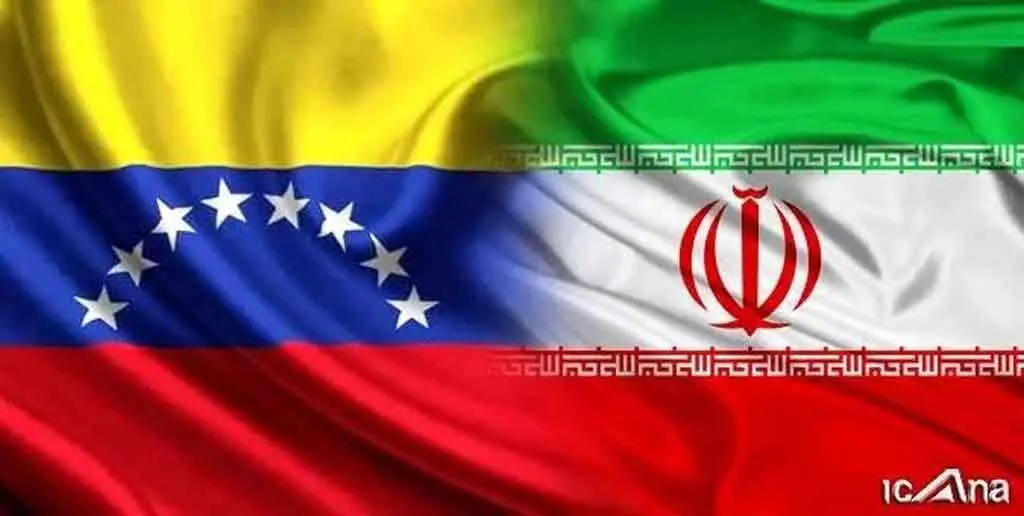
Iran’s condemnation of the U.S. attack on Venezuela carries layered implications. At a time when Tehran faces its own threats of military action—particularly from Israel and hardliners in Washington—its vocal defense of Caracas serves as both a warning and a mirror. By highlighting the illegality of unilateral force, Iran seeks to reinforce norms that could one day protect its own sovereignty.
Moreover, the timing is significant. With Venezuela’s vast oil reserves and strategic location, the U.S. incursion risks triggering a wider confrontation involving Russia, China, and other non-Western powers. Iran’s intervention in the diplomatic arena aims to prevent escalation while strengthening South-South solidarity.
In essence, Iran is not just defending Venezuela—it is defending a vision of international order based on equality, mutual respect, and adherence to law, rather than power projection and regime change. In an era of resurgent great-power rivalry, that message carries weight far beyond the Middle East or Latin America.
Conclusion: A Sovereignty Line in the Sand
Iran condemns U.S. attack on Venezuela not out of blind allegiance, but as a matter of principle rooted in decades of anti-imperialist foreign policy. In a world where unilateralism increasingly masquerades as “strategic necessity,” Tehran’s statement is a stark reminder that sovereignty remains the bedrock of international peace.
Whether the UN will act—or whether the Global South can mount a coordinated response—remains uncertain. But one thing is clear: Iran has drawn a line in the sand, and it stands not alone, but alongside a growing bloc of nations determined to uphold the Charter that Washington now appears to have discarded.
From teleSUR English via This RSS Feed.
It shouldn’t be necessary to list reasons for condemning it. The whole world can see why it’s condemnable
