


The Global South moves to dismantle the unilateral actions of the North.
The year 2025 has become a turning point in global history. As the unipolar power of the late 20th century fades, a new multipolar order is being built through conflict, economic resistance, and an emerging “alliance of systemic survival” in the Global South.
RELATED:
President Maduro Warns of US State Piracy in the Caribbean
From Washington to Gaza and from BRICS+ capitals to the Caribbean, the architecture of power is being reshaped in real time.
1. The Return of the Monroe Doctrine and the Axis of Reaction
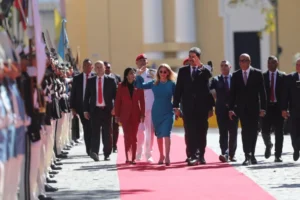
The political landscape of 2025 was dominated by a “Conservative Restoration” in the United States. The return of Donald Trump to the White House in January marked the beginning of an aggressive phase of protectionism and exclusionary nationalism.
This era, described by analysts as Monroe Doctrine 2.0, seeks to reaffirm U.S. control over the Western Hemisphere through “economic blackmail” and symbolic territorial offensives.
- January 10: The year begins with the inauguration of President Nicolás Maduro, representing a refusal to capitulate to external regime-change pressures and a reaffirmation of regional autonomy.
- January 20: Donald Trump’s return signals a “symbolic and territorial offensive,” including the imperialist proposal to rename the Gulf of Mexico as the “Gulf of America” to erase sovereign identity.
- January 21: The launch of “Operation Aurora” and mass ICE raids signals a devastating humanitarian impact on Latin American families. This policy marks the “criminalization of survival,” using military forces for domestic raids.
- February: Washington implements 25% tariffs against Mexico and Canada. And up to 100% against BRICS+ nations to force a break with China and curb de-dollarization.
2. Resistance and the Reconfiguration

While the North hardens its borders, the Global South becomes the center of resistance. Palestine remains at the heart of this struggle. On March 2, Israel’s total blockade deepens what experts describe as a “planned famine” in Gaza, with full famine conditions officially declared by August.
Between March 14 and 17, the United States begins deporting migrants to El Salvador’s CECOT “Terrorism Confinement Center,” in clear violation of human rights, while Israel unilaterally ends a ceasefire and resumes massive air strikes on Gaza.
At the same time, the Belt and Road Initiative (BRI) continue to grow in Latin America. In April, China advances as a key partner for infrastructure, despite U.S. pressure and blackmail against governments that engage with Beijing.
By May, the BRICS+ bloc emerges not only as an economic space but as a “multipolar refuge” for countries seeking protection from sanctions and dollar dependency. This shift turns multipolarity into a strategy of systemic survival rather than a mere diplomatic choice.
In June, the global conflict escalates further. Between June 13 and 24, Israel, backed by the United States, carried out a 12-day bombing campaign against military and nuclear sites in Iran, provoking unprecedented missile responses and pushing the region to the brink of a wider war.
On August 15, the world’s attention shifts to Anchorage, Alaska, where Trump and Vladimir Putin meet in a summit that Western media calls a “peace summit,” but which many analysts interpret as a “Reverse Nixon” moment.
3. The Consolidation of the Multipolar Vanguard
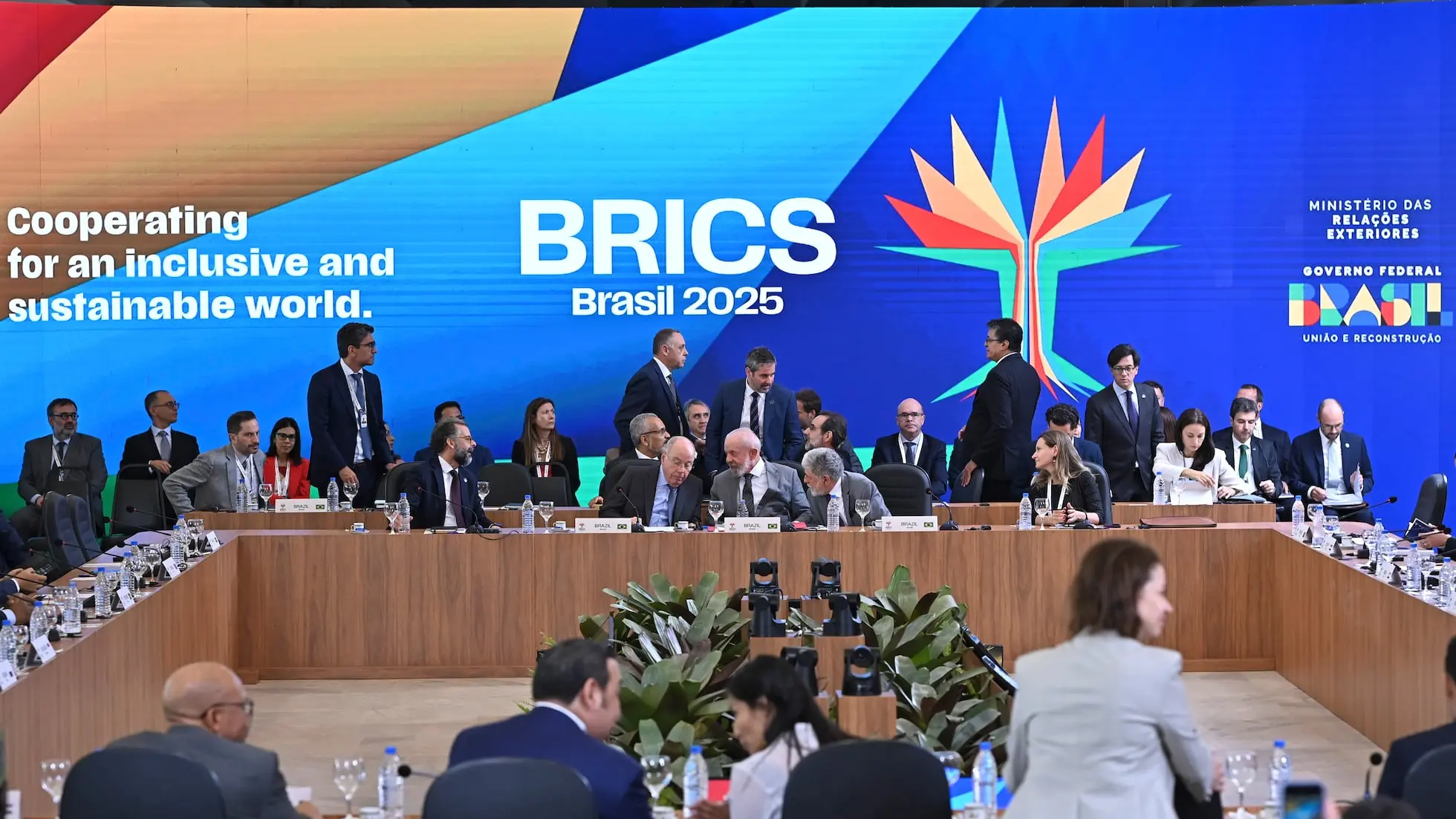
By mid-2025, the global financial architecture witnessed what analysts call the “Irreversible Erosion” of Western hegemony. As the G7 closed inward with protectionist barriers, the Global South solidified an alternative based on technological sovereignty and resource control.
- The “Tianjin Thaw” and the Eurasian Giant: In September, the Shanghai Cooperation Organization (SCO) summit in Tianjin marked a historic reconciliation between China and India. This “union of necessity,” triggered by U.S. trade hostility, saw the two giants settle long-standing Himalayan border disputes to focus on a “post-Western” world order.
- The Dedollarization Offensive: Under the Russia-India-China (RIC) axis, trade reached record levels of settlement in local currencies. By 2025, over 90% of Russia-China trade will bypass the dollar, creating a “financial safety net” that shields smaller economies from the unilateral sanctions of the North.
- Expansion of the Bloc: The formal incorporation of new strategic partners, including Iran and Ethiopia, pushed the BRICS+ to represent over 30% of global GDP and 40% of the world’s population. This bloc is no longer just an economic club but the financial backbone of the Global South.
4. The Systemic Crisis – Environmental Collapse and the “Climate Fraud”
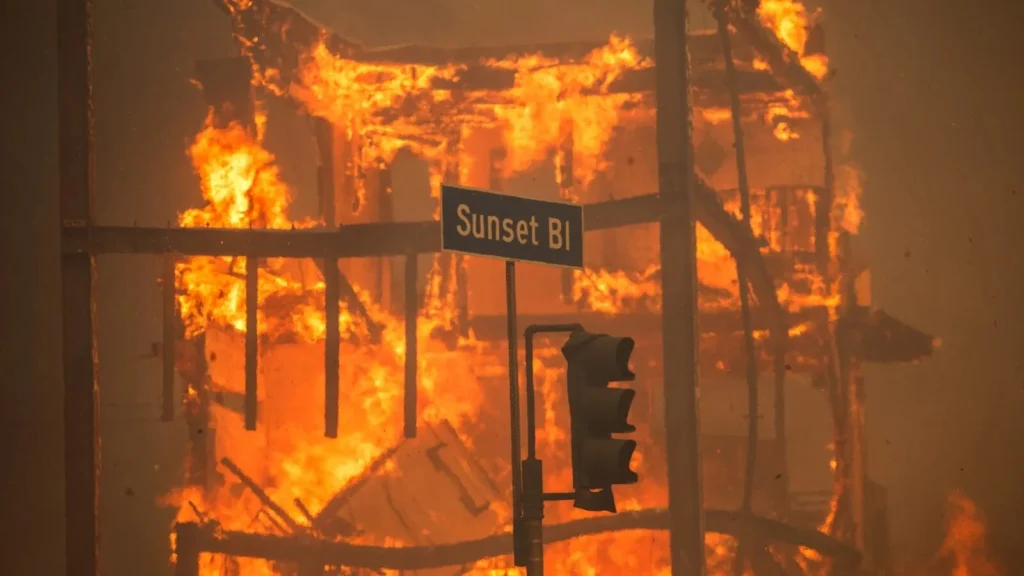
The year 2025 proved that the extractive model of the North is not only unsustainable but physically destructive to the heart of the empire itself.
- January – February: The most devastating wildfires in the history of Los Angeles served as a grim reminder of the climate crisis. While the fire struck indiscriminately, the recovery highlighted profound class inequalities, leaving the most vulnerable families homeless while the “Technological Aristocracy” remained insulated.
- November: During the COP30 summit, rich nations once again resisted funding reparations for climate-related “loss and damage”. Instead, the Global North prioritized the militarization of the Arctic and new trade routes, leading activists to label the summit a “Climate Fraud”.
- The Battle for Water and Land: Throughout Latin America (Brazil, Chile, Argentina, Peru, México), climate litigation intensified as indigenous communities and environmental defenders faced increased criminalization while protecting strategic water reserves from extractive concessions.
5. The Interception of the Sumud

By October 2025, the humanitarian situation in Gaza reached a definitive breaking point, prompting the largest civilian maritime challenge to the blockade in history.
- October 2–4: A convoy of nearly 50 vessels from 44 countries, the Global Sumud Flotilla (GSF), attempted to establish a maritime corridor to deliver symbolic aid and “bear witness” to the genocide. In a series of aggressive maneuvers in international waters, Israeli naval forces intercepted and boarded all 42 primary vessels, including the final boat, the Marinette.
- Abduction and Global Outcry: Over 450 activists—including European parliamentarians, doctors, and the climate activist Greta Thunberg—were detained and taken to the Israeli port of Ashdod. This “act of state piracy” triggered a wave of global protests, most notably in Italy, where over two million people took to the streets, signaling a deep fracture between Western governments and their populations.
- The Death of International Law: Human rights organizations, including Amnesty International, condemned the interception as a blatant violation of the UN Convention on the Law of the Sea (UNCLOS) and the ICJ’s provisional measures requiring the delivery of aid.
6. A World at the Ballot Box – The “Bukelization” of the Right
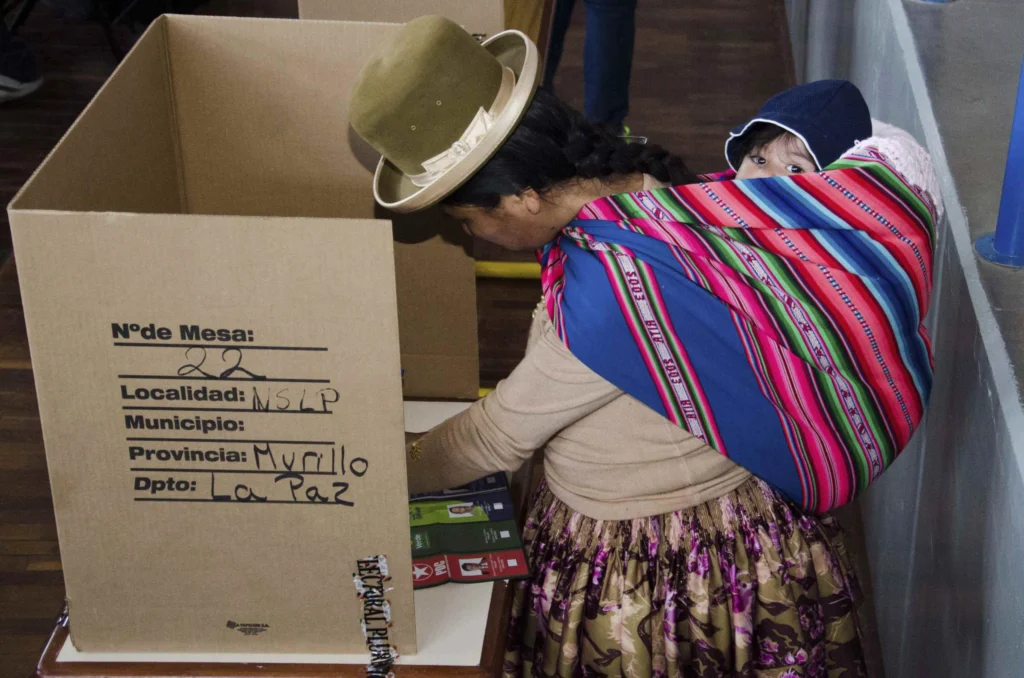
The political map also shifts at the ballot box. The last quarter of 2025 was defined by elections that reshape alliances and strengthen what many call the “Bukelization” of the right: the use of extreme security discourse, inspired by Nayib Bukele’s model, to win votes amid crisis.
In Ecuador and Bolivia, elections in the Lithium Triangle became battles over control of strategic minerals, with popular movements trying to defend sovereignty against IMF-backed neoliberal projects.
In December, far-right candidate José Antonio Kast won Chile’s presidential runoff, aligning the country with the Trump-Milei axis and weakening spaces such as CELAC.
In November, the collapse of Olaf Scholz’s government and the rise of the far‑right AfD left Germany introspective and paralyzed. This internal crisis limits the European Union’s capacity to resist U.S. pressure to “decouple” from China, deepening its dependence on Washington.
Across Africa and Asia, elections in countries such as Egypt, Côte d’Ivoire, and Myanmar also reveal the central role of governance in economic transformation and the dangers of militarized politics in times of crisis.
7. The Sharm El-Sheikh Declaration
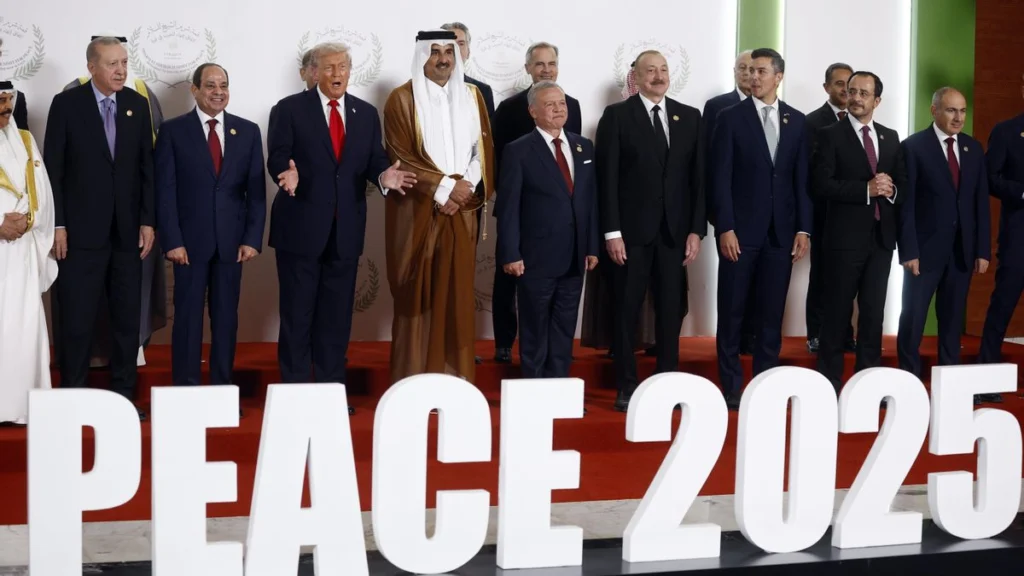
On October 13, the focus shifts to Sharm El‑Sheikh, Egypt. The Trump-Sisi summit produced the “Trump Declaration for Enduring Peace,” a document critics describe as a corporate business plan rather than a political peace treaty.
The agreement was signed by mediators (the U.S., Egypt, Qatar, and Turkey) but not by the direct parties to the conflict, Israel and Hamas.
The declaration proposes that Gaza be administered by an “apolitical Palestinian committee” overseen by an international “Board of Peace” chaired by Donald Trump and Tony Blair. This technocratic structure effectively removes Palestinian sovereignty and converts Gaza into a ward of global capital.
Leaked plans confirm a vision of “New Gaza” as the “Riviera of the Middle East,” filled with AI-driven smart cities and an “Elon Musk” manufacturing hub built over the ruins of the Erez industrial zone.
8. Sovereignty in the Age of Algorithms
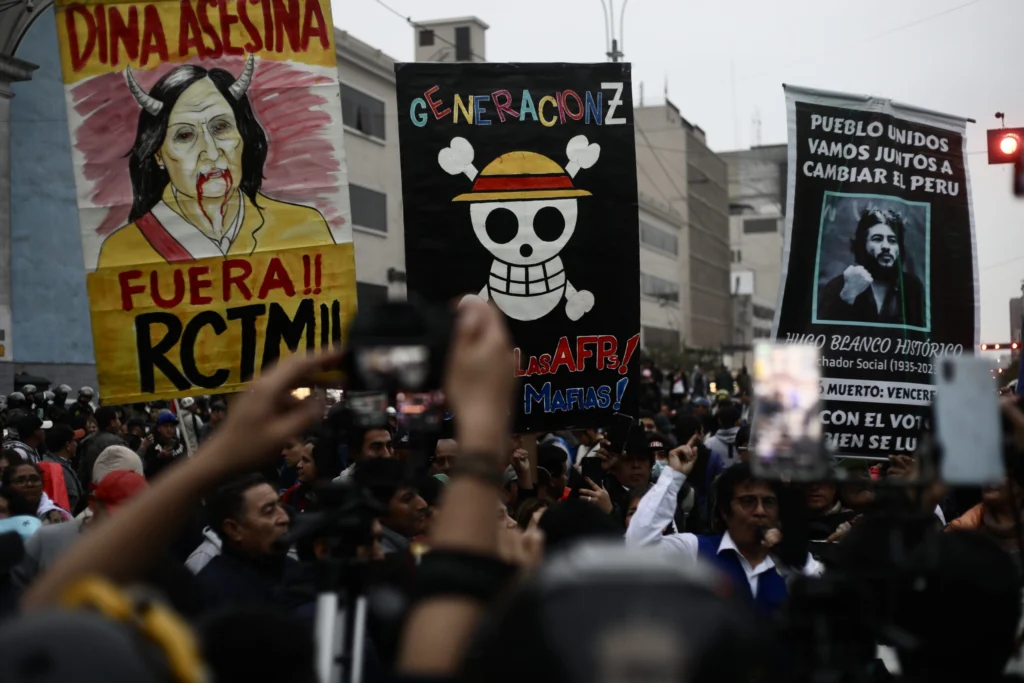
Meanwhile, the digital front becomes a key battlefield. In 2025, a new wave of Gen Z-led protests erupts around the world, targeting corruption, surveillance, and what many describe as “digital colonialism.”
The struggle for sovereignty now includes control of data, platforms, and infrastructure, challenging the monopoly of the “Technological Aristocracy” of the North.
For progressive governments in Mexico, Brazil, and Venezuela, digital sovereignty becomes a central tool to resist the new Monroe Doctrine, defend social movements, and link critical minerals, such as those of the Lithium Triangle, to the right to develop their own technological future.
9. The Deployment in the Caribbean – “Southern Spear” and the Naval Siege

As the year drew to a close, the focus of U.S. geopolitical aggression shifted decisively toward the Caribbean, transforming the “mare nostrum” into a theater of military intimidation.
- November 13: U.S. Secretary of Defense Pete Hegseth officially launched “Operation Southern Spear,” a massive naval and air deployment under the pretext of an anti-drug campaign. The operation involved the USS Gerald R. Ford Carrier Strike Group, bringing stealth fighters and nuclear-capable assets just miles from the Venezuelan coast.
- The Humanitarian Toll: Between September and December 2025, U.S. forces conducted dozens of strikes against vessels in the Caribbean and Eastern Pacific. These actions, justified as “targeting narco-terrorists,” resulted in over 100 extrajudicial executions and the destruction of civilian boats, sparking condemnation from Caracas.
- Energy Piracy and Blockade: In December, the U.S. escalated the conflict by seizing two tankers containing four million barrels of Venezuelan oil on the high seas. Washington announced an absolute naval blockade against tankers carrying Venezuelan energy, a move aimed at strangling the Venezuelan economy and asserting neocolonial control over regional resources.
10. The Dawn of Transactional Geopolitics and the Multipolar Refuge

As the year drew to a close, two parallel realities defined the global landscape. On the one hand, Washington’s aggressive unilateralism, tariffs, sanctions, blockades, and militarized borders created the very Eurasian integration it sought to prevent, deepening the “reverse Nixon” effect and consolidating a systemic survival alliance between Russia, China, and India.
On the other hand, countries of the Global South, regardless of their internal political systems, increasingly sought protection in BRICS+ and the SCO to escape economic blackmail and defend their development.
In Latin America and beyond, the lesson of 2025 was stark. The world is not returning to the old “rules-based order,” but entering a brutal era of transactional geopolitics where sovereignty is traded for bases, corridors, and control of strategic routes.
Faced with Monroe Doctrine 2.0 and a neocolonial pincer that combines military pressure, financial siege, and digital control, the only viable path for the peoples of the South is the unrestricted defense of self-determination and the acceleration of sovereign integration.
As 2026 begins, the Global South stands at a crossroads: submit to a renewed empire, or deepen the multipolar refuge to build a future rooted in social justice, environmental dignity, and true democratic sovereignty.
Sources: teleSUR – Al Jazeera – Al Mayadeen – TRT – Xinhua – NODAL – BBC – NYT – VTV
From teleSUR English via This RSS Feed.