

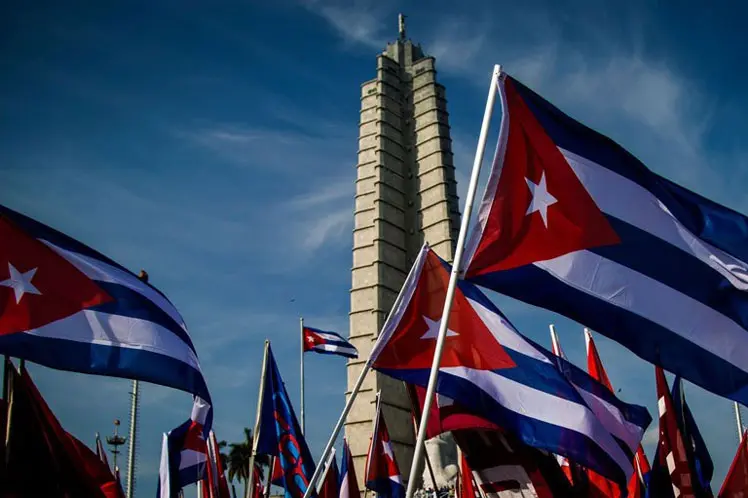
The Bolivarian Alliance for the Peoples of Our America (ALBA) issued a statement joining with profound revolutionary emotion and historical conviction in the commemoration of January 1, 1959, the date on which the Cuban Revolution triumphed, an event that marked an “irreversible horizon of dignity, sovereignty, and social justice for Cuba and for all of Our America.”
RELATED:
Venezuela Reaffirms Brotherhood With Cuba on 67th Anniversary of Revolution
In the statement, ALBA emphasizes that the revolutionary triumph was the work of the Centennial Generation, a youth inspired by the ideals of José Martí and led by Commander-in-Chief Fidel Castro Ruz, who, from the Sierra Maestra mountains, “lit the sacred fire of emancipation” that transcended borders.
Sixty-seven years later, the statement emphasizes, the Cuban Revolution “remains a relevant example of coherence, resilience, and loyalty to the principles of social justice,” even in the face of the US blockade, unilateral coercive measures, and disinformation campaigns.
The ALBA member countries reaffirm their unwavering commitment to solidarity with the people and government of Cuba, recognizing in its revolutionary process “a common root of their struggles,” where the historical figures of Simón Bolívar, José Martí, Augusto César Sandino, and Hugo Chávez converge.
Furthermore, the statement highlights that, on the road to the centennial of Fidel Castro’s birth, his historical and moral legacy continues to guide the peoples who struggle for a just, multipolar international order that respects self-determination.
Happy Birthday to the unforgettable Fidel Castro. A revolutionary who led a life filled with triumph, love, and compassion. 👏🏼 pic.twitter.com/uOCQgOVJwC
— teleSUR English (@telesurenglish) August 13, 2017
The declaration also underscores that the Cuban Revolution continues to be an ethical and political benchmark for the popular struggles of the continent, strengthening the bonds of integration and resistance among the ALBA nations.
From teleSUR English via This RSS Feed.
Fidel Castro built a wall around Cubans, not Cuba (the latter was done by the USA). Castro only allowed certain groups to leave, at moments he found useful (see the Mariel boatlift). The emigration process was lengthy (years). Once you left, it was near impossible to return (some could even not return for the burial of their parents). It was engineered migration, perhaps slightly better than the DDR, but still not free.