


By Nikos Mottas
As 2026 begins, the world confirms what the communist movement has long understood: capitalism is not merely experiencing turbulence — it has reached the limits of what it can offer humanity. A system once celebrated for technological progress now turns innovation into surveillance and exploitation.
It multiplies wealth at the top while condemning the majority to insecurity. It transforms entire regions into war zones — not for freedom, but for markets, energy routes and geopolitical dominance. It even pushes the planet itself toward irreversible destruction in the name of quarterly profits.
Yet this moment is not defined only by capitalism’s decay. It is also defined by the extraordinary capacity of humanity to build something better. Never before have the productive forces been so advanced, nor the working class so globally connected and capable. The very crises of capitalism sharpen awareness and fuel resistance. Struggles erupt from factories and ports to campuses and digital platforms. Millions refuse to accept that this system — with all its misery and injustice — is the end of history.
Marxism-Leninism teaches us that every exploitative order eventually becomes a brake on human development. Today, that brake is capitalism itself. The choice before us is no longer between “reform” and “continuity,” but between socialism-communism or the deepening barbarism of inequality, war, reaction and environmental collapse. And because history is made by people — by workers who already hold the world in their hands — the possibility of socialist transformation is not a dream. It is a realistic and urgent necessity.
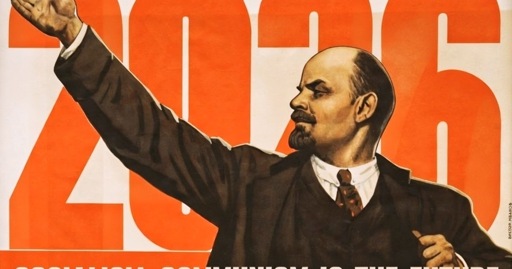
This is why, on the eve of 2026, the struggle for socialism-communism is more timely and relevant than ever — not as an abstract idea, but as the only path for humanity to move forward. And the reasons are all around us:
1. Capitalist inequality has reached a grotesque, structurally entrenched level.
In the mid-1990s, the richest 0.001% of the world’s population held around 4% of global wealth; today, that share has climbed well above 6%, and fewer than 60,000 multimillionaires control more wealth than half of humanity. Meanwhile, the bottom 50% own almost nothing and live permanently on the edge. This is not an accidental distortion. It is the normal functioning of a system where the ownership of the means of production is private, and the surplus created by billions of workers is systematically siphoned to a microscopic class. Every “boom” ends with richer billionaires and more indebted workers. If such an order cannot even distribute already-created wealth in a minimally just way, it has no moral or historical legitimacy left.
2. Humanity can cover basic needs for all — but capitalism blocks it.
The productive forces have reached a level where food, housing, healthcare and education could be guaranteed to every human being. Yet hunger persists, slums expand, public systems crumble. In 2023, the richest 1% owned around half of global wealth, while nearly 40% of the world’s adults held less than 1% of it. This means vast capacity exists, but is locked behind private ownership and the profit rate. Factories close not because people no longer need their products, but because shareholders demand higher returns elsewhere. Socialism does not rely on moral pleas to capital; it removes the barrier altogether by socialising the means of production and planning them for human need instead of private gain.
3. The danger of a generalized imperialist war is no longer theoretical.
World military expenditure reached about 2.72 trillion dollars in 2024 — the highest ever recorded and almost a 10% jump in a single year, the steepest rise since the end of the Cold War. All major power centres — the United States, the European Union states, Russia, China — are arming at record levels. This is not “defence”; it is preparation for collisions over markets, energy routes, raw materials and spheres of influence. When imperialist powers stockpile arms on this scale, the risk of a broader, even nuclear, conflict becomes a concrete, near-term danger. Lenin’s definition of imperialism as the “highest stage of capitalism” is not a metaphor; it describes precisely the period we live in.
4. The war in Ukraine is a concentrated expression of inter-imperialist rivalry.
Ukraine has become more than a tragic battlefield between two neighboring states; it has been transformed into a flashpoint of inter-imperialist rivalry that reflects the deeper contradictions of global capitalism. What began as internal tensions and regional conflict escalated dramatically in 2014 and even more so after 2022, when NATO powers increased military aid, intelligence support and political backing for Kyiv, not out of altruism but out of strategic calculus. The United States and its European allies see Ukraine as a crucial zone to counter Russian influence on the Eurasian landmass, secure access to resources and markets, and reinforce NATO’s eastern flank as a statement of Western dominance. Russia, for its part, interprets these moves as a direct threat to its strategic depth and regional hegemony, responding with its own military campaigns and geopolitical assertions.
The working class in and around Ukraine — including miners, factory workers, farmers and the informal labour force — pays the highest price: death, displacement, shattered communities and economic collapse. Far from being a “defensive” struggle on any side for the people themselves, this war illustrates the brutal logic of inter-imperialist competition, where great powers use local conflicts to advance their own interests, deepen alliances and reshape the balance of power. Marxist-Leninist analysis sees in this conflict not a noble cause but the blatant consequences of a world order governed by monopolies and competing blocs, where national sovereignty is crushed under the wheels of global capitalist rivalries.
5. The Pacific is becoming the main front of a U.S.–China confrontation.
In the Indo-Pacific, the rivalry between the United States and China exemplifies how inter-imperialist competition escalates geopolitical tensions and deepens the threat of global conflict. The U.S., determined to maintain its post-World War II military and economic hegemony, has expanded its network of strategic bases, naval deployments, and military partnerships — including the Quad and AUKUS frameworks — aimed at containing China’s rise as an alternative centre of capital accumulation and influence. From the South China Sea to Taiwan’s Strait, trade routes and resource corridors become arenas for power projection, where freedom of navigation operations, military exercises and diplomatic posturing increase the risk of miscalculation.
China, for its part, pursues its own expansion in infrastructure finance, maritime influence and regional partnerships, challenging the historical monopoly of U.S. power. For workers from Manila to Sydney, Tokyo to Jakarta, these manoeuvres are not distant “great power politics” but immediate pressures on wages, living standards and national autonomy. Far from creating peace, this confrontation normalizes permanent mobilization, increases military budgets at the expense of education and healthcare, and locks entire populations into camps of rival capitalist alliances.
From a Marxist-Leninist standpoint, this is precisely what Lenin identified as imperialism: the highest stage of capitalism, where rival capitalist powers fight not simply for markets but for strategic dominance, dragging humanity closer to a wider war unless the working class and oppressed peoples of all nations rise in solidarity to oppose these forces.
6. Venezuela exposes the brutality and illegality of U.S. imperialist intervention — a direct threat to all peoples of Latin America.
Washington has openly pursued regime-change operations in Venezuela for more than two decades, escalating dramatically with the so-called “Trump Doctrine” that declared Latin America once again a U.S. geopolitical backyard. Through unilateral sanctions targeting Venezuela’s oil sector and trade, freezing state assets abroad, and recognizing unelected figures as “legitimate leaders,” the U.S. sought to impose its will on a sovereign people.
At the same time, Venezuela has increasingly become a point of inter-imperialist rivalry, with the United States determined to maintain its regional dominance while opposing what it perceives as growing Russian military ties and Chinese economic influence in the country. These actions — maintained largely unchanged by the Biden administration — have led to severe economic hardship, including shortages of essential goods and spiraling inflation, with the explicit goal of breaking the population’s resistance. Far from “defending democracy,” this policy reinforces the right of U.S. monopolies to control strategic resources and dictate political outcomes throughout the region.
No matter what opinion someone might have about the social-democratic Maduro government and its internal policies, nothing justifies the economic warfare and open regime-change operations led by the United States. For Marxist-Leninists, Venezuela is an example of how imperialism tramples national sovereignty when its interests are challenged and of why genuine liberation requires freeing nations from the grip of monopoly capital and foreign domination altogether.
7. The Middle East and Palestine remain permanent laboratories of imperialist violence.
From the invasion and occupation of Iraq to the destruction of Syria and the ongoing tragedy of Palestine and Gaza, the region has long been carved up by imperialist powers and regional bourgeois classes seeking control of oil, gas and strategic corridors. Every “peace process” is undermined by the interests of those who profit from arms sales, sectarian division and dependent regimes. The repeated bombardments, blockades and occupations are not aberrations of foreign policy — they are tools in a long-term strategy of domination. Socialism, by opposing every form of national oppression and basing international relations on equality among states and peoples, stands as the only real alternative to this endless cycle.
8. Climate catastrophe is directly driven by capitalist energy monopolies.
Global emissions of CO₂ from fossil fuels reached record levels again in 2024, even as scientific warnings grow ever more urgent. Oil and gas giants invest billions in new exploration while spending relatively little on genuine transition. Governments sign agreements with one hand and approve pipelines with the other because their economies are steered by corporate profit, not ecological necessity. Climate summits produce declarations; shareholders demand dividends. A socialist economy, with public ownership of energy and long-term planning, could phase out fossils in a rational, coordinated way. Capitalism cannot, because it cannot go against its own ruling class.
9. Public healthcare is collapsing under the weight of commercialization.
In the United States, tens of millions of people remain without adequate health insurance, and medical debt is one of the leading causes of personal bankruptcy. In European countries, decades of “cost-cutting,” outsourcing and privatisation have thinned public health systems to the point that a serious epidemic or winter surge pushes them toward breakdown. In many poorer regions, even basic primary care is unavailable. For capital, hospitals are “cost centres” or investment opportunities, not sacred public institutions. By contrast, socialist systems that built universal healthcare — even under embargoes or from a position of underdevelopment — demonstrated that when health is a political priority rather than a commodity, mortality and preventable suffering can be massively reduced in a single generation.
10. The housing crisis is a global symptom of speculation, not genuine scarcity.
Across continents, young workers and families face rents that devour half their income or more, while buying a home becomes a distant fantasy. Real-estate funds accumulate thousands of apartments and entire blocks, not to house people but to gamble on prices. Short-term rental platforms transform city centres into tourist zones, pushing residents out. At the same time, empty luxury units stand as dead capital. Capitalism takes a basic human need — shelter — and turns it into a financial asset. A socialist society would treat housing like healthcare or education: a right to be guaranteed, not a market where people bid against one another to live.
11. Migrants and refugees die at sea because the system that uproots them denies them safe routes.
In the Mediterranean alone, more than 26,000 people have been recorded as dead or missing since 2014 while attempting to reach Europe; in 2024, over 2,400 deaths were documented, and the central Mediterranean remained the world’s deadliest migration route. These are people fleeing wars, dictatorships, famine, economic collapse and climate disasters — many of them products of the same imperialist system that now bars the borders. Their mass death is not a “tragic accident” but the expected outcome of policies that criminalize movement instead of addressing the causes of displacement. Socialism, consistently internationalist, fights those causes: war, exploitation, and imperialist plunder.
12. Women remain structurally oppressed because capitalism needs their unequal position.
Globally, women still earn significantly less than men for similar work, are over-represented in the lowest-paid sectors, and carry the greatest burden of unpaid domestic and care labour. Violence against women, harassment at work, restrictions on reproductive rights — all are reinforced by a system that benefits from their economic dependence and double exploitation. Capitalism can adapt rhetorically — selling “empowerment” as a brand — but it cannot grant full equality when inequality is built into its cost structure. Socialist transformation, with socialized childcare, collective services and guaranteed economic independence, is the material basis for real emancipation.
13. A whole generation is being told it has no real future.
Youth unemployment, underemployment and precarious contracts are the norm in many countries. Millions of young people neither work nor study, not because they are “lazy,” but because the system cannot absorb them except as cheap, disposable labour. Housing is unaffordable, education is commodified, and stable employment becomes rare. The result is a generation living with chronic anxiety, unable to plan even a few years ahead. For Marxists, this is not a “youth problem” but a symptom of capitalism’s inability to integrate its own future workforce. Socialism gives young people not just jobs, but a role in consciously shaping society.
14. Technology and AI are used to deepen exploitation, not liberate human beings.
Automation and artificial intelligence could radically shorten the working day, remove dangerous tasks and open space for culture, study and rest. Instead, they are deployed to surveil workers, cut jobs, intensify workloads and expand the power of a few tech monopolies. Algorithms decide who gets hired or fired; data is extracted from every movement and click. Capitalism uses every technological advance to increase the rate of exploitation. Only under socialism, where technology is socially owned and democratically planned, can it become a tool for human development instead of a digital whip.
15. Financialization and recurring crises show that capitalism cannot even manage its own chaos.
From the capitalist crash of 2008 to recurring debt crises, currency swings and speculative bubbles, the global economy lurches from one shock to another. Entire countries see pensions, wages and public services destroyed because of decisions taken in distant stock exchanges and rating agencies. Instead of investing in real production, capital increasingly chases quick gains in finance and real estate, amplifying instability. This is not “bad management”; it is the natural trajectory of mature capitalism, where productive investment yields less than predatory speculation. Socialist planning, by contrast, can direct investment where it is socially needed and stabilise economic life.
16. The food system is dominated by agribusiness while hunger persists.
A handful of corporations control seeds, fertilizers, processing plants and supermarket chains across the world. Small farmers are squeezed by high input prices and low purchase prices, forced either into dependency or off the land altogether. Yet hundreds of millions of people suffer food insecurity each year. The contradiction is stark: never before has humanity had such capacity to feed itself, and never before has food been so thoroughly subordinated to global commodity chains. A socialist approach, with public control of key agrifood sectors and support for cooperative farming, can guarantee food sovereignty and nutritional security.
17. The rise of far-right and fascist forces is capitalism’s reserve weapon, not a historical accident.
The resurgence of far-right and openly fascist forces across advanced capitalist countries is not an aberration or a cultural quirk — it is a political expression of capitalism in decay. As economic insecurity deepens, wages stagnate and public services are hollowed out, sections of the population — disoriented and frustrated — are pushed toward scapegoating, nationalism and authoritarian appeals.
In Europe, this dynamic has found clear expression in parties such as the National Rally in France, which has made significant electoral gains by channeling discontent toward migrant communities rather than toward the capitalist system that has produced unemployment, housing precarity and social fragmentation. In Germany, the Alternative for Germany (AfD) has seized on fear and resentment to build support, especially in economically lagging regions, framing its rhetoric in terms of cultural threat and exclusion. In Poland, the Law and Justice Party (PiS) has fused conservative nationalism with attacks on labour rights and democratic institutions, using xenophobic appeals to hold power even as economic inequalities persist.
Across the Atlantic, social media figures in the United States mobilize a far-right audience by promoting conspiracy, nativism and hostility toward working-class movements, while deflecting anger away from corporate predation and toward fabricated “enemies.” These tendencies are not spontaneous or isolated. They are systematically fed by a capitalist order that needs divisions within the working class to forestall unified resistance. When job security collapses, when housing costs take half of a young person’s income, when public healthcare becomes a luxury, capitalism does not offer a positive alternative — it offers division. In this context, far-right and fascist movements do not appear because of a lack of culture or information; they thrive because the system’s structural crises make workers feel abandoned, betrayed and fractured.
For Marxist-Leninists, the antidote is not palliative reform but class unity — a conscious effort to unite workers of all backgrounds against their common exploiters, dismantling the material conditions that allow reactionary forces to gain traction and empowering movements that insist on solidarity rather than scapegoating.
18. Culture and information are controlled by monopolies that fear critical thought.
A few giant media and tech companies now shape most of what humanity watches, reads and discusses. Their business model depends on advertising, data extraction and maintaining a passive audience. Serious investigative journalism shrinks; sensationalism and distraction triumph. Revolutionary history is demonized or erased, while the present system is presented as eternal. Under socialism, public ownership and democratic control of major media, combined with freedom of expression and genuine pluralism for the working class, can create a cultural environment where truth, criticism and creativity flourish instead of being commodified.
19. The historical record of socialist construction proves that another path works.
Within a few decades, the Soviet Union eradicated mass illiteracy and built a universal public education system that brought millions of workers and peasants into culture and science. Healthcare became free and accessible, dramatically reducing infant mortality and increasing life expectancy — a historic leap compared to the extreme inequalities under the Tsar. Women gained rights that bourgeois societies still struggle to ensure: full participation in work, education and political life, supported by public childcare and maternity care. Housing was treated as a right, not a commodity, and full employment was guaranteed — eliminating the insecurity that today defines life for workers under capitalism. These achievements did not occur in ideal conditions but under siege and hostile encirclement, proving the immense potential of a system based on social ownership and planning. As capitalism in our time pushes millions back into poverty, homelessness and debt, the successes of socialism appear not as history to admire from afar, but as a living reminder that humanity can — and must — organize its economy for the many, not for the profits of the few.
20. The working class already holds the material power; socialism means taking the corresponding political power.
Every ship, every warehouse, every hospital, every factory, every data centre runs on labour. Without workers, nothing moves, nothing is produced, nothing functions. Yet those who produce everything do not decide anything essential: not what is produced, not how, not for whom. That separation — between those who produce and those who rule — is the core scandal of capitalism. The Marxist-Leninist answer is clear: the working class must organise as a class for itself, build its own party, confront the power of monopolies and take state power in order to socialise the means of production and plan the economy in the interests of the many. Only then can democracy become real, not limited to a vote every few years while capital governs every day.
- Because capitalism now endangers the very things that make life worth living
We are watching a system that eats away at the foundations of human society itself. Capitalism today is not simply unjust. It is historically exhausted and objectively dangerous — for peace, for the environment, for even the minimal stability of everyday life. It has reached the point where its continued existence means deeper crises, sharper wars and more barbarism. Socialism-communism is not a nostalgic memory or a nice dream. It is the only coherent, realistic alternative to the chaos and brutality of the present order.
The twenty-one reasons above are not separate “issues.” They are facets of a single reality: a system that has outlived any progressive role and now stands in the way of human development. The task is to turn understanding into action — to build the forces of the working class, strengthen revolutionary communist parties, and link every struggle, from wages and housing to war and climate, with the strategic goal of workers’ power.
The future will not be handed to us. It will be conquered — consciously and collectively.
* Nikos Mottas is the Editor-in-Chief of In Defense of Communism.
From In Defense of Communism via This RSS Feed.
TL;DR?
Capitlism sucks and teamwork rules :)
Hope this isnt too much of a summarizations.