

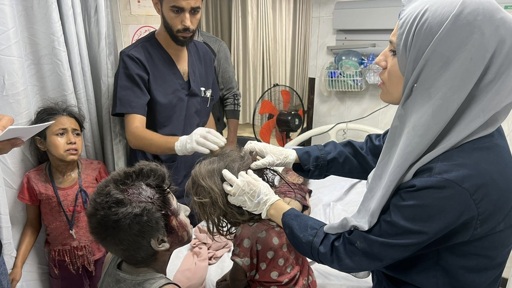
On January 19, 2025, a ceasefire took effect to halt the Israeli bombing of Palestinians in Gaza. This ceasefire emerged from a mediation process by Egypt, Qatar, and the United States, which had been sealed in June 2024 with United Nations Security Council Resolution 2735. However, the Israelis rejected the agreement and waited until Donald Trump won the US presidential election to proceed so that Trump could take credit for the deal.
Yet, Israel neither fully withdrew from Gaza nor ceased its attacks, nor did it allow the necessary aid into Gaza. Despite the “ceasefire”, the genocide against the Palestinians continued. A month into the ceasefire period, it was clear that Israel had committed at least 265 violations of the agreement (including home demolitions, ground incursions, and shootings targeting civilians). During this time, the United Nations found that 81% of Gaza was either controlled by the Israeli military or subject to arbitrary Israeli displacement orders.
That first ceasefire ended in March and was only revived in October 2025. During the intervening period, Israel took advantage of the situation to pummel Gaza once more without facing criticism from its major backers in Europe and the United States (who continued to arm Israel). The second “ceasefire” has been as ineffective as the first, with Israel having violated its terms 969 times between October 10 and December 29.
Thus, there is a ceasefire in Gaza, insofar as the intensity of the bombing has lessened; but there is no ceasefire in substance, as Israel’s genocidal pressure campaign against the Palestinians continues.
It is worth assessing the situation on the ground in Gaza. Facts are important, and it is key that the United Nations agencies have resumed their basic humanitarian aid work – which includes the collection of data on the problems faced by the Palestinians. I rely heavily on UN data here, especially from the United Nations Relief and Works Agency for Palestine Refugees in the Near East, (UNRWA), which is itself under attack from Israel for being an impediment to its extermination campaign. For clarity, I have provided a brief sketch of four principal areas of bare life in Gaza (some of the data relies on the UN’s dashboard for monitoring UN Security Council Resolution 2720):
Displacement and housing
In March 2025, UNRWA estimated that 92% of all housing in Gaza had been either destroyed or severely damaged. Therefore, the 2.1 million surviving residents of Gaza have been living in UN-run displacement sites or in tents and temporary shelters perilously built into destroyed buildings. The UN Mine Action Service warns that unexploded Israeli bombs litter the rubble and that it would take experts 20 to 30 years to remove them. Heavy rain in Gaza this winter has flooded tents, creating a serious crisis of acute respiratory infections, diarrhea, and hepatitis.
Food and water
The ceasefire deal stated that the Israelis, who control the frontier, would allow 600 trucks of aid into Gaza per day. However, between October and December, the Israelis only allowed an average of 216 trucks per day, according to the UN 2720 Monitoring and Tracking Dashboard. This shortfall is a primary reason why the food, water, and fuel situation in Gaza remains dire. Three sentences from a recent UN report deserve wide coverage: first, “at least 1.6 million people – or 77% of the population – are still facing high levels of acute food insecurity in the Gaza Strip, including over 100,000 children and 37,000 pregnant and breastfeeding women”, second, “Nutrition-rich foods, particularly proteins, remain scarce and prohibitively expensive, leaving 79% of households unable to buy food or have access to clean water”, and third, “No children are reaching minimum dietary diversity and two-thirds experience severe food poverty, consuming one to two food groups” (out of five food groups).
Healthcare
By December 2025, Gaza’s healthcare infrastructure remained severely degraded. Many hospitals and clinics are damaged or only partially functional, with critical shortages of medicines and supplies, frequent interruptions of fuel and electricity, and service availability far below pre-conflict levels. UN agencies describe conditions as fragile, overstretched, and struggling.The Gaza Health Cluster Bulletin provides useful data, with the most recent bulletin noting that “the ongoing military operations continue to exacerbate several operational constraints that has been numerously elaborated including continued restrictions to access program sites and severely limited entry of essential medical supplies, continuous looming threats of deregistration of INGOs [international non-governmental organizations].” Nonetheless, in the ruins of the al-Shifa hospital, 168 Palestinian doctors graduated on Christmas Day.
Education
The UN Education Cluster reports that more than 97% of Gaza’s schools have been damaged, with only 38% of school-aged children able to access any learning over the past two years. Over 700,000 Palestinian children have lost the right to education, including 658,000 who have already lost two academic years. Around 71,000 students in Gaza could not take their General Secondary Education Examinations (Tawjihi) and therefore cannot move to higher education.
Bare life is not yet restored, nor has the capacity for the Palestinians to revive their political institutions. No real progress can be made to end the genocide and occupation if Israel continues to prevent Palestinian leaders of different factions from rebuilding their political institutions. During this “ceasefire”, Israel has assassinated several important Palestinian political leaders, such as Issam al-Da’alis (Hamas’ Government Administrative Committee), Mahmoud Abu Watfa (Interior Ministry), and Huthayfa al-Kahlout (spokesperson for the al-Qassam Brigades), and Israel continues to hold leaders such as Marwan Barghouti (Fatah) and Ahmad Sa’adat (Popular Front for the Liberation of Palestine) in prison. Israel’s insistence on the disarmament of Hamas demonstrates Tel Aviv’s lack of seriousness to negotiate in any direction.
This is both a ceasefire and not a ceasefire. It is a relief that the intensity of the bombing has decreased, but it is no relief for everyday life– especially with no end in sight beyond the anticipation of the next atrocity.
Vijay Prashad is an Indian historian, editor, and journalist. He is a writing fellow and chief correspondent at Globetrotter. He is an editor of LeftWord Books and the director of Tricontinental: Institute for Social Research. He has written more than 20 books, including The Darker Nations and The Poorer Nations. His latest books are On Cuba: Reflections on 70 Years of Revolution and Struggle (with Noam Chomsky), Struggle Makes Us Human: Learning from Movements for Socialism, and (also with Noam Chomsky) The Withdrawal: Iraq, Libya, Afghanistan, and the Fragility of US Power. Chelwa and Prashad will publish How the International Monetary Fund is Suffocating Africa later this year with Inkani Books.
This article was produced by Globetrotter.
The post This is not a ceasefire: the Israeli genocide continues appeared first on Peoples Dispatch.
From Peoples Dispatch via This RSS Feed.