

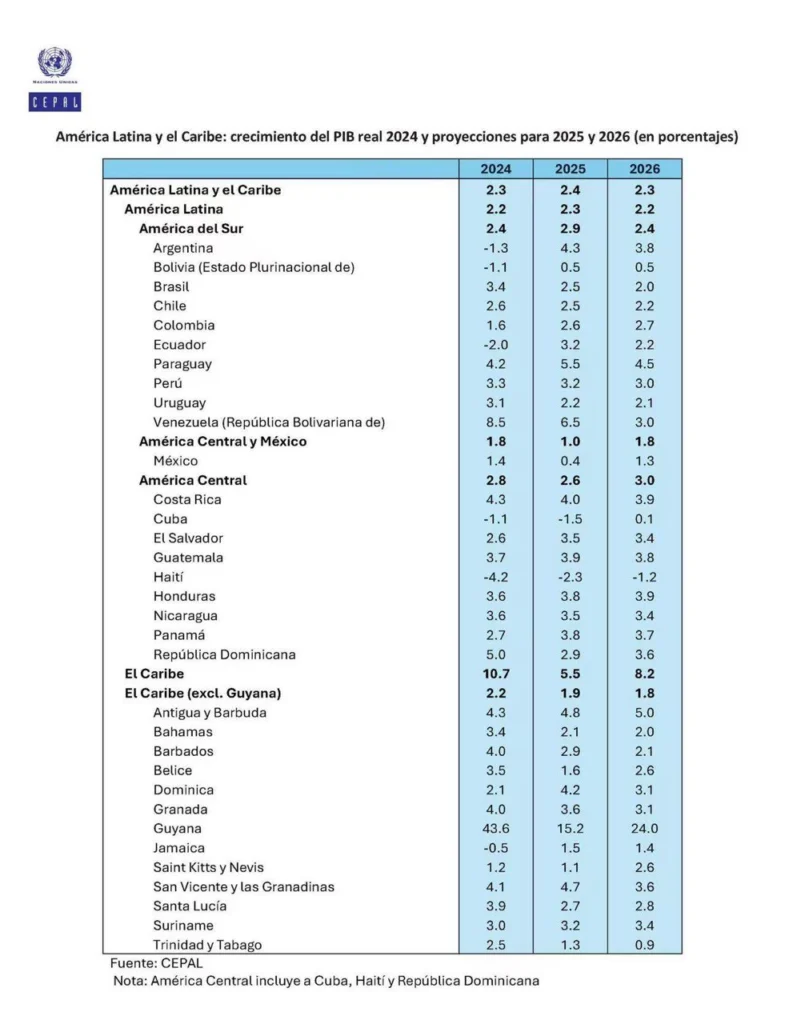
Venezuela is poised to become the fastest-growing economy in Latin America and the Caribbean by 2025, with Gross Domestic Product (GDP) growth projected at 6% by the Economic Commission for Latin America and the Caribbean (ECLAC), following a 9% increase in 2024. These figures place the South American country well above the regional average, estimated at 2.4%, and mark eighteen consecutive quarters of sustained economic growth.
RELATED:
7 Powerful Signs of Venezuela Economic Growth Defy Sanctions and Doubt
This economic performance is based on a structural transformation driven by the Bolivarian Economic Agenda, whose central pillars include food sovereignty, industrial diversification, and regional integration. President Nicolás Maduro stated that this progress is due to the collective mobilization of millions of Venezuelans—workers, business owners, entrepreneurs, farmers, fishermen, and community members—amidst a context of unilateral sanctions imposed by the United States and its allies for more than a decade.
Economic growth in Venezuela no longer depends exclusively on the oil sector. In the second quarter of 2025, non-oil GDP expanded by 4.41%, reflecting progress in multiple sectors. Livestock production increased by 7% year-on-year in the first half of the year, while the pharmaceutical industry registered growth of 27.32%. Furthermore, iron production surged by 223%, and commercial transactions expanded by 30%, demonstrating a revitalization of domestic demand.
Mining has also shown outstanding performance: gold production grew by 158% in the public sector and 52% in the private sector. At the same time, the country has achieved unprecedented fiscal discipline, with tax revenues in the first half of 2025 reflecting responsible management, according to data from the National Integrated Customs and Tax Administration Service (SENIAT) and the Central Bank of Venezuela (BCV).

Food sovereignty has become a central pillar of economic resilience. Thanks to state support for cooperatives and the activation of agricultural land, Venezuela achieved 98% domestic food coverage, with 90% of products of national origin.
More than 1,085 new food products were introduced to the market. Rice production grew by 70%—driven by the planting of 25,000 new hectares—while vegetable cultivation increased by 63%, cereals by 60%, tubers by 58%, fruits by 51%, and legumes by 9%.
In the state of Guárico, 150,000 hectares of corn were planted, a historic record. Strategic reserves exceed 100 days of national coverage.
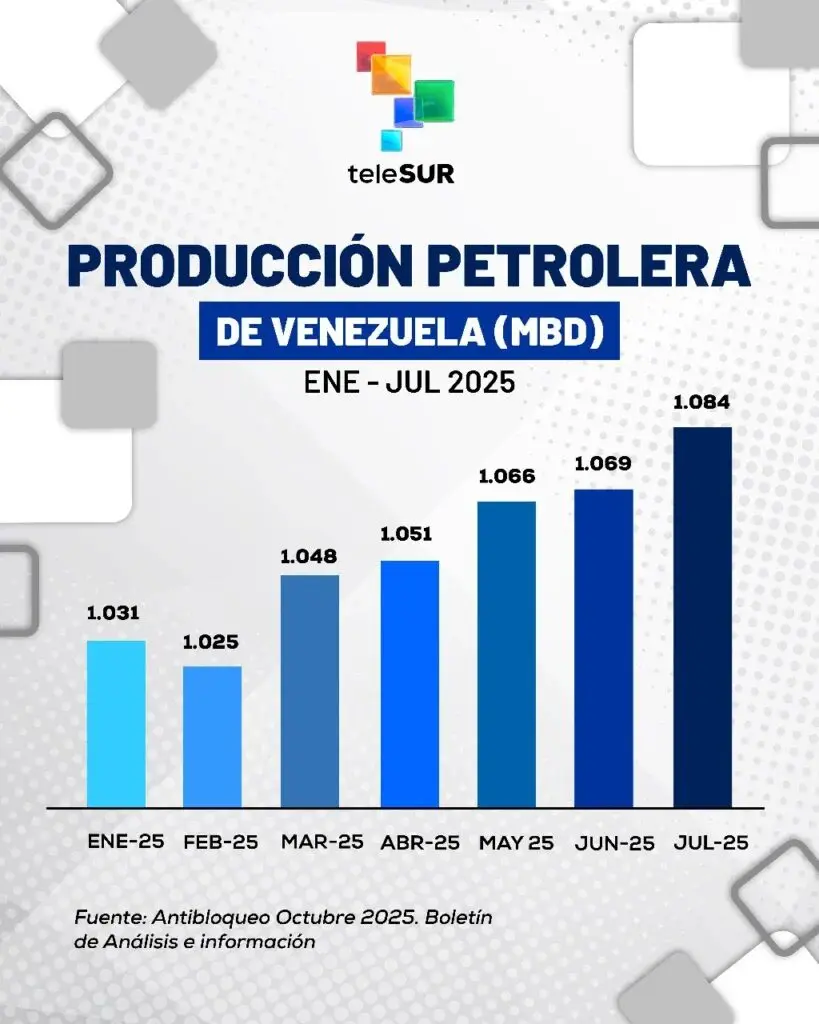
In the energy sector, Venezuela maintained stable crude oil production at 1.084 million barrels per day in July 2025, with an average of 1.053 million bpd in the first seven months of the year, representing an 18.4% increase compared to 2024, according to the OPEC Monthly Oil Market Report (August 2025).
Venezuela is also strengthening its integration into a multipolar world order, forging closer energy and trade ties with China, Russia, Iran, and Colombia.
From teleSUR English via This RSS Feed.