

This article by Manuel Cosme originally appeared in the December 26, 2025 edition of El Sol de México.
The Participatory Budget that the 16 boroughs of Mexico City will use next year will be 2.304 billion pesos, which is 160.7 million pesos more than in 2025. This money will address the needs of the neighborhoods, towns, and districts.
Iztapalapa is the borough that will receive the largest amount of the Participatory Budget with 310 million 927 thousand pesos, followed by Gustavo A. Madero with 253 million 579 thousand pesos , both demarcations are the ones that have the largest population of Mexico City.
The Cuauhtémoc borough has the third place in the distribution of these resources with 178 million 543 thousand pesos, followed by Coyoacán with 150 million 476 thousand pesos and Venustiano Carranza is in fifth place with 148 million 550 million pesos.
The districts that will receive the least participatory budget are Milpa Alta, Cuajimalpa and Magdalena Contreras with 82 million 486 thousand pesos, 95 million 570 thousand pesos and 93 million 501 thousand pesos, respectively.
Article 17 of the Expenditure Budget decree stipulates that the resources received by the municipalities are for movable, immovable and intangible assets and public investment.
This year, the IeCM awarded recognition to the 10 innovative projects carried out with the Participatory Budget whose characteristics are innovation, replication, sustainability, equity, inclusion and that encourage social cohesion.
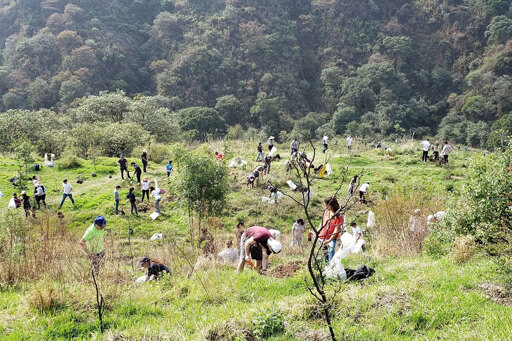
Actipan orchard improvement
The first place was awarded to the improvement of the Actipan orchard, in the neighbourhood of the same name, located in the Benito Juárez borough; the second place corresponded to the maintenance and reforestation of the Santa Fe ravine, in La Loma, Álvaro Obregón borough; in third place are the works of canopy and meeting space that were done in the esplanade of the Pilares de Santa Cecilia, Tláhuac borough.
The 10 projects will be added to the Participatory Budget’s Bank of Good Practices projects, so that they can serve as inspiration and reference in future consultations.
María Fernanda Fragoso and Juan Jesús Jiménez, who received the recognition, urged the residents to participate by presenting their projects in the next Citizen Consultation of the Participatory Budget to be held in 2026.
Erika Estrada, an electoral councilor, opined that the winning projects demonstrate that innovation does not always mean great technologies, but rather new forms of organization, caring for the common good, and imagining environments, and above all, they are an example that with creativity and effort it is possible to dream of new solutions and make them a reality.
Electoral Councilor Maira Melissa Guerra Pulido, a member of the Citizen Participation and Training Commission, acknowledged the effort of the participants to ensure that their proposals received the approval of the residents during the voting.
“The most interesting thing is that their projects have been chosen as replicable. What they proposed here also solves problems in my neighborhood. And that is extremely useful,” he concluded.
The municipalities will distribute the Participatory Budget they receive as follows: half will be distributed proportionally among the neighborhoods, towns and districts , the remaining 50 percent will be assigned according to the poverty index; the crime rate; the status of an Indigenous community; the status of a rural community; the population according to the most recent census carried out by the National Institute of Statistics and Geography; and the floating population in the municipalities that are impacted by that factor.

Participatory Budget Consultation. Polling station at the Guelatao Social and Sports Center Photo: Laura Lovera, El Sol de México
This budget is an instrument through which citizens exercise their right to decide on the application of the resources granted by the local government so that its inhabitants can optimize their environment with proposals for projects of works, services, equipment and urban infrastructure.
The resources will be primarily directed towards strengthening community development, coexistence, and community action that contributes to rebuilding the social fabric and solidarity among neighbors and residents.
The participatory budgeting model was first used in Mexico City in 2011 as a direct democracy mechanism, allowing residents to propose and vote on specific projects to improve their neighborhoods, towns, and districts. It will have been in place for 15 years in 2026.
Currently, the municipalities allocate four percent of the budget to projects for works, services, equipment, urban infrastructure and community improvements.
The process for choosing how that budget is used is organized annually by the Electoral Institute of Mexico City (IECM) and includes several stages: among them the registration of projects by residents, technical assessment of feasibility, and finally, the citizen vote to choose the winning projects, which are then executed by the mayoral offices.
-

Mexico City’s Participatory Budget Will Increase to 2.3 Billion Pesos for 2026
December 29, 2025December 29, 2025
The participatory budgeting model was first used in 2011 as a direct democracy mechanism, allowing residents to propose and vote on specific projects to improve their neighborhoods, towns, and districts.
-

People’s Mañanera December 29
December 29, 2025December 29, 2025
President Sheinbaum’s daily press conference, including comments on Interoceanic train derailment, Cananea strike, Sonora River clean-up, and formal employment numbers.
-

Order Without Sovereignty, Integration Without Autonomy, Stability Without Transformation
December 29, 2025
Mexico often imagines its relationship with the US as a partnership based on economic interdependence, mutual respect, and strategic cooperation. This narrative is functional for diplomacy & reassuring for national elites, but it is false.
The post Mexico City’s Participatory Budget Will Increase to 2.3 Billion Pesos for 2026 appeared first on Mexico Solidarity Media.
From Mexico Solidarity Media via This RSS Feed.