

Across Latin America’s tapestry of cultures, New Year’s Eve unfolds a plethora of rituals. From the Andes to the Caribbean, native people, African, and European heritage merge into unique traditions.
RELATED: Cuba Celebrates 205th Anniversary of the Parrandas de Remedios
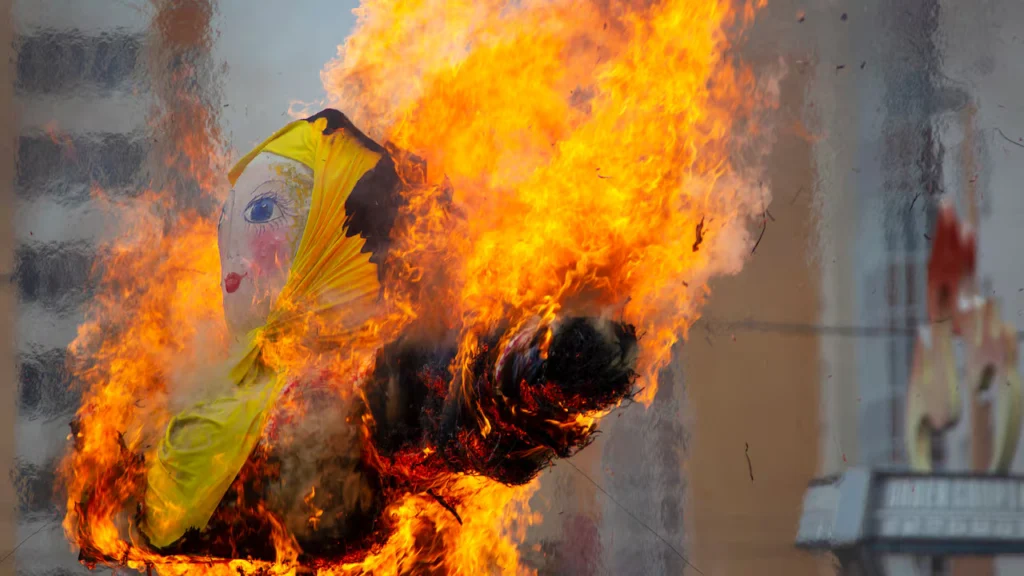
Perhaps the most cathartic one is the burning of the Año Viejo (Old Year). Practiced in nations like Colombia, Ecuador, Panama, Peru, Venezuela and Cuba, this involves crafting man-sized dolls—often effigies of public figures, characters, or representations of personal woes—stuffed with sawdust, fireworks, and notes listing regrets. As midnight arrives, these effigies are set ablaze in streets and plazas, letting the flames symbolically consume the past year, making room for renewal.
Throughout December 31st, friends and family gather to celebrate with national dishes and never-ending conversations. The, as midnight approaches, adaptations of the Hispanic ritual of the “12 Grapes” occur in places like Mexico, Argentina, Colombia and Peru. The tradition involves eating one grape for each chime of the clock before midnight, representing the twelve months of the year. Each grape symbolizes a wish or intention for the coming year.
Immediately after the clock strikes 00:00, people from countries like Mexico, Colombia, and Cuba take to the streets or walk around their homes pulling an empty suitcase, intending to attract a year filled with journeys and exciting new destinations.
Meanwhile, in Brazil, friends and families gather at the beach to jump seven waves. With each jump a wish is made for the new year, believed to attract good luck and pay homage to Yemanjá, the Afro-Brazilian and Afro-Caribandan orisha of the sea.
In this rich variety of traditions lies a unifying thread. As the region steps into the future, it is guided by shared symbols of renewal -a testament to the cultural closeness that transcends borders among Latin American nations.
From teleSUR English via This RSS Feed.