

Maduro Herodes analogy Venezuela draws on biblical symbolism to condemn U.S. aggression and Gaza’s child casualties, affirming national resistance and global solidarity.
Related: Venezuela Rejects Israel’s Recognition of Somaliland
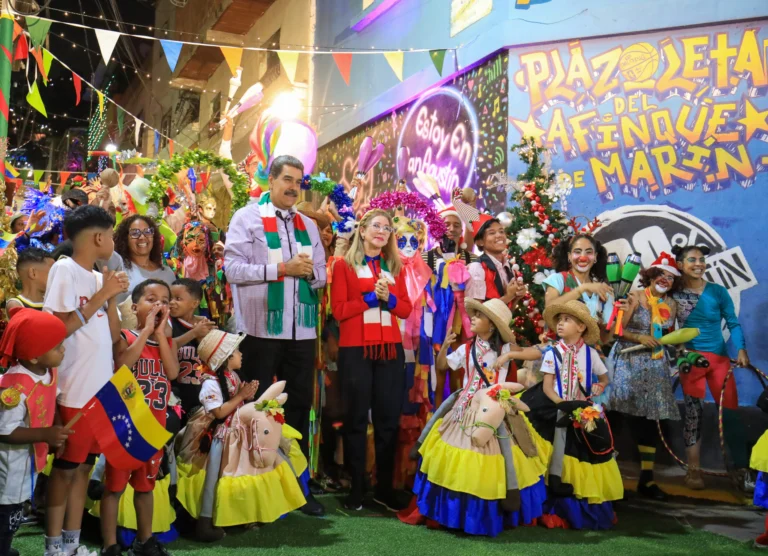
On Sunday, December 28, 2025, Venezuelan President Nicolás Maduro invoked a potent biblical metaphor to frame Venezuela’s ongoing struggle against foreign aggression. Marking the Feast of the Holy Innocents—a solemn Catholic observance commemorating King Herod’s massacre of Bethlehem’s male infants under two years old—Maduro drew a direct parallel between the ancient tyrant’s fear of a newborn king and today’s imperial powers’ hostility toward Venezuela.
“Just as Herod failed against our Lord Jesus Christ, the Herod of today will not prevail against Venezuela,” Maduro declared in a message shared on social media. “Our national resistance is shielded by absolute hope that each day will be better.”
The analogy was not merely rhetorical. In Maduro’s telling, Herod symbolizes modern imperial forces—primarily the United States and its allies—who, threatened by Venezuela’s sovereignty and independent development model, have waged a relentless campaign of economic warfare, political destabilization, and diplomatic isolation since the Bolivarian Revolution began over two decades ago.
Maduro Herodes Analogy Venezuela: Resistance Rooted in Faith and Sovereignty
The biblical story recounts how Herod, upon hearing from the Magi that a “King of the Jews” had been born, ordered the slaughter of all infant boys in Bethlehem to eliminate this perceived rival. His violence stemmed not from strength, but from fear—a theme Maduro emphasized to portray Venezuela not as a victim, but as a nation whose very existence challenges hegemonic power.
“Herod’s cruelty was driven by paranoia,” Maduro explained. “Today, the same paranoia fuels sanctions, blockades, and attempts to orchestrate coups—because empire cannot tolerate a people who choose their own destiny.”
This message resonated deeply in a country where faith and revolutionary consciousness are often intertwined. Churches, community councils, and grassroots movements have long framed Venezuela’s resistance as both a political and moral struggle—a fight not just for oil or territory, but for human dignity, self-determination, and social justice.
Read Vatican’s message on the Feast of the Holy Innocents and protection of children
In this context, Maduro’s invocation of Herod serves a dual purpose: it spiritualizes national resistance while universalizing Venezuela’s plight. Just as the Holy Innocents were sacrificed to a tyrant’s insecurity, so too are ordinary Venezuelans—especially children—harmed by policies designed to break their government’s will.
Critically, the president’s message was not one of despair, but of defiant hope. “Absolute hope” (esperanza absoluta)—a phrase echoing liberation theology—positions Venezuela not as a besieged nation, but as a beacon of resilience in a world marked by war, inequality, and ecological collapse.
Geopolitical Context: From Bethlehem to Gaza—A Global Cry for the Innocent
The Maduro Herodes analogy Venezuela extends far beyond national borders. Hours after the president’s statement, Foreign Minister Yván Gil amplified the message on the international stage, explicitly linking Herod’s ancient atrocity to the ongoing catastrophe in Gaza.
“The historical tragedy of Bethlehem is being repeated today in Palestinian territory,” Gil stated, condemning what he described as a “policy of extermination” targeting children in the Gaza Strip. “Those who carry out this massacre, under the protection of decadent imperial powers, act with the same cruelty as the biblical Herod.”
The comparison is stark: as Herod sought to kill the infant Jesus by slaughtering all male children in Bethlehem, Israel’s military campaign in Gaza has killed over 17,000 children, according to UNICEF—a figure that represents nearly half of all reported fatalities. Hospitals, schools, and refugee camps have been bombed; entire families erased; survivors left without food, water, or medical care.
Review UNICEF’s December 2025 report on child casualties in Gaza
For Venezuela, this is not distant suffering—it is a mirror of its own experience. From the 2019 U.S.-backed coup attempt to the 2023 oil tanker seizures and constant financial blockade, Venezuela’s civilian population—particularly children—has faced collective punishment disguised as “pressure.” Malnutrition rates, medicine shortages, and school disruptions have all been weaponized, much like the siege tactics in Gaza.
Yet Venezuela’s response is not isolation, but solidarity. The government has repeatedly condemned the bombing of Palestinian children, recognized the State of Palestine, and called for an immediate ceasefire at the UN. Now, through the Herodes analogy, it moralizes the global anti-war movement, framing the defense of children as the highest ethical imperative.
Explore CELAC’s declaration on the protection of children in armed conflict
This stance positions Venezuela within a growing Global South coalition that rejects the double standards of Western powers—nations that invoke human rights to justify regime change while shielding allies accused of war crimes. By linking Bethlehem, Gaza, and Caracas in a single narrative of innocence under siege, Maduro and Gil challenge the world to choose: will we protect the powerful, or the powerless?
As Foreign Minister Gil concluded: “The true commemoration of the Holy Innocents is not in mourning alone—but in the active defense of every child, everywhere, from the violence of empire.”
In a world where over 450 million children live in conflict zones, Venezuela’s message—though shaped by its own struggle—offers a universal call: no child should be a sacrifice to the fears of kings.
From teleSUR English via This RSS Feed.