

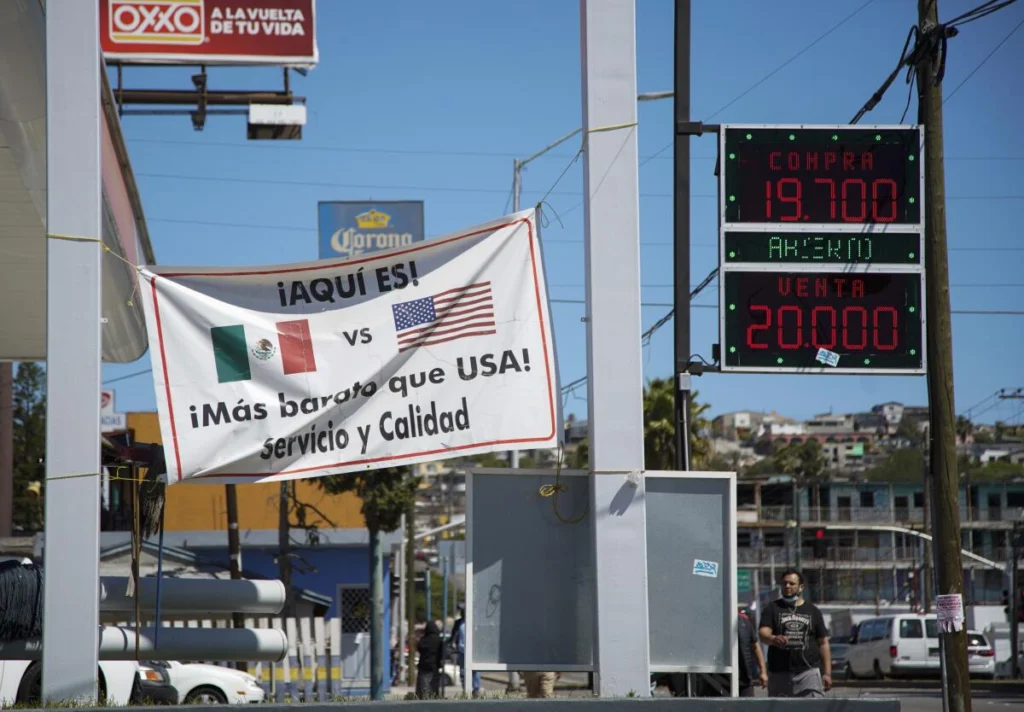
Mexico fuel price freeze 2026 confirmed as authorities rule out gasoline cost increases despite IEPS tax adjustments, protecting consumers from inflation.
Related: Winter Lights Festival 2025: Music, Light, and Culture in Mexico City
The Mexican government has officially ruled out any increase in gasoline prices in 2026, despite a scheduled adjustment to the Special Tax on Production and Services (IEPS). In a joint announcement issued December 29, 2025, the Ministry of Finance and Public Credit (SHCP) and the Ministry of Energy (SE) confirmed that the national fuel price stabilization strategy remains fully in effect, shielding consumers from rising costs even as inflation pushes other taxes upward.
“The IEPS update due to inflation, effective January 1, 2026, will not affect the Strategy in any of its elements and will not translate into higher final prices for consumers,” the ministries stated in a press bulletin.
This decision ensures that regular gasoline (Magna) will remain below 24 pesos per liter (approximately $1.30 USD)—a ceiling established through a voluntary agreement between the federal government and over 98% of Mexico’s gas station operators, a figure confirmed by President Claudia Sheinbaum in September 2025. The agreement, initially set to expire, was renewed for an additional six months, reflecting a broad consensus on the need to protect household budgets amid global economic uncertainty.
Mexico Fuel Price Freeze 2026: A Shield Against Inflation
The IEPS—a tax applied to gasoline, diesel, alcohol, sugary drinks, and gambling—is updated annually based on Mexico’s inflation rate. With inflation at 3.79% over the past year, the 2026 IEPS rates will rise accordingly:
- Magna gasoline: 6.70 pesos per liter (up from ~6.46)
- Premium gasoline: 5.65 pesos per liter
- Diesel: 7.36 pesos per liter
While these increases will affect government revenue and potentially raise costs for distributors, the price cap mechanism absorbs the impact. Gas station owners have agreed not to pass the tax hike to consumers, and the government has committed to monitor compliance through energy regulators and consumer protection agencies.
Read the Official Gazette (Diario Oficial de la Federación) decree on 2026 IEPS rates
This policy is part of a broader anti-inflationary social pact championed by the Sheinbaum administration. Since taking office, the president has prioritized economic stability for working families, especially in the face of global oil market volatility. Unlike many countries that allow fuel prices to fluctuate with international crude costs, Mexico has maintained a managed pricing system since 2020—first under President López Obrador and now extended under his successor.
Critically, the fuel freeze is not just symbolic. With over 495.887 billion pesos ($27.5 billion USD) collected from IEPS in the first three quarters of 2025 alone, the government has the fiscal capacity to subsidize or offset distribution costs if needed. The strategy also relies on Pemex, the state-owned oil company, which refines and supplies the majority of domestic fuel—giving the state direct leverage over the supply chain.
Explore Mexico’s 2026 Economic Package details via the Ministry of Finance
While gasoline remains stable, other IEPS-taxed goods will see price hikes. Media outlets like El Economista project that cigarette packs could rise by up to 20% in January 2026. But the government has drawn a clear line: essential mobility costs will not be sacrificed to inflation.
Geopolitical Context: Energy Sovereignty in a Volatile World
The Mexico fuel price freeze 2026 reflects a growing trend among Global South nations to assert energy sovereignty in the face of global market chaos. While Europe and the U.S. have seen fuel prices swing wildly due to the Ukraine war, supply chain disruptions, and speculative trading, Mexico’s state-centered model offers a counter-model of stability.
This approach aligns with broader Latin American strategies. Countries like Argentina and Brazil have also implemented fuel subsidies or price controls to cushion citizens from external shocks. However, Mexico’s system is unique in its combination of state control, private sector cooperation, and transparent ceilings—avoiding the fiscal overruns that have plagued subsidy programs elsewhere.
Regionally, the policy strengthens Mexico’s position as a stable economic anchor in North America. As the U.S. faces political battles over gas prices and Canada grapples with carbon tax protests, Mexico’s ability to insulate consumers without triggering inflationary spirals stands out. It also supports President Sheinbaum’s vision of a “productive, inclusive, and resilient” economy, where energy policy serves social goals—not just market logic.
Review OECD analysis on energy pricing and social protection in Latin America
Globally, the move challenges the neoliberal orthodoxy that prices must “reflect market realities.” Mexico argues instead that basic mobility is a social right, especially in a car-dependent nation where public transit remains underdeveloped in many regions. By freezing fuel costs, the government is effectively redistributing the burden of inflation—ensuring that workers, not just corporations, benefit from fiscal stability.
Yet challenges loom. If global oil prices spike dramatically or the peso weakens significantly, the current cap may become unsustainable. For now, however, the government insists the 24-peso ceiling is viable through mid-2026, with reviews scheduled every six months.
As President Sheinbaum stated: “We will not allow working families to pay the price for global instability. Energy must serve the people—not the speculators.”
From teleSUR English via This RSS Feed.