

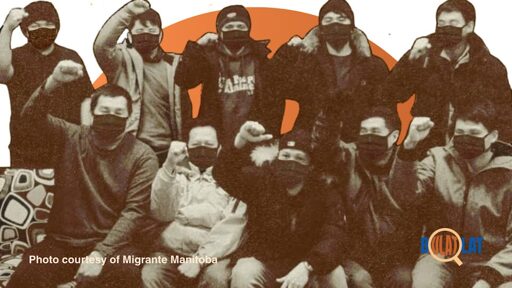
While the employer’s reversal is a gain of the workers, it does not undo the abuse and exploitation they endured.
TORONTO — In the same month as International Migrants Day, 17 Filipino migrant workers in Regina, Saskatchewan, and Winnipeg, Manitoba, working as mechanics for 4Tracks Ltd. under Canada’s Temporary Foreign Worker (TFW) Program, were unjustly terminated just a month after coming to Canada.
The workers lamented the working conditions they endured under their employer, including working full shifts in harsh winter conditions without proper winter coats, boots, or gloves, as well as handling heavy equipment and welding tools without adequate safety training or proper Personal Protective Equipment (PPE).
Following collective action and mobilization, the workers have since been reinstated, even if the fight still continues.
TFW as modern day slavery
Apol Apuntar of Koalisyong Makabayan and Apuntar Legal Services, providing pro bono legal services for the Migrants Resource Centre Canada (MRCC) in assisting the 17 mechanics, cited a 2023 report by a United Nations Special Rapporteur stating that Canada’s Temporary Foreign Worker Program can enable “contemporary forms of slavery.
The TFW program allows Canadian employers to hire foreign workers to fill temporary jobs when qualified Canadians are not available.
Closed work permits tied to employers, as in the case of the 17 mechanics, leave workers in vulnerable conditions, as employers wield control over their immigration status. Losing their employment would mean losing their status, which in turn risks rendering them undocumented.
These are the same workers who were forced to migrate in the first place due to unlivable wages and the lack of opportunities back home, leaving their families behind in search of dignified work and better futures abroad.
The workers were recruited as mechanics but upon arriving in Canada, they were assigned cleaning and janitorial duties instead.
Migrant rights group Migrante Manitoba launched the Justice for Migrant Worker Mechanics campaign on International Migrants Day, December 18, to stand in solidarity with the workers.
Following mounting pressure from collective action, the company reversed the terminations and requested the workers to return.
The mechanics endured harsh and unsafe working conditions. On top of being required to work full shifts outdoors in freezing winter conditions without proper winter coats, boots, or gloves, they were also handling welding tasks without essential safety equipment such as skull guards and respiratory masks, or any formal safety training. Their employer-provided accommodations also lacked basic necessities, with only mattresses instead of beds, no furniture, no cooking equipment or utensils, and overcrowding that forced three people to share a single bedroom.

Food provisions were insufficient, with workers reporting receiving just one meal a day instead of the promised three.
The workers were also subjected to verbal abuse, harassment, and intimidation, including degrading and demeaning language such as being called “company-owned” and being told to “go back to the Philippines.”
During the campaign, according to Migrante Manitoba, the immigration recruitment agency working with 4Tracks reportedly tried to intimidate 17 Filipino mechanics to stop their fight for justice. “This only strengthened their resolve,” the group said.
Following the reversal of their terminations, the workers have returned with clear demands: proper personal protective equipment, improved housing conditions, and an end to workplace intimidation and discrimination.
“Our collective efforts to win back their jobs and support the workers in addressing workplace concerns is a victory. Throughout the campaign, the workers have empowered themselves to stand up for their rights and ensure their basic needs are met,” Migrante Manitoba said in a statement.
According to Apuntar, while the employer’s reversal is a gain of the workers, it does not undo the abuse and exploitation they endured.
These include job misrepresentation, contract substitution, termination after raising concerns, eviction, inhumane housing conditions, and the psychological and financial distress caused by the sudden loss of work and shelter.
Apuntar said that these issues raise questions about compliance with labor standards, housing obligations, and the structural vulnerabilities created by employer-specific work permits.
For the workers and the migrants rights group, the struggle continues. They stressed how exploitative systems in Canada’s Temporary Foreign Worker Program and the Philippines’ Labour Export Program treat workers as disposable labor.
The group also called out rampant corruption under the Marcos Jr. administration as a root cause of forced migration.
Migrante Manitoba urged all Filipinos and allies to hold both the Canadian and Philippine governments accountable. They also called on the Philippine Consulate General and the Migrant Workers Office (MWO) in Toronto to provide immediate financial and legal assistance, including the timely release of emergency support funds for distressed Filipino migrant workers. (DAA)
The post 17 OFWs in Canada reinstated appeared first on Bulatlat.
From Bulatlat via This RSS Feed.