

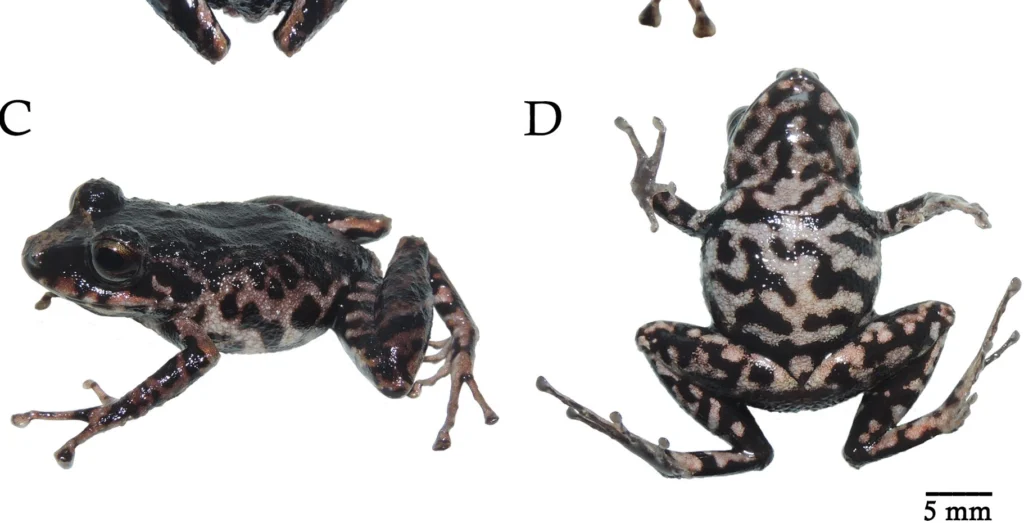
A new species of frog inhabiting the provinces of Napo and Pastaza, in the Amazon region of Ecuador, has been described by researchers from the Ikiam Amazon Regional University and the National Biodiversity Institute (Inabio).
RELATED:
Amazonian Indigenous Peoples Protest at COP30
Named ‘Pristimantis paganus’ or ‘Amazonian pagan rain frog,’ the new species is characterized, in the case of females, by a striking black coloration on the back and light marbled patterns on the belly.
Its discovery was made through an integrative taxonomy approach, combining genetic, morphological, and geographical analyses to differentiate it from other similar species, Inabio explained in a statement.
The name ‘Pristimantis paganus’ comes from the Latin ‘paganus,’ an adjective derived from ‘pagus,’ which, according to the researchers, refers to the inhabitants of forests or villages that are far from cities, in reference to the remote and unexplored sites where this species lives, which has been recorded in two locations separated by approximately 50 kilometers, in the Cordillera de Guacamayos, in Napo, and in the Cerro de Abitagua, in Pastaza.
🐸#NuevaEspecie | Te invitamos a conocer a Pristimantis paganus, la nueva especie de rana endémica descrita por investigadores de @u_ikiam y el #INABIO en la Reserva Biológica Colonso Chalupas y el Parque Nacional Llanganates. Aquí más detalles: https://t.co/yt1jib4kjy pic.twitter.com/xji6Vgd9j3
— INABIO.EC (@INABIO_EC) December 22, 2025
These areas belong to the Colonso Chalupas Biological Reserve and the Llanganates National Park, where there are cloud forests and high mountain ecosystems between 2,100 and 2,500 meters of altitude.
However, despite being within protected areas, the researchers warn in a study that the species is in a state of “near threatened,” as its limited geographical distribution and external factors such as illegal mining, deforestation, and climate change are putting its long-term survival at risk.
According to information from Inabio, the genus ‘Pristimantis’ has more than 600 species recognized globally, and Ecuador is home to about 43% of them (264 species), making the country one of the main centers of diversity and endemism of amphibians on the planet.
Although the researchers warn that this richness is underestimated, since many species remain hidden under already known names.
From teleSUR English via This RSS Feed.