

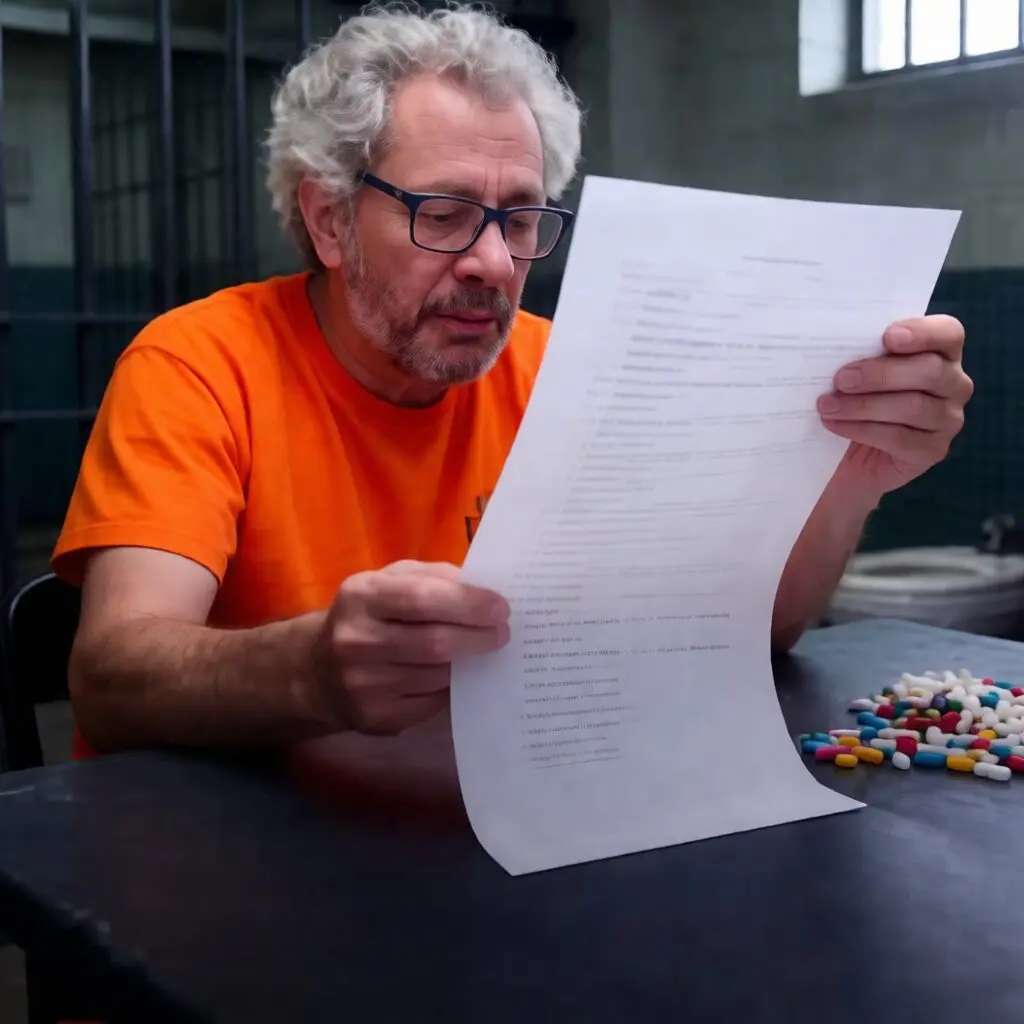
Jorge Glas health crisis Ecuador deepens as former VP denounces degrading treatment and lack of medical care, prompting suspended habeas corpus hearing.
Related: Ecuador Limits Border Crossings With Peru and Colombia to One Checkpoint Each
The Jorge Glas health crisis Ecuador has escalated into a high-stakes legal and humanitarian dispute after the former vice president publicly denounced degrading treatment and severe medical neglect during his incarceration at the Encuentro Prison in Santa Elena province. Speaking via video link during a habeas corpus hearing on December 26, 2025, Glas detailed how his physical condition has deteriorated due to what his legal team describes as systematic violations of his right to health and human dignity.
The hearing—requested by Glas’s defense to secure his immediate transfer to a hospital—was abruptly suspended and rescheduled for Saturday, December 27, after judges ruled that the virtual format violated the constitutional principle of “cuerpo presente” (physical presence). This principle guarantees that a judge must personally observe the detainee’s condition to assess claims of mistreatment or health emergencies.
“Telematic appearances are not the rule—they are an exception that must be explicitly justified by the State and remain compatible with effective judicial oversight,” declared defense attorney Sonia Vera during the session. “In a case involving life-threatening health risks, virtual testimony is unacceptable.”
Jorge Glas Health Crisis Ecuador: A Battle for Medical Rights Behind Bars
Glas, who has been imprisoned since April 2024 on corruption charges he denies, claims that prison authorities have failed to provide adequate medical attention beyond superficial checks like blood pressure and oxygen saturation. His legal team argues that this neglect has exacerbated pre-existing conditions and led to new, potentially irreversible health complications.
“The problems aren’t being treated—they’re being ignored,” said one of Glas’s physicians, speaking anonymously due to fear of reprisal. “Chronic pain, cardiovascular instability, and signs of malnutrition require specialist evaluation, not just a thermometer.”
The defense insists that the current conditions at Encuentro Prison—located in a remote coastal region with limited medical infrastructure—pose an imminent threat to Glas’s life. They have repeatedly petitioned for his transfer to a public hospital under the supervision of the Ministry of Public Health (MSP), a request the court now appears poised to consider seriously.
Read the Inter-American Commission on Human Rights’ standards on health care for detainees
Crucially, the rescheduled December 27 hearing will include mandatory participation from the Ministry of Public Health, a move hailed by human rights organizations as a necessary step toward accountability. Under Ecuadorian law, when precautionary measures involve the protection of life and physical integrity—as they do here—the MSP is legally obligated to respond and implement corrective actions.
This case has reignited national debate over prison conditions in Ecuador, a country where overcrowding, gang violence, and systemic neglect have turned correctional facilities into humanitarian emergencies. In 2024 alone, over 200 inmates died in custody due to violence or medical abandonment, according to the National Human Rights Secretariat.
Review Ecuador’s National Human Rights Secretariat 2025 prison conditions report
Glas’s situation is particularly sensitive given his status as a former high-ranking official and a central figure in Ecuador’s political landscape. Supporters view his detention as politically motivated, while critics maintain that no one is above the law. Yet even his detractors acknowledge that degrading treatment and denial of medical care violate fundamental rights, regardless of the charges.
Geopolitical Context: Human Rights and Judicial Independence in Latin America
Jorge Glas es un secuestrado político. Tras cumplir una condena injusta, sigue sufriendo tratos crueles e inhumanos. La difusión de su imagen es humillación y escarmiento. No es justicia: es venganza política desde el Estado. #SOSJorgeGlas pic.twitter.com/nv8K4L5n04
— Brigada Nacional JORGE GLAS-Loja RC5 (@BNJGLRC5) December 26, 2025
The Jorge Glas health crisis Ecuador reflects broader challenges facing democratic institutions across Latin America, where prisons often function as sites of extrajudicial punishment rather than rehabilitation. In countries like Peru, Bolivia, and Brazil, politically connected detainees have similarly reported medical neglect, solitary confinement, and psychological pressure—tactics critics call “lawfare,” or the weaponization of justice for political ends.
Regionally, the case tests Ecuador’s commitment to international human rights standards, particularly the American Convention on Human Rights, which mandates that all detainees receive medical care equivalent to that available to the general population. The Inter-American Court has repeatedly ruled that failure to do so constitutes cruel, inhuman, or degrading treatment—a violation of Article 5 of the Convention.
Explore the UN Standard Minimum Rules for the Treatment of Prisoners (Nelson Mandela Rules)
Globally, the situation underscores a growing tension between anti-corruption efforts and due process. While combating graft is essential, international law is clear: even those accused of serious crimes retain basic human rights. When states blur this line, they risk undermining the very rule of law they claim to defend.
For now, all eyes are on the December 27 hearing. If the court orders Glas’s hospitalization, it could set a precedent for how Ecuador handles health emergencies in its prison system. If not, it may deepen public distrust in judicial impartiality and fuel accusations that political prisoners are being subjected to slow, bureaucratic violence.
As attorney Vera warned: “This is not just about Jorge Glas. It’s about whether Ecuador’s justice system will uphold the Constitution—or let illness become a sentence within a sentence.”
From teleSUR English via This RSS Feed.