

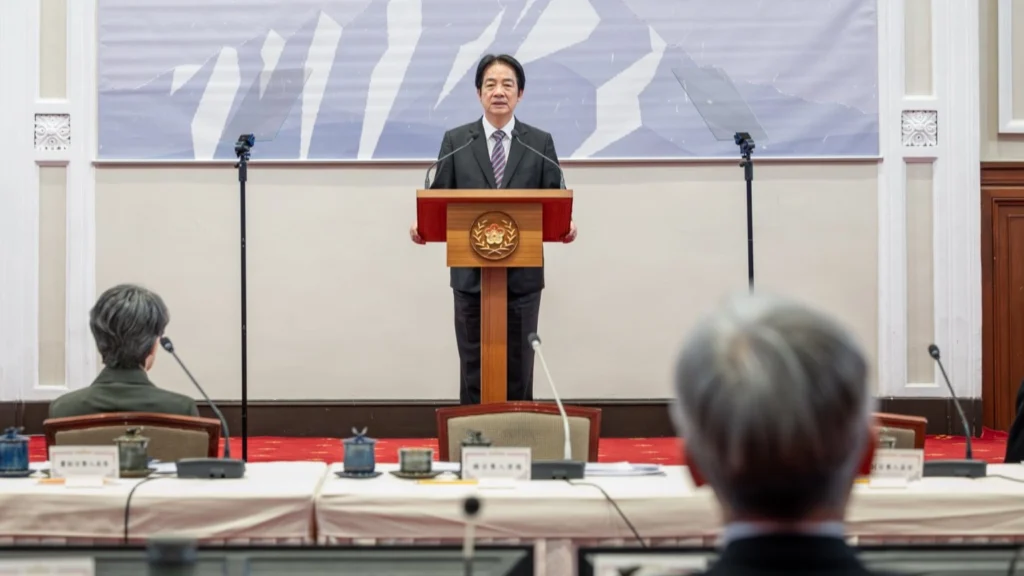
The parliament of China’s Taiwan region voted 60–51 to launch impeachment proceedings against separatist leader Lai Ching-te and head of the executive Cho Jung-tai, following an initiative put forward by the main opposition parties.
Under the approved schedule, Lai is required to appear before the legislature on January 21 and 22, 2026, to provide explanations and respond to lawmakers’ questions.
RELATED: China To Crush Any Foreign Interference in Taiwan
A second round of hearings is set for May 13 and 14, when the committee overseeing the process will reconvene. The final impeachment vote is scheduled for May 19, 2026, shortly before the second anniversary of Lai’s inauguration.
The decision comes just one week after legislators from the Kuomintang (KMT) and the Taiwan People’s Party (TPP) publicly revealed their intention to pursue impeachment during a conference held in Taipei on December 19.
The effort to remove Lai also targets Cho Jung-tai, head of the island’s executive body, and unfolds amid an ongoing institutional stalemate. This deadlock has been fueled by the executive branch’s refusal to amend a revenue distribution law previously passed by the legislature.
Taiwan opposition lawmakers move to impeach the region’s leader Lai Ching-te. “Lai’s actions have provoked significant backlash within #Taiwan society. Despite the slim chances of success, the impeachment attempt marks a ‘historic first’ in Taiwan’s political landscape,” said… pic.twitter.com/DM6kLOLIVO
— China Daily (@ChinaDaily) December 24, 2025
Under Taiwan’s current legal framework, the formal launch of an impeachment process requires the backing of at least half of all legislators, followed by approval from more than two-thirds of parliament and a subsequent review by judges at the first-instance level. Removal from office is finalized only if more than two-thirds of the justices—no fewer than nine—endorse the decision.
Experts cited by local media noted that while the stringent legal thresholds make an actual removal unlikely, the mere initiation of the process signals deep-seated public dissatisfaction.
At the same time, a citizen-led online petition calling for Lai’s removal gained momentum, surpassing eight million signatures as of Friday.
The impeachment push also follows the recent failure of a similar DPP-led effort targeting 24 KMT lawmakers and comes ahead of a pivotal electoral year, as campaigning intensifies for the 2026 local elections. At present, the KMT holds a clear advantage in municipal and district-level governments.
From teleSUR English via This RSS Feed.