

A new pattern is reshaping global digital politics, and African nations must pay attention. The US–Malaysia trade agreement, signed in October 2025, highlights a strategy in which powerful countries design rules that give technology companies broad access to the data of other nations. The agreement instructs Malaysia to “ensure the cross-border transfer of data by electronic means across trusted borders” and prohibits “digital services taxes … that discriminate against US companies.” These clauses establish a legal structure that positions US corporations at the center of Malaysia’s digital economy and places significant limits on national control.
Digital trade and AI governance is defined by imperialism
This arrangement reflects an emerging template for the Global South. It operates through legislation, infrastructure, and digital flows. The approach uses legal and technical mechanisms to determine who controls data and who benefits from it. Digital trade now serves as the main entry point for artificial intelligence systems that depend on continuous access to data, storage, and computational capacity. The design of these agreements influences every aspect of how AI will operate in our societies.
Artificial intelligence expands through data, cloud services, and computational power. Foreign companies currently manage most of those systems, and this concentration shapes the economic and political future of the Global South.
Osagyefo Dr. Kwame Nkrumah, the first leader of the Republic of Ghana, explained in “Neocolonialism: The Last Stage of Imperialism” that formal independence provides little protection when external actors direct the key economic structures of a nation. His insight applies to the digital era. African nations have constitutions and legal frameworks, yet foreign companies still determine the architecture of the networks, platforms, and algorithms that organize daily life. The digital environment functions as a territory with boundaries, nodes, and centers of control, and the holders of that infrastructure shape its governance.
The Bandung spirit in the AI era
A coordinated response is necessary. This effort draws inspiration from the recently concluded Global South Academic Forum (GSAF) 2025, and forms the foundation of what I call the Digital Bandung of the 21st Century. The original Bandung Conference of 1955 brought leaders of Africa, Asia, and Latin America together to confront domination and reshape global power relations. A Digital Bandung extends that historical mission into a world organized through data centers, cloud services, and artificial intelligence. It creates a space for countries in the Global South to establish shared standards, negotiate collectively, and develop regional digital capabilities.
The urgency of this work is visible in the Democratic Republic of Congo. The Congo provides a large share of the world’s cobalt, a critical mineral for electric vehicles, data centers, and advanced computing. Communities in Congo experience environmental destruction, economic deprivation, and prolonged insecurity. The global digital economy depends on Congolese resources, and Congolese families continue to face instability associated with that demand.
Read More: The new Bandung spirit is about industrial development
Mineral extraction shapes one part of the digital landscape, and data extraction shapes another. Africans generate digital activity through language, culture, and everyday life. This activity trains AI systems that create commercial value elsewhere. The structure resembles earlier extractive arrangements in which inputs originate in Africa while financial returns accumulate outside the continent.
Strengths and challenges
The Global South also holds significant strengths. Africa possesses critical minerals, a young population, and a growing community of researchers. The Ghana Natural Language Processing (NLP) community produces high-quality language technologies suited to local needs. The Beyond AI initiative in Ghana brings citizens into national discussions on technology, governance, and legislation. These examples show how community-driven innovation can shape the future of AI.
As global interest in African talent increases, new programs require careful scrutiny. The launch of OpenAI’s first African AI academy at the University of Lagos has generated public enthusiasm, and it also raises important questions. In Ghana, the Minister of Communications and Digitalization recently promoted Google’s Gemini app on his official social-media account. The announcement did not describe the data policy, the protections in place for participants, or the arrangements that govern how user data is stored, accessed, or transferred.
In both cases, the public lacks information about how data from this app contributes to the development of foreign AI systems or how value returns to Nigerian and Ghanaian communities. Independent research shows that many AI companies retain extensive user data and metadata without clear public documentation. Weak data-governance frameworks increase the risk of exposure and enable large-scale extraction of digital activity.
Read More: Africa at the digital crossroads: Why Ghana must lead a sovereign AI future
Open-source developments offer another avenue. Models such as DeepSeek and Qwen, along with newly released open models from OpenAI, create opportunities for adaptation and experimentation. Researchers can build tools that reflect African languages and cultural knowledge. This work becomes meaningful when supported by strong institutions, community involvement, and public investment.
Digital sovereignty through regional integration
A regional approach enhances these efforts. Individual countries face limitations when negotiating with multinational technology companies. Collective action through African institutions or Global South alliances strengthens negotiating power and supports the creation of shared digital norms.
Recent infrastructure failures highlight the scale of vulnerability. In March 2024, a subsea-cable disruption cut off millions across West Africa from the internet. The event revealed Africa’s limited authority over the systems that sustain its digital life. Later, in October 2025, a large-scale outage at Amazon Web Services disrupted major platforms, payment systems, and cloud-hosted services across several continents. African users experienced delays, failures, and service interruptions because critical applications depend on infrastructure controlled outside the continent. These incidents show how a single point of failure in foreign-owned systems can destabilize entire economies.
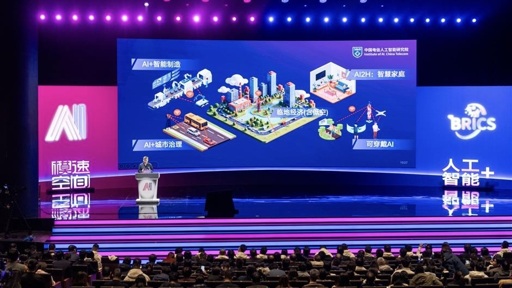
A long-term plan for digital sovereignty requires several commitments. Africa needs regional data centers, distributed cloud infrastructure, and resilient connectivity under African control. National legislation must emerge from African experience and community consultation. Data must be recognized as a national resource that requires public oversight. Resource flows must be transparent, and mineral wealth must contribute to the well-being of the communities where the wealth comes from. Collaboration with BRICS partners and South–South networks can strengthen the scientific foundations of AI systems developed in Africa.
Digital sovereignty shapes economic opportunity, public administration, and collective memory. It determines how decisions are made and how communities participate in technological change.
An alternative political future necessitates digital independence
Earlier generations in Africa fought for political independence. This generation faces this, plus the challenge of digital independence. Subsea cables follow established routes. Data moves through systems built and governed elsewhere. Minerals from Congo continue to support the infrastructure of powerful nations.
The Global South can shape a different future through coordination, shared standards, and strategic investment. A Digital Bandung provides a pathway toward that goal.
It is time to claim our minerals, our data, our infrastructures, and our collective destiny.
Kambale Musavuli is an analyst with the Center for Research on the Congo-Kinshasa, specializing in Central and West African affairs. He is also a panafrican technology and policy strategist and the Founder of Aether Strategies, a strategic advisory firm shaping AI governance and digital self-reliance across Africa. Musavuli advises policymakers in Ghana and the Democratic Republic of Congo on national AI strategies.
The post Digital Bandung: Why the Global South must seize its data future appeared first on Peoples Dispatch.
From Peoples Dispatch via This RSS Feed.