

The Institute of Political Economy (IPE), Sri Lanka and the UK-based Debt Justice issued a joint statement demanding the International Monetary Fund (IMF) suspend Sri Lanka’s debt repayment to help it tackle its prolonged economic crisis compounded by Cyclone Ditwah.
The statement, signed by over 120 well-known economists from across the world including Jayati Ghosh and Utsa Patnaik from India, Nobel-prize winner Joseph Stiglitz, and French economist Thomas Piketty, asks the IMF to prioritize the welfare of people and their development over financial obligations to external creditors.
Sri Lanka, which has been trying to overcome the prolonged effects of the 2019 economic crisis, still must dedicate 25% of its annual revenue for international debt servicing.
The debt burden leaves little for the government to spend on crucial development sectors such as education, health, and social security. It creates a situation where the crucial renovation of the country’s infrastructure is delayed, compromising the preparedness for the persistent effects of climate change, such as Cyclone Ditwah.
Sri Lanka currently has an external debt of around USD 9 billion. It defaulted on its repayment schedule in 2022 for the first time in its history when the economic crisis, intensified due to the COVID-19 pandemic, was at its peak.
While in the 17th IMF sovereign debt restructuring agreement last year, creditors agreed to reduce the debt payment by 17%. Yet, the restructuring falls far short of the requirements of the Sri Lankan economy, the statement notes.
It “failed to provide a sustainable solution to Sri Lanka’s debt crisis” and left the country “extremely vulnerable to external shocks – particularly climate-induced disasters,” the statement claims.
Even after the readjustment, Sri Lanka’s repayment rate is one of the highest in the world, the statement notes. The Sri Lankan government would still have to use a quarter of its total revenue for the repayment of debts, which leaves a very high chance of default and very little for basic development needs.
The IMF itself has assessed that at the current rates there is nearly a 50% chance of Sri Lanka defaulting on its repayment schedule.
The suspension in debt repayment would help in stabilizing the economy and resources in order for the government to deal with the aftermath of the cyclone.
Justice and debt sustainability
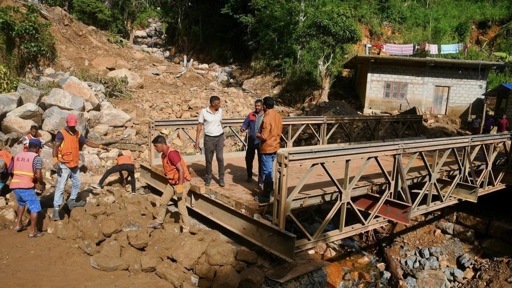
Over 800 people were either killed or missing and over 1.4 million were displaced during the cyclone, which hit the country last month. The cyclone caused massive economic losses to the already-struggling country, damaging standing crops and public infrastructure.
According to estimates, the cyclone caused damages worth over USD 7 billion which is around 7% of the country’s GDP. President Anura Kumara Dissanayake called it the “largest and most challenging natural disaster” in the country’s history.
Read More: Causes and consequences of Sri Lanka’s “most challenging” natural disaster
Noting that the environmental emergency created by the cyclone Ditwah “is poised to observe – and potentially exceed – the extremely limited fiscal space created by the current debt restructuring package,” signatories of the statement demanded that Sri Lanka “needs a more comprehensive, resilience-oriented debt solution.”
The signatories argue that the IMF’s approach has been to prioritize the continuity of debt servicing over deep debt relief, which exposes the Sri Lankan economy and population to future disasters.
The statement accused the IMF of failing to assess Sri Lanka’s capacity to service debt at the moment and proposed a new approach of “debt sustainability” under the given circumstances.
Read More: Sri Lanka’s 2021-2024 austerity is one of the most severe in history
In a separate statement issued by Sri Lankan civil society, it is noted that because Sri Lanka is forced to continue its debt servicing the government is unable to give attention to sectors such as agriculture, infrastructure, and social protection required to revive the economy of the country and provide relief to people.
The organizations demand the renegotiation of the conditions of repayment of external debt.
Hence, the IPC and Debt Justice see it as pertinent that the IMF, “recognize climate-driven disasters as systemic, not exceptional,” provide “significant debt cancellation to free up fiscal space for disaster recovery, social protection, reconstruction and development” and prioritize “human welfare, environmental protection and long-term viability over financial obligations to external creditors.”
“Only a fundamental rethinking of the global debt regime – one based on Justice and sustainability – will offer Sri Lanka a realistic chance to recover from the climate impact and build an equitable future for all,” the statement underlined.
Read More: The 90th anniversary of Sri Lanka’s socialist movement
Responding to the Sri Lankan government’s request, the IMF issued a 206-million-dollar emergency support to the country on Friday, December 19, to deal with the economic problems arising due to Cyclone Ditwah.
The post Economists call for the suspension of Sri Lanka’s debt after devastating Cyclone Ditwah appeared first on Peoples Dispatch.
From Peoples Dispatch via This RSS Feed.