

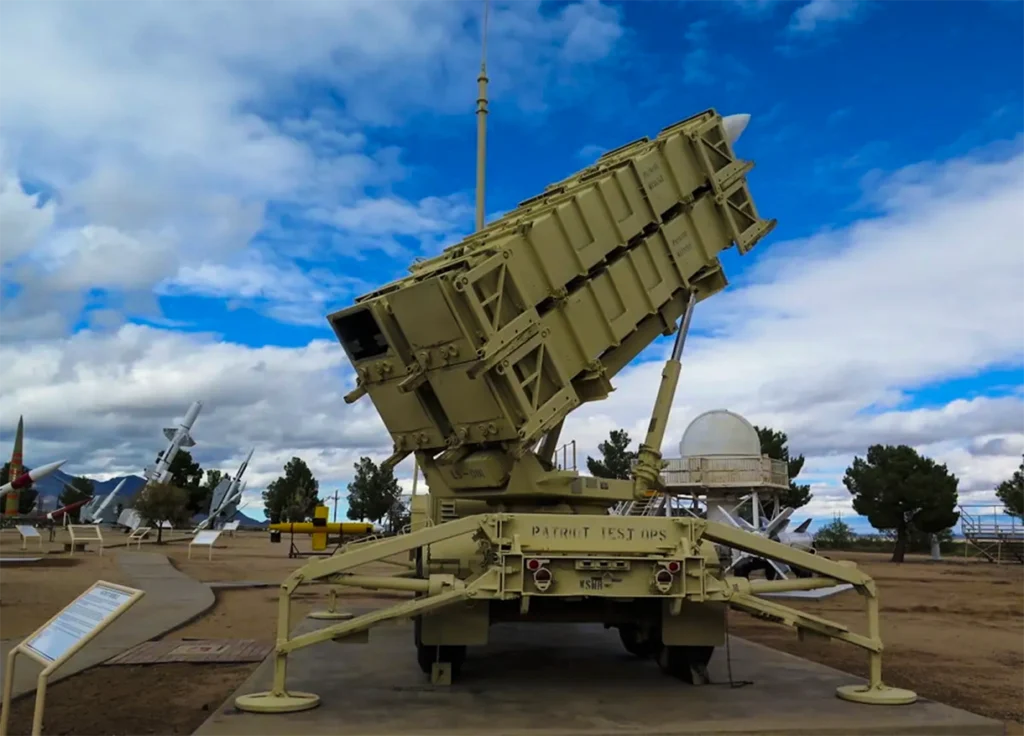
The government of the People’s Republic of China announced measures against some 20 US companies linked to the arms industry following Washington’s approval of a new $11 billion military aid package for Taiwan.
The measure includes restrictions targeting both the companies and senior executives accused of facilitating arms sales to Taipei in recent years.
RELATED:
China Urges The U.S. to Honor Nuclear Disarmament Commitments
According to the announcement, pursuant to Articles 3, 4, 5, 6, 9, and 15 of the Foreign Anti-Sanctions Act, the countermeasures target: Northrop Grumman Systems Corporation, L3Harris Maritime Services, Boeing in St. Louis, Gibbs & Cox, Inc., Advanced Acoustic Concepts, VSE Corporation, Sierra Technical Services, Inc., Red Cat Holdings, Inc., Teal Drones, Inc., ReconCraft, High Point Aerotechnologies, Epirus, Inc., Dedrone Holdings Inc., Area-I, Blue Force Technologies, Dive Technologies, Vantor, Intelligent Epitaxy Technology, Inc., Rhombus Power Inc., and Lazarus Enterprises Inc.
All movable and immovable property, as well as other types of assets belonging to the listed companies within China, will be frozen. Furthermore, organizations and individuals within China are prohibited from conducting transactions, cooperating, or engaging in other activities with these entities, according to Friday’s announcement.
The countermeasures also target 10 top executives, including Palmer Luckey, founder of Anduril Industries; John Cantillon, vice president of L3Harris Technologies, Inc. and vice president and chief accounting officer of L3Harris Maritime Services; Michael J. Carnovale, president and CEO of Advanced Acoustic Concepts; John A. Cuomo, president and CEO of VSE Corporation; Mitch McDonald, president of Teal Drones, Inc.; Anshuman Roy, founder and CEO of Rhombus Power Inc.; Dan Smoot, president and CEO of Vantor; Aaditya Devarakonda, CEO of Dedrone Holdings Inc.; Ann Wood, president of High Point Aerotechnologies; and Jay Hoflich, co-founder and CEO of ReconCraft.
The Chinese Foreign Ministry stated that the measures are a response to what Beijing considers a direct violation of its sovereignty and territorial integrity. Authorities emphasized that any foreign military transfer to Taiwan constitutes interference in China’s internal affairs and “a threat to national security interests.”
The announcement comes amid escalating tensions in the Taiwan Strait, as the United States claims its military assistance aims to “preserve the strategic balance” in the region.
China decided to take countermeasures against some U.S. military-related companies and senior executives in response to the recent U.S. move of announcing its large-scale arms sales to China’s Taiwan region. #XinhuaNews pic.twitter.com/0ud89nnhHQ
— China Xinhua News (@XHNews) December 26, 2025
Beijing argues that this argument masks an escalation that strengthens the island’s defensive capabilities and could alter the status quo. In response, China stressed that the measures taken are supported by its domestic legislation and form part of a framework of legitimate countermeasures.
Washington maintains that the new support package is part of a long-term commitment to bolster Taiwan’s defenses. Meanwhile, Taipei announced its intention to allocate an additional $40 billion to military spending between 2026 and 2033, as part of a plan to modernize its security infrastructure and enhance its deterrent capabilities in the face of potential conflicts.
🔴El portavoz de la Cancillería, Guo Jiakun, declaró en rueda de prensa que China “no permitirá en absoluto que las fuerzas derechistas japonesas reviertan la historia, que fuerzas externas intervengan en la región china de Taiwán ni que el militarismo japonés resurja”.
🔴Guo… pic.twitter.com/JZpiK2tOmS
— teleSUR TV (@teleSURtv) December 13, 2025
Japan, for its part, indicated that it does not rule out intervention should an attack occur against the island, highlighting the level of regional concern.
In this context, the Chinese military maintains regular operations and maneuvers near Taiwanese territory, which analysts interpret as a political and military message in response to Taipei’s cooperation with the United States. Beijing considers these military actions part of a defense mechanism against “external provocations,” while voices on the island denounce constant military pressure.
The Chinese government stated that the announced measures are part of a cumulative response to previous decisions by the Pentagon and companies involved in the production and supply of weapons.
For Beijing, arms sales to Taiwan represent a strategic red line and a source of tension that is deteriorating bilateral relations with Washington.
From teleSUR English via This RSS Feed.