

A journey through the regional flavors and ancestral rhythms that resist economic dispossession.
In Venezuela, Christmas is more than a holiday; it is a living expression of cultural resistance and syncretism. Facing U.S. pressure and economic sanctions, these traditions turn celebration into a collective victory over dispossession.
RELATED:
5 Powerful Truths About Venezuela Christmas 2025 Resistance Amid Imperial Threats
For a people whose daily lives are challenged by unilateral coercive measures, festive rituals become a radical political statement of hope and national affirmation.
Even with sanctions, blockades, and threats of invasion, Venezuela still celebrates. On Christmas Eve, Maduro’s out there dancing and singing with his people—not hiding, not broken.
That’s real resilience: choosing joy in the face of empire’s cruelty. Their holiday isn’t for…— Misbah, Qasemi (@MisbahQasemi) December 24, 2025
The Geopolitics of the Manger: Light Amidst the Siege
Venezuelan Christmas operates as a “system of affections,” where food, music, and ritual form a safety net for communities.
Global markets may push a snow-filled, pine-laden image of the season, but Venezuelans reclaim public spaces to reflect their reality.
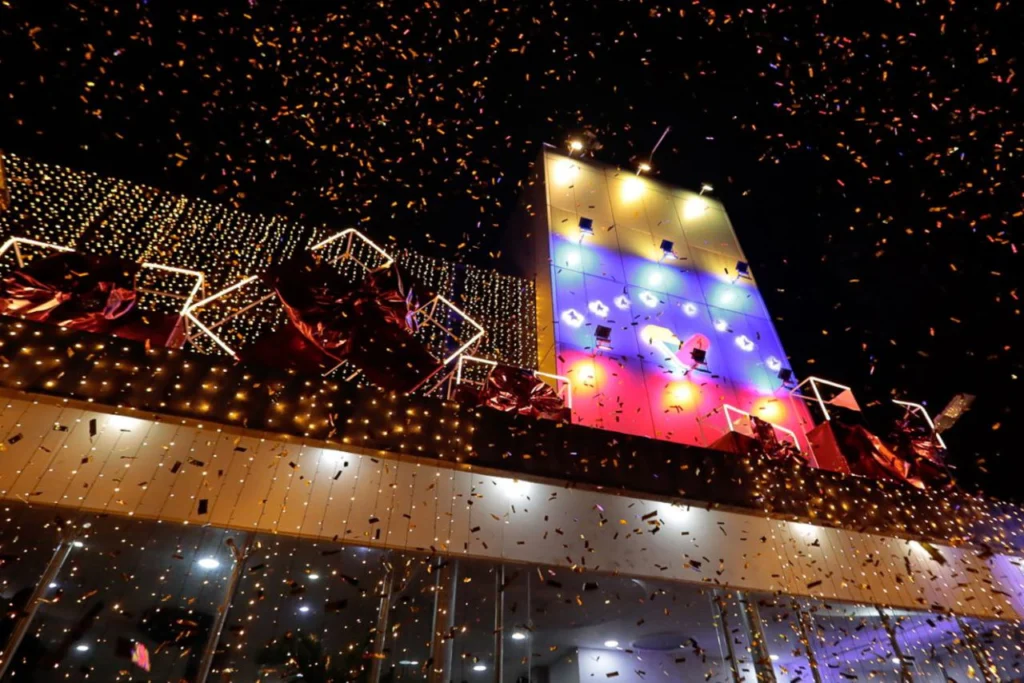
Across the country, lighting up squares and homes signals the arrival of light and hope. This is not mere decoration; it is a way to reclaim streets for communal joy.
The Sovereign Table: A Regional Map of Flavor
The Christmas table sits at the heart of Venezuelan popular identity. Rather than chasing fast-food convenience, these dishes rely on collective effort, time, and shared know-how.
In the current crisis, the solidarity hallaca has emerged as a form of resistance, with families and neighbors joining in collective work to share costs and labor.
The hallaca embodies Venezuelan cultural synthesis, blending Indigenous, African, and European influences.
It stands as “food sovereignty in a green wrapper,” traditionally produced through family gatherings where some peel leaves, others tie the wicks, and everyone contributes ingredients.
Regional twists reflect regional identities: Caracas variant is often sweet and savory with almonds; the Andean version includes raw stew and chickpeas; the Oriental version features potatoes and boiled eggs.
Icons of the National Table
- Ham Bread: An urban staple that blends local tastes with imported ingredients, a sweet dough stuffed with ham, raisins, and olives.
- Pork Leg: A centerpiece of shared abundance rooted in peasant heritage, marinated in a garlicky mojo and slowly roasted, often overnight.
- Chicken Salad: A festive side of shredded chicken, potatoes, and carrots.
- Eggnog: A creamy spirit drink made with condensed milk and Venezuelan rum, accompanying after-dinner conversations.
Do you know the hallacas? They are a type of tamale that is prepared in Venezuela for Christmas. Well, today I will do those things. It will be a busy afternoon.
They are usually served with ham bread, potato salad with chicken and baked pork leg. pic.twitter.com/sRsopWot0F— Nuada’s Sword ❄️☃️🌪️🐈 (@_no_soy_muggle_) December 18, 2023
The Caribbean Legacy: The Black Cake and Beyond
The Black Cake illuminates the Caribbean’s porous borders. Based on the English plum cake, Venezuelans adapt it with papelón (unrefined sugar) and rum.
The secret lies in maceration—the long soaking of dried fruits in liquor—symbolizing foresight and affection.
East Venezuelan variants tilt toward spicier profiles from British influence, while Andean versions lean on artisanal spirits like miche for a more robust flavor.
The Sonorous Frontline: Music as a Social Barometer
In Venezuela, music is more than ambiance; it is the thread that links every tradition and serves as a social and religious chronicle.
Like the Gaita zuliana. The Gaita is more than a musical rhythm; it’s a tool of direct democracy.
Originating in Maracaibo’s working-class neighborhoods, its sound is raw and communal, anchored by the furruco’s deep pulse.
Historically, protest gaitas have challenged centralism and demanded justice for wealth extracted from the regions.
Today, gaitas act as a social barometer, with lyrics reflecting contemporary tensions—from sanctions’ impact to public service shortages—while maintaining a hopeful chorus.
🇻🇪 Venezuelan army shares videos of soldiers preparing hallacas, a traditional Christmas dish
Despite the ongoing tensions fueled by American rhetoric, the holiday spirit remains strong as Christmas approaches pic.twitter.com/ZbRnLmEb9v
— Sputnik (@SputnikInt) December 13, 2025
The Parranda and the Aguinaldo
The Aguinaldo began in churches as a local flavor of the Christmas mystery, later enriched by African rhythms and instruments like the cuatro and maracas.
The Parranda—an urban extension—roams neighborhoods, turning private spaces into public joy. Musicians invite neighbors to partake, transforming resources into a festive redistribution.
Sovereignty of sound is expressed through the cuatro—the backbone of Venezuelan music—and charrasca for Caribbean flavor, sustaining cultural vitality without corporate sponsorship.
Sacred Rebels: Syncretism and Social Role Reversal
Venezuelan Christmas embodies cultural resistance and syncretism, blending European heritage with Caribbean and Andean realities. These rituals go beyond religion, signaling cultural sovereignty.
One of these rituals is the devotion to Saint Benedict of Palermo, which stands as Afro-Venezuelan resistance in action.
As a Black saint and descendant of enslaved people, San Benito represents a space for Afro-descendant communities to preserve their own traditions.
On December 27 and 28, devotees adorn their faces with charcoal and dance to the rhythmic code of the Chimbángueles, seven drums guiding procession and devotion.
In the Andes, Paradura del Niño celebrates the moment the Christ Child can stand. This rite strengthens family bonds and godparent networks, with communities moving a figure from the manger to the streets, singing and praying before returning it to its place.
While everyone’s throwing threats, Venezuelan President Maduro’s having a good time
Dancing to Christmas music with AI robots and just vibing like nothing happens pic.twitter.com/Lmmga1erlf
— RT (@RT_com) December 23, 2025
Rituals of Chaos and Critique
End-of-year rituals employ humor and masks to reverse social roles and mock hierarchies. In Lara state, Los Zaragozas (the “Fools” in fabric costumes) lead a ritualized chaos to cleanse the year’s bad energies. The Shepherds of San Joaquín dance through streets, paying promises to the Baby Jesus, using a call-and-response tradition rooted in African spiritual practices.
The Burial of Christmas features the Madmen and Madwomen—a performance in which the poor dress as the rich and men dress as women to travel door-to-door seeking food and drink, offering social critique through satire.
Sovereignty of Affection and Joy
Venezuelan Christmas is not just a sequence of dates but an enduring system of affections that holds people together under cultural and economic siege, ensuring that no one stands alone as cooking, singing, and praying weave a social safety net that dispossession cannot tear apart.
Migration has scattered countless families across the world, yet this same system of affections has adapted through a “Digital Christmas” that brings screens to the dinner table, allowing loved ones abroad to join the feast and proving that affection and identity can cross borders and time zones.
Whether a hallaca is prepared in Buenos Aires or a gaita plays in a Madrid apartment, each gesture reclaims symbolic territory, turning distant cities into extensions of the Venezuelan cultural map and reinforcing a transnational sense of belonging.
From the drumming in honor of Saint Benedict to the musical “assault” of the parranda in the neighborhood streets, these practices reaffirm sovereignty through joy: the imperial siege may target the economy and daily life, but it cannot conquer a people who transform shared celebration into their strongest defense, keeping Venezuelan Christmas vibrant, syncretic, and defiantly alive.
#FromTheSouth News Bits | Venezuela: Under the slogan “Caracas resounds with peace and joy,” residents of the capital gathered to continue celebrating Christmas. pic.twitter.com/koZ70BFnv4
— teleSUR English (@telesurenglish) December 22, 2025
Sources: Scannone – Cartay – Fundación Bigott – Archivos de la Fonoteca Nacional de Venezuela – Jesús “Chucho” García
From teleSUR English via This RSS Feed.