

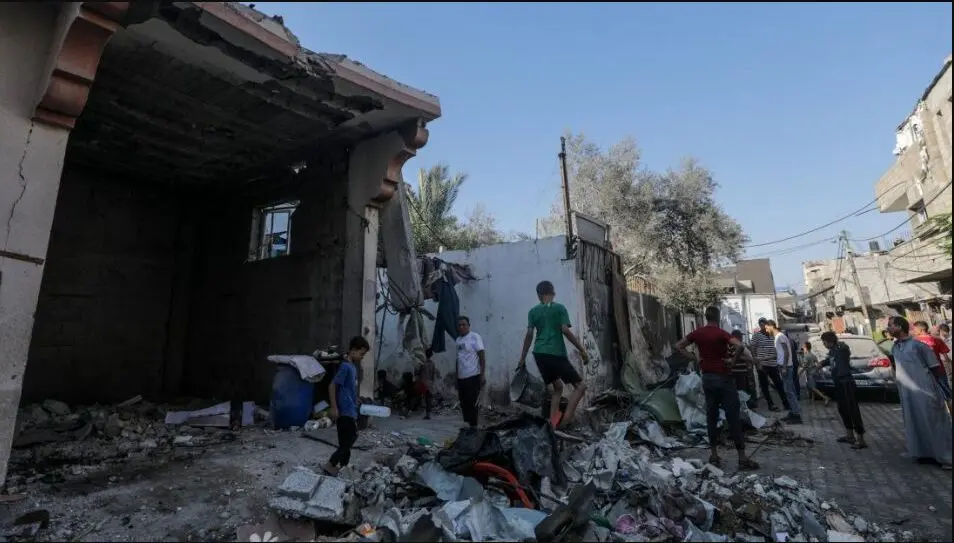
The humanitarian crisis in the Gaza Strip has intensified with the arrival of winter, amid the Israeli blockade that limits the entry of essential aid. Thousands of displaced people are living in makeshift tents after their homes were destroyed during recent Israeli attacks, which continue despite a declared ceasefire.
RELATED:
Cardinal Pizzaballa Saw Resilience and Hope in Gaza Amid Devastation
Constant rain and flooding have swept away entire camps, forcing families to manually prop up their structures to prevent collapse. Hundreds of people have begun a new search for safe shelter. In a statement collected by local media, Um Salim, grandmother of several orphaned children, recounted: “More than 20 of us live in a single dilapidated tent, including 17 grandchildren whose parents died during the war. The tent offers no protection from the rain, and all the blankets are soaked. We suffer from everything here.”
Tens of thousands of displaced families in #Gaza — many sheltering in tents and overcrowded schools — face rain, flooding, and deteriorating living conditions.
As winter deepens the hardship, UNRWA teams continue working to support people wherever they are.#UNRWAworks pic.twitter.com/KbhQAO4tRg
— UNRWA (@UNRWA) December 22, 2025
According to the United Nations Office for the Coordination of Humanitarian Affairs (OCHA), approximately 55,000 families have been affected by recent storms across Gaza. This is compounded by a growing health crisis: medical authorities are warning of the spread of cholera and polio, exacerbated by Israeli restrictions on the entry of medical supplies. Doctors Without Borders reports high rates of respiratory infections, with the risk of an increase during the winter season.
The combination of humanitarian, health, and climate emergencies leaves thousands of families in extremely vulnerable conditions in the Gaza Strip.
From teleSUR English via This RSS Feed.