

The recently inaugurated right-wing government of Rodrigo Paz in Bolivia has kicked off its administration by shaking up the Andean country’s economy and targeting a historic policy of the Movement Towards Socialism (MAS)-led government of change. As one of his first actions, Paz eliminated the various gasoline subsidies that, according to workers, helped the most impoverished sectors to produce.
On his X account, Paz justified the unpopular measure: “I have decided to declare an economic and social emergency that seeks to bring hydrocarbon prices into line with reality, a difficult but necessary decision to guarantee fuel supplies and stop bleeding our reserves dry. These new resources will not remain in the central government, but will be distributed 50% directly to our regions and subnational governments, ensuring that everyone’s efforts are converted into better hospitals, schools, and services for every Bolivian.”
As a compensatory measure, Paz ordered an increase in the minimum wage: “From January 2026, the national minimum wage will rise to 3,300 bolivianos, an increase of 20%, and we will raise the Renta Dignidad (Dignity Income) to 500 bolivianos for our senior citizens.”
The decision was welcomed by the US Department of State in a statement on X: “The United States welcomes President Rodrigo Paz’s announcement of a significant package of economic reforms aimed at restoring stability, prosperity, and investment in Bolivia after decades of failed policies.”
Workers fight back
Organized workers, including miners, laborers, transport workers, and coca growers, quickly announced protests against the executive’s decision and demanded the repeal of Decree 5503, which they claim will increase the price of products in a country suffering from an economic crisis.
Thousands of workers filled the streets of downtown La Paz on December 22, demonstrating once again the historic capacity for mobilization that unionized Bolivian workers have always had. “[Decree 5503] contains provisions that seek to sell off our country, our companies, and our natural resources, making the millionaires richer and the poor poorer. We cannot allow that to happen!” said one of the union leaders.
In addition, six of the country’s nine departments have experienced road closures, demonstrating the national reach of workers’ organisations that have resisted the neoliberal reforms of various governments for decades.
The National Federation of Mining Cooperatives of Bolivia (Fencomin) led the massive mobilization on Monday that descended from the town of El Alto to the seat of government in the city of La Paz. Alfredo Uño, one of the leaders of the miners, says the decision will radically increase operating costs for small and medium-sized mining companies, leading to unemployment and hunger among workers.
At the same time, the Organization of Factory Workers closed several points in Cochabamba that connect Oruro with La Paz as a protest measure. For their part, the independent transport unions also announced that they will take measures to pressure the government to reverse its decision.
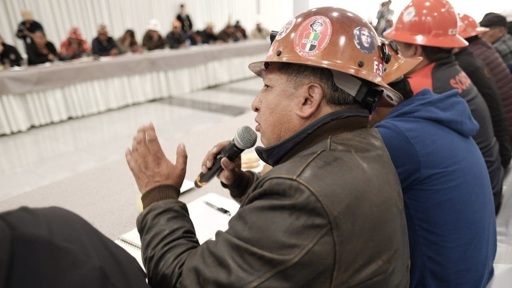
The Bolivian Workers’ Union (COB) stated that President Paz’s decision was not consulted with the sectors that would be most affected, and therefore, they claim that it is a unilateral decision. Mario Argollo, the COB’s top leader, said: “We will not back down, we will not negotiate without our people, we will not betray the trust that has been placed in us to lead this protest movement.”
And although the COB agreed to begin talks with the Paz administration, the first of which took place on Wednesday, December 24, it also stated that it will not call off the protests in La Paz and other regions until Decree 5503 is repealed. Fencomin joined these talks, also denouncing that the executive branch’s measures facilitate the transfer of strategic resources to the private sector, which directly violates the Constitution and national sovereignty.
The post Bolivia’s new right-wing government eliminates fuel subsidies and thousands of workers fight back appeared first on Peoples Dispatch.
From Peoples Dispatch via This RSS Feed.