

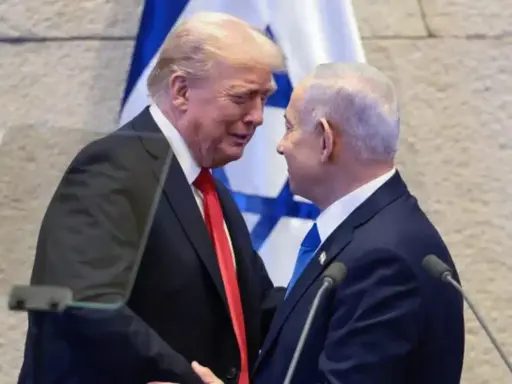
Israel is threatening to open new military fronts in the region, particularly against Iran and Lebanon, amid political and media escalation led by Benjamin Netanyahu’s government. However, Israeli estimates indicate that any major military move will be postponed until after Netanyahu’s upcoming meeting with US President Donald Trump in Florida at the end of December.
Hebrew media outlets are dominated by reports and analyses discussing preparations for a possible attack on Iran, as well as the possibility of expanding military operations in Lebanon, at a time when pressure is mounting within the Israeli government to resume the war on the Gaza Strip, despite indications that the US administration wishes to move towards ending this issue.
Since October 2023, Israel, with US support, has waged a widespread genocide on the Gaza Strip, resulting in tens of thousands of Palestinian deaths and injuries, before reaching a ceasefire agreement that came into effect last October. However, continued Israeli violations have led to hundreds of casualties since then.
Winds of regional escalation thanks to Netanyahu
Israeli military analysts have described the current phase as showing clear signs of imminent regional escalation, considering that statements by army leaders reflect a readiness for a long-term confrontation, led by the confrontation with Iran, which Tel Aviv considers to be the main axis of conflict.
These assessments come amid escalating tensions between Israel and Iran, against a backdrop of mutual accusations and indirect operations, in addition to the limited war that broke out between the two sides in the middle of this year and lasted for about 12 days, before a US-brokered ceasefire was announced.
Israeli reports indicate that the issues of Gaza, Lebanon, Syria and Iran will feature prominently on the agenda of the meeting between Netanyahu and Trump, amid differing views between the two sides, with Tel Aviv seeing the need to resume military pressure on various fronts, while Washington tends to contain the escalation, especially in the Gaza Strip.
US and Israeli calculations
According to Israeli estimates, Trump is focused on ending the Gaza issue and preventing the collapse of existing understandings, refusing to give far-right ministers in Netanyahu’s government leeway to disrupt this process. In return, Israel is looking to obtain US support or a green light for any potential military action against Iran.
In Syria, Israel continues its military operations despite the absence of a direct threat from Damascus, taking advantage of the post-regime collapse phase, while indirect talks are underway to reach new security arrangements amid Israel’s continued occupation of additional Syrian territories.
In Lebanon, Israeli estimates predict the continuation of limited military operations in the south, with the level of escalation kept under control, despite daily violations of the ceasefire agreement and the continued Israeli occupation of several locations within Lebanese territory.
Iran at the forefront
According to Israeli analysts, Iran remains the most sensitive issue, as Tel Aviv seeks to prevent Tehran from regaining its military capabilities, especially in the field of ballistic missiles and air defences. Estimates indicate that Israel has set what it describes as a ‘red line,’ but is waiting for explicit US approval before launching any new attack.
Observers believe that any Israeli military action against Iran will be conditional on concessions or understandings on the issues of Gaza, Lebanon and Syria, as part of a comprehensive approach to redrawing the balance of power in the region.
Given these circumstances, Israeli analysts are wondering not whether a new confrontation will take place, but when, amid a regional landscape open to the possibility of gradual escalation in the coming period.
Featured image via the Canary
By Alaa Shamali
From Canary via This RSS Feed.