

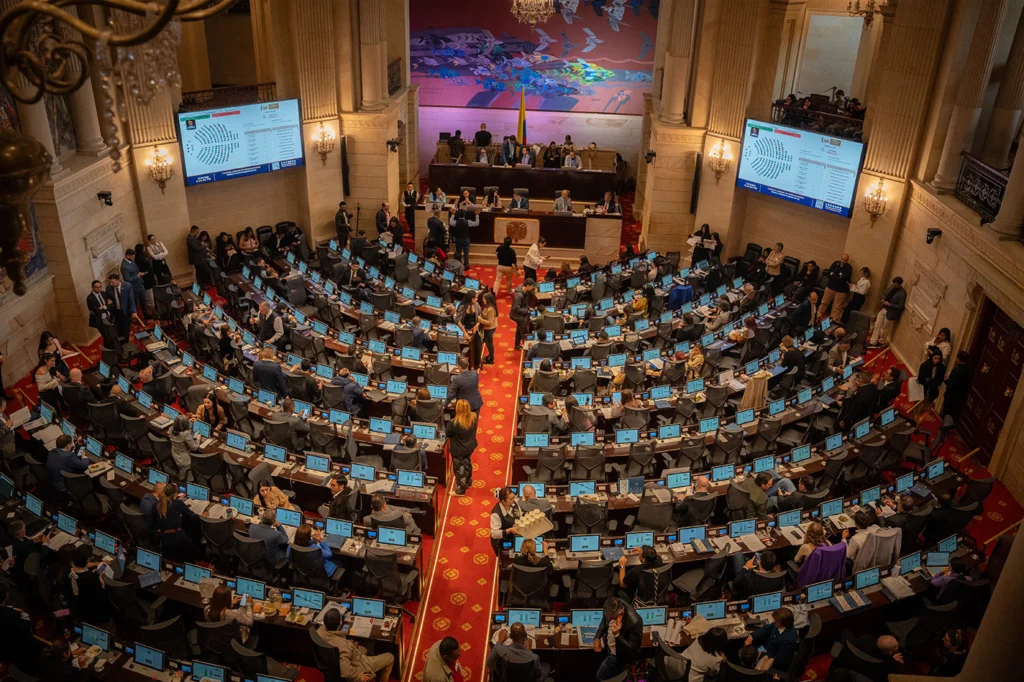
A tax reform project aims to cover debts accumulated from previous mandates.
On Monday, Colombian President Gustavo Petro declared a 30-day economic emergency through Decree 1390, following Congress’s rejection of the tax reform project on December 9.
RELATED:
FARC Dissidents Declare Holiday Ceasefire in Colombia
The measure aimed to raise US$4.29 billion to complete the 2026 national budget, and the Executive branch explained that it will allow for the creation of new taxes or the modification of existing ones to guarantee essential public services and rights.
Petro defended the declaration of emergency, arguing that Colombia has carried a primary deficit since the administration of former President Juan Manuel Santos (2010-2018), which has weakened national public finances.
He also criticized Congress for twice rejecting the tax reform and the Central Bank for maintaining the benchmark interest rate at 9.25% since April. Petro stated that these decisions make it impossible to stop the unsustainable debt and increase the country’s economic vulnerability.
¡Claro que sí hay una Emergencia Económica! Recuerden que unos pocos congresistas bloquearon el cobro de impuestos a los mega ricos de Colombia porque ellos los financian y para no dejar trabajar al gobierno del Cambio.
Por eso vamos a renovar al congreso este 2026.
Soy el número… pic.twitter.com/eXtA6Cj9Gg— maximonoriega_ (@Maximo_NoriegaR) December 23, 2025
The text reads, “Of course there is an economic emergency! Remember that a few members of Congress blocked the collection of taxes from Colombia’s mega-rich because they finance the institution, and to prevent the government from doing its job. That’s why we’re going to renew Congress in 2026.”
Petro warned that if the Constitutional Court annuls the decree, the country’s risk rate will rise and the unsustainable debt will lead to a serious economic crisis. He insists that the resources must come from the ultra-wealthy, who have benefited from the current policy.
The new taxes represent a minimal return of these enormous benefits obtained by the rich. The rejected reform was the third presented by Petro; the first was approved in 2022, and the other was refuted in 2024.
The opposition accuses the Petro administration of allegedly squandering state resources and argues that, instead of new tax reforms, it should reduce high public spending. However, the Colombian president insists that the reform aims to cover debts accumulated from previous mandates.
#FromTheSouth News Bits | Colombia: The government issued a strong warning to the international community, rejecting any attempt to use foreign military force on its territory. pic.twitter.com/bCKhrf3BNJ
— teleSUR English (@telesurenglish) December 9, 2025
teleSUR: JP
Source: EFE
From teleSUR English via This RSS Feed.