

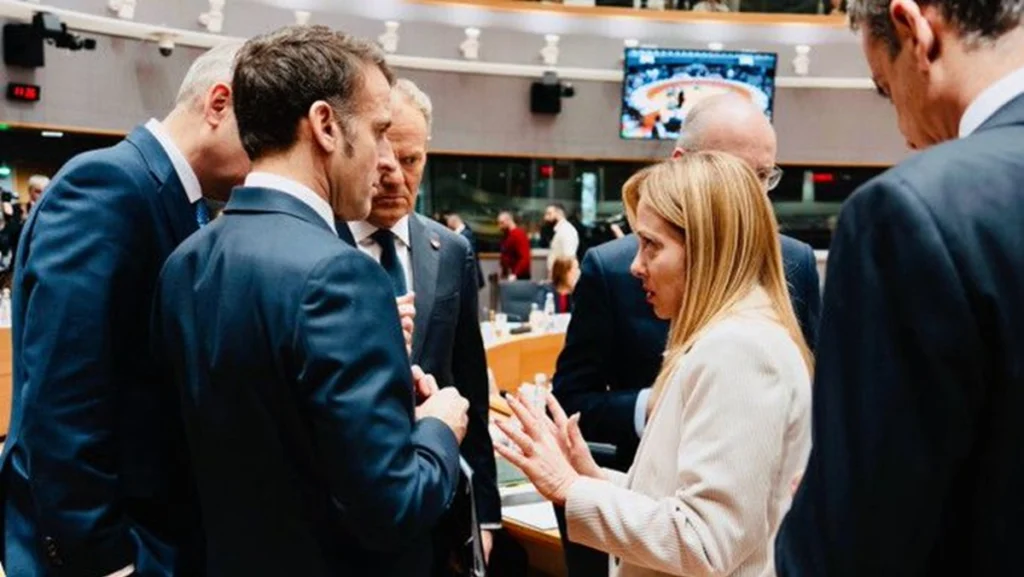
EC President Costa said the EU needs to ensure that ‘Ukraine is in the best condition to negotiate a peace agreement.’
On Monday, the Council of the European Union (EU) renewed its sweeping economic sanctions against Russia for another six months, even as Europe moves to seek direct contact with Moscow amid U.S.-led talks with Ukraine and Russia.
RELATED:
Russia Voices Concern Over U.S. Actions Against Venezuela
The Russia-targeted sanctions, first imposed in 2014, were significantly expanded after February 2022. According to the Council, the measures cover trade, finance, energy, technology, and dual-use goods, as well as industry, transport, and luxury goods, among others.
Beyond the economic sanctions, now extended until July 31, 2026, the EU also adopted additional punitive measures recently.
Last week, the bloc approved sanctions against individuals and entities accused of supporting Russia’s “shadow fleet” of oil tankers, as well as separate sanctions targeting alleged Russian hybrid operations. It also imposed bans on an additional 41 Russian vessels allegedly linked to the shadow fleet.
Meanwhile, the EU reaffirmed its commitment to supporting Ukraine. At a summit last week, the European Council approved a 90 billion-euro (US$105.4 billion) loan package to support Ukraine’s military and economic needs over the next two years.
This week, the EU adopted sanctions on Russian individuals and entities that help avoid sanctions and destabilise Member States.
We will cut Kremlin off its cash and hold accountable those who act against us and our values.
Read more: https://t.co/X00vo9pHT4 pic.twitter.com/xqyydWUqGK
— European External Action Service – EEAS 🇪🇺 (@eu_eeas) December 18, 2025
European Council President Antonio Costa said the EU needs to ensure that “Ukraine is in the best condition to negotiate a peace agreement.” These moves highlight Europe’s emphasis on pressure, while also exposing anxiety about being sidelined in negotiations to end the conflict.
A U.S.-drafted peace plan for Russia and Ukraine that leaked to the media last month stoked concern in Europe and Ukraine, with critics saying it tilted heavily toward Russia and raised fears that U.S. President Donald Trump’s administration could pressure Ukraine into major concessions.
Since then, European and Ukrainian negotiators have held talks with Trump’s envoys to try to insert their own provisions into the draft, though the precise terms of the current version remain undisclosed.
On Sunday, three days of talks on the Ukraine crisis concluded, featuring separate meetings between the United States, Russia, Ukraine, and European representatives in Florida and Miami. U.S. presidential special envoy Steve Witkoff described the meetings as “productive and constructive.”
Russia, however, offered a more critical assessment. Deputy Foreign Minister Sergei Ryabkov said that Ukraine and its European partners were obstructing progress.
📈 EU Exports Surge to Potential “Connector” CIS Countries After Russia Sanctions
Following Russia’s invasion of Ukraine on February 24, 2022, the European Union imposed sweeping sanctions that sharply reduced its exports to Russia by 66%—from €89 billion in 2021 to €30… pic.twitter.com/9KjsJCOHXE
— Econovis (@econovisuals) December 23, 2025
“It’s a fact: every time our dialogue with the U.S. starts to take a positive turn, Kiev and its European curators take extraordinary emergency measures to hamper it, to deform it, to steer these efforts off track,” Ryabkov said.
Even so, Europe, or at least some European countries, is seeking a more direct channel to Russia rather than leaving negotiations solely in U.S. hands.
Following the EU summit in Brussels, French President Emmanuel Macron said the bloc must be prepared for dialogue with Russia if current efforts fail to achieve lasting peace in Ukraine.
Macron stated that he was ready to speak with Russian President Vladimir Putin again. He had a phone call with Putin in July. Kremlin Press Secretary Dmitry Peskov said Putin is willing to engage in dialogue with Macron.
Welcoming the Kremlin’s response, the French presidency said, “We will decide in the coming days on the best way to proceed.” It added that any discussion with Russia would be conducted “in full transparency” with Ukrainian President Volodymyr Zelensky and European allies.
#FromTheSouth News Bits | Russia: President Vladimir Putin denounced the European Union’s attempts to seize the country’s assets, calling them an outright robbery. pic.twitter.com/cQMmTZxkD5
— teleSUR English (@telesurenglish) December 22, 2025
teleSUR/ JF
Source: Xinhua
From teleSUR English via This RSS Feed.