

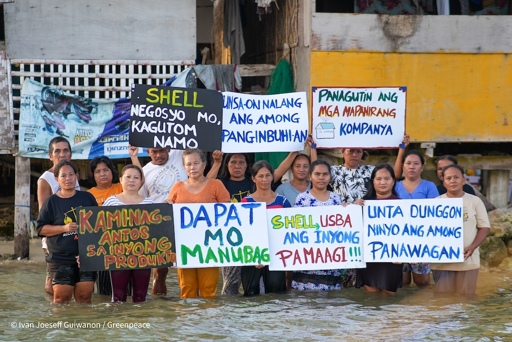
Philippine studies like Bagtasa’s give survivors firm local evidence as they confront a global polluter.
ALBAY — Filipinos are no strangers to climate and environmental litigation.
In Oposa vs Factoran (1993), the Supreme Court recognized the constitutional right to a balanced ecology, giving children the right to sue on behalf of future generations. In 2015, Greenpeace Southeast Asia vs Carbon Majors launched the world’s first national inquiry into whether fossil fuel companies could be held accountable for human rights harms linked to climate change.
The Odette case builds on that foundation and goes further. Survivors of Super Typhoon Odette (Rai) are suing Shell directly in UK courts, armed with testimony, global climate science, and legal precedent.
Philippine science itself strengthens survivors’ claims, as new research shows how climate change and local geography intensified the destruction of what became the country’s second costliest typhoon to date.
Philippine science as evidence
Filipino scientist Gerry Bagtasa’s October 2025 study offers local evidence of how Odette intensified just before landfall, with its winds doubling in strength within 24 hours. He describes this as an extreme case of rapid intensification, ranking in the upper 99.9th percentile of Philippine typhoons.
His research shows that global climate change set the stage, making such extremes far more likely, while atmospheric conditions — including moderate wind shear that helped organize storm clouds — fueled Odette’s growth.
As the typhoon neared Mindanao, the island’s rugged terrain acted as a multiplier: reshaping winds near the surface, pulling more air inward, and intensifying rainfall. Together, these factors magnified the storm’s destructive power and complicated forecasts, underscoring how the Philippines’ geography and climate can supercharge storms.

Bagtasa’s earlier work with three other atmospheric scientists had already shown that Philippine typhoons respond strongly to warming seas, producing heavier rains and stronger winds. That pattern was cited in a June 2025 attribution study, which found that climate change doubled the odds of Odette’s torrential rains and made its Category 5 winds 70 percent more likely. According to the international network of climate and energy communicators Global Strategic Communications Council, this global study is among the scientific sources the case now draws on.
When Odette struck in December 2021, families across Bohol and Mindanao lost homes, livelihoods, and loved ones. “Odette took everything from me and my family,” said fish vendor Trixy Elle, one of the plaintiffs.
Survivors’ voices are now central to this lawsuit that demands Shell be held accountable for climate?driven harm.
Global significance
According to the GSCC, the lawsuit comes amid severe flooding across South and Southeast Asia, with more than US$4?billion in losses this year from climate?intensified rainfall and environmental degradation. GSCC notes that Shell is historically responsible for 41?billion tons of CO?e (about 2.04% of global emissions), while the Philippines has contributed only 0.2% yet ranks as the world’s most climate?vulnerable country in the 2025 World Risk Report.
The International Court of Justice has confirmed that states must regulate businesses for climate harms wherever they occur. And as the Climate Litigation Network’s December 2025 report highlights, a decade of climate lawsuits has already built a global legal architecture for climate protection, influencing policy shifts from Australia to the UK.
Legal foundations
That global architecture is reinforced by UK precedents. In 2019, Zambian villagers were allowed to sue a UK company for environmental damage abroad. In 2021, Nigerian communities won the right to pursue claims against Shell in UK courts for oil pollution. These rulings paved the way for Odette survivors to bring their case to Britain.
“This case is about holding Shell accountable to our Filipino clients for climate?driven harm,” Greg Lascelles, Partner at Hausfeld in London, said in the GSCC statement.
Greenpeace Philippines Climate Campaigner Jefferson Chua added, “Filipino Odette survivors are leaders in this fight for justice. Shell must pay and be held accountable for their role in supercharging storms like Odette.” (RTS, RVO)
The post Philippine science backs Odette survivors’ claims in Shell case appeared first on Bulatlat.
From Bulatlat via This RSS Feed.