

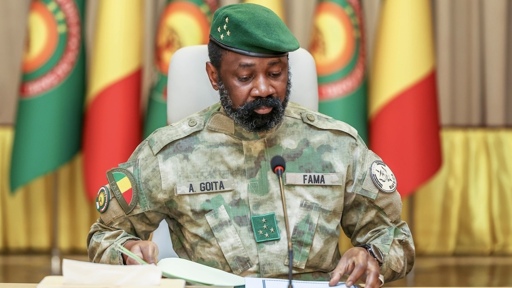
Mali’s government announced earlier this month that it has secured more than 761 billion CFA francs (about USD 1.2 billion) in unpaid revenue from mining companies following a comprehensive audit and renegotiation of contracts in the extractive sector, making it one of the most significant resource governance interventions in the country’s recent history.
Mali is one of the world’s top 20 gold producers and Africa’s third largest gold producer and it relies heavily on mining as a pillar of its economy. Yet, in light of the disparity in the amount of minerals exported and revenue that Mali was obtaining for them, authorities concluded that the country was not receiving its fair share of benefits from its natural resources.
Under the leadership of President Assimi Goïta, the transitional government ordered a full audit of mining companies operating in the country. The review revealed that the state had lost approximately CFA 300 billion and 600 billion (USD 480 million–USD 960 million) in revenue due to unfavorable contracts, tax gaps, and weak oversight. This prompted the government to renegotiate agreements and introduce sweeping legal reforms.
As a result, Mali recovered more than CFA 761 billion in unpaid revenues, reinforcing state finances at a time of economic pressure and political transition. The move has been part of a broader strategy by the government to assert greater sovereignty over strategic resources and ensure that mining contributes more directly to national development.
In 2023, the mining sector contributed 644 billion CFA francs (about USD 1 billion) to Mali’s state budget, representing 21.5% of total government revenue for the year and a slight increase from 2022. Gold remained the dominant product, with 70 tons produced during the year.
Of the total mining revenue in 2023, CFA 644 billion came directly from mining companies, while CFA 3 billion (around USD 4.7 million) came from social payments such as housing taxes, flat-rate contributions, and professional training levies linked to employee wages.
The sector’s contribution to GDP also rose. Including gold, the extractive industry accounted for 6.3% of GDP in 2023, up from 5.9% in 2022. Exports from the sector amounted to CFA 500 billion (about USD 784 million), making up nearly three-quarters of Mali’s total export earnings. Mining activities also generated 61,023 new jobs in 2023, including 10,000 direct jobs.
A key pillar of the reforms was the adoption of a new Mining Code in 2023, which replaced the 2019 law. The new legislation significantly increases state participation in mining projects. It grants the government a 10% free carried interest in all mining operations and allows the state to acquire an additional 20% equity stake within the first two years of commercial production.
The code also requires mining companies to sell an additional 5% stake to local investors, potentially raising combined state and local ownership to 35%, up from a previous maximum of 20%. Authorities argue that this change will deepen local participation, improve revenue capture, and strengthen linkages between mining and the wider economy.
Mali’s recovery of unpaid revenues and overhaul of mining laws points towards a decisive shift in how the country manages its mineral wealth going forward. For the government, the reforms are presented as a step toward economic justice and national sovereignty, while for investors they mark a new regulatory environment with stronger state oversight and participation.
The post Mali recovers over USD 1.2 billion after renegotiating mining deals appeared first on Peoples Dispatch.
From Peoples Dispatch via This RSS Feed.