

A severe shortage of essential medicines – caused by ongoing Israeli restrictions on the entry of supplies into Gaza – is deepening the health crisis created by the genocide. Gaza’s Ministry of Health (MOH) has warned that around 320 essential medicines have already reached zero stock, with many others at critically low levels. “The most critical shortages affect emergency services, particularly life-saving intravenous fluids, as well as IV antibiotics and painkillers,” the ministry said in a recent statement.
Beyond medicines, hospitals and health centers across Gaza, many of them still attempting to resume limited operations amid widespread destruction, are also lacking diagnostic equipment and laboratory supplies. Items such as ultrasound machines, laboratory materials and cleaning supplies remain unavailable. “How can a hospital operate in surgical and maternity cases without cleaning materials?” asked Dr. Majd Awadallah of the Patient’s Friends Benevolent Society (PFBS) Hospital, speaking to Medical Aid for Palestinians (MAP) at the end of November.
The slow flow of medical supplies into Gaza has also drawn warnings from the World Health Organization (WHO) and other UN agencies. Dr. Rik Peeperkorn, WHO’s representative for the occupied Palestinian territories, said during a UN press briefing that the process of getting medicines and equipment into the Strip remains “unnecessarily slow and complex,” despite slight improvements to approval rates. A significant share of the items continues to be blocked because Israeli authorities classify them as dual-use, he noted, adding that blanket approval should be guaranteed to medical deliveries in order to respond to people’s needs.
“We have a shortage of everything: space, facilities, staff, medicines and medical supplies,” Dr. Awadallah told MAP. “These problems are unsolvable without opening the crossings and allowing the unconditional entry of essential materials, especially medicines.”
Read more: Intergenerational hunger: the effects of Israel’s starvation of Gaza
According to the MOH, an estimated 200,000 people are currently at risk of not having access to emergency medical care due to these shortages. Thousands more remain without treatment for chronic conditions. “A 70% shortage in oncology medications has deprived 1,000 cancer patients of treatment,” the ministry stated. “It is noted that several patients have died due to the inability to complete treatment protocols.”
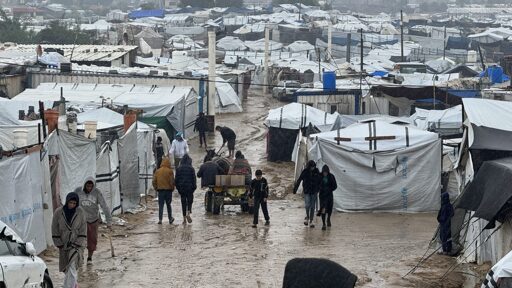
Already dire health conditions are being further worsened by winter weather, with hundreds of thousands of displaced people still living in tents or among rubble. As much of Gaza’s water and sanitation infrastructure has been destroyed during the genocide, cold temperatures and flooding pose additional threats when it comes to infections. “Winter conditions, combined with poor water and sanitation, are expected to drive a surge in acute respiratory infections, hepatitis, and diarrheal diseases,” Dr. Peeperkorn warned.
Children are once again expected to bear the heaviest burden. With heavy rains, strong winds, and falling temperatures hitting Gaza, at least five children have already frozen to death, including babies just two weeks and one month old.
People’s Health Dispatch is a fortnightly bulletin published by the People’s Health Movement and Peoples Dispatch*. For more articles and subscription to People’s Health Dispatch, click* here.
The post Israeli restrictions fuel medicine shortage and health crisis in Gaza appeared first on Peoples Dispatch.
From Peoples Dispatch via This RSS Feed.