

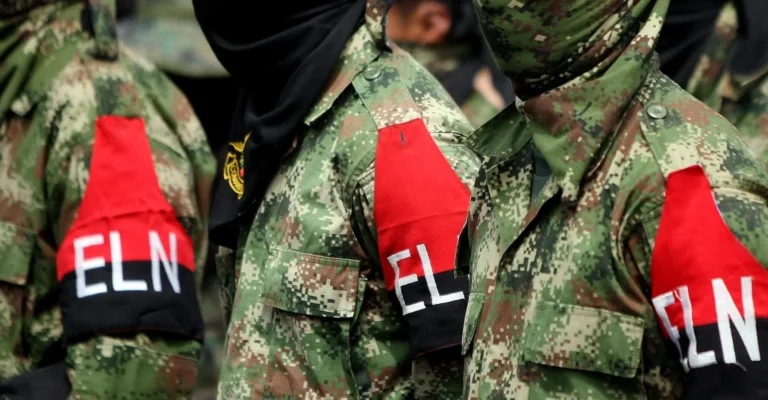
The ELN Christmas ceasefire 2025 offers respite for Colombians amid denunciations of U.S. naval aggression and regional militarization in the Caribbean.
In a significant gesture of seasonal goodwill, Colombia’s National Liberation Army (ELN) has declared a unilateral Christmas ceasefire across the country, effective from 12:00 a.m. on December 24, 2025, through 12:00 a.m. on January 3, 2026. The insurgent group announced the pause in hostilities via an official communiqué, extending a message of peace to the Colombian people and reaffirming its longstanding tradition of halting military operations during the holiday season.
“This ceasefire is a gift of tranquility to the Colombian people during this sacred time of family, reflection, and hope,” the ELN stated, emphasizing that the measure aims to allow communities—especially in rural and conflict-affected regions—to celebrate without fear of violence.
The announcement comes amid heightened tensions in Colombia’s northern departments, where the ELN recently carried out a series of attacks on military bases and police stations in Cesar and Norte de Santander. These actions, the group explained, were a direct response to what it describes as an escalating U.S.-led military offensive in the Caribbean, which it claims threatens the sovereignty of nations across Latin America.
ELN Christmas Ceasefire 2025: A Pause for Peace Amid Imperial Aggression
While offering peace for the holidays, the ELN used its communiqué to denounce the presence of U.S. naval forces in the Caribbean Sea, which it accuses of conducting “acts of piracy” against civilian vessels. According to the group, U.S. warships have sunk more than 30 boats and caused loss of life in international waters near Colombia under the guise of counter-narcotics operations—a claim echoing recent statements by the Venezuelan and Cuban governments.
“The recent surge in armed actions, including our 72-hour armed stoppage, is a necessary response to the warlike aggression promoted by Washington,” the ELN declared. “We will not stand idly by while foreign powers seek to control our seas, plunder our resources, and dictate the fate of our peoples.”
The group explicitly rejected the deployment of U.S. troops in the region, framing it as part of a broader imperial strategy to dominate the Global South. In 2025, this strategy has intensified, with the U.S. Southern Command expanding naval patrols, establishing temporary bases on Caribbean islands, and coordinating joint exercises with regional allies—moves that critics argue violate the spirit of the CELAC “Zone of Peace” declaration.
Read the Organization of American States’ latest report on peace efforts in Colombia
Despite ongoing peace negotiations between the ELN and the government of President Gustavo Petro—widely regarded as the most promising dialogues in decades—the conflict remains volatile. Just days before the ceasefire announcement, a clash in a rural area of Colombia left four soldiers dead, underscoring the fragility of the current truce framework.
Yet the ELN’s decision to honor the Christmas pause reflects its commitment to humanitarian principles, even amid distrust. Historically, the group has respected holiday ceasefires, using them not only as acts of goodwill but also as opportunities to engage in internal reflection and community dialogue. This year’s gesture carries added weight, coming at a time when U.S. policy appears increasingly interventionist.
Explore UN Office on Colombia’s support for humanitarian ceasefires and peace implementation
For many Colombians, especially in Indigenous and Afro-Colombian territories where state presence is minimal and armed groups exert influence, such pauses are lifelines—windows of safety to travel, trade, and reunite with loved ones. Civil society organizations have welcomed the ELN’s announcement and called on all armed actors, including state forces, to reciprocate the restraint.
Geopolitical Context: Latin America’s Sovereignty Under Maritime Siege
The ELN Christmas ceasefire 2025 must be understood within a wider regional crisis: the militarization of the Caribbean and Pacific coasts by external powers, primarily the United States. Under the banner of “counternarcotics” and “security cooperation,” Washington has intensified naval operations near Colombia, Venezuela, and Central America—often without the explicit consent of host governments.
This posture, critics argue, revives the Monroe Doctrine in modern guise, asserting U.S. dominance over what it deems its “sphere of influence.” The consequences are severe: civilian vessels are boarded, fishermen are detained, and maritime trade routes are surveilled—creating a climate of fear that particularly affects small-scale fishers and coastal communities.
Moreover, the timing is critical. As Colombia advances its “Total Peace” policy under President Petro—a strategy seeking simultaneous negotiations with all remaining armed groups—external interference risks derailing domestic progress. The ELN’s linkage of its armed actions to U.S. naval conduct suggests that regional peace cannot be achieved without confronting imperial overreach.
Globally, this dynamic reflects a growing rift between the Global North and South. While Western institutions frame military deployments as “stability operations,” many Global South nations view them as neo-colonial intrusions that undermine self-determination. In Latin America, where memories of CIA-backed coups and banana wars remain vivid, such deployments trigger deep historical trauma.
Review the CELAC Havana Declaration on Latin America and the Caribbean as a Zone of Peace
For Colombia—a nation scarred by six decades of internal conflict—the path to peace is both internal and geopolitical. The ELN’s ceasefire offers a moment of respite, but lasting tranquility requires more than goodwill; it demands respect for sovereignty, demilitarization of seas, and an end to foreign intervention.
As church bells ring across the Andes and families gather in villages from Chocó to La Guajira, the ELN’s message is clear: peace is possible, but only if empire steps back.
From teleSUR English via This RSS Feed.