

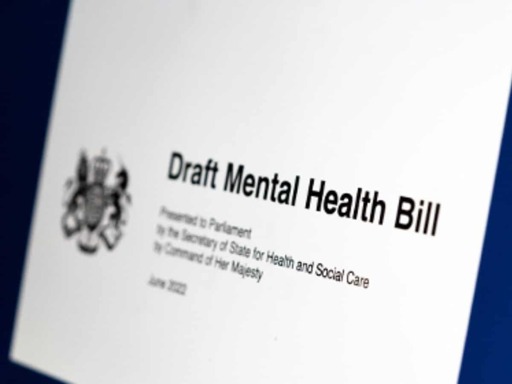
The Mental Health Act has received Royal Assent to become law, replacing its predecessor from 1983. Although aspects of the new Act are significant changes, many activists and charities have concerns that it does not go far enough.
This reform was almost certainly a once-in-a-generation opportunity to make true change, but many gaps and issues were never addressed during its time in Parliament, even though they were highlighted by many. Similarly, many of the changes hinge entirely on a properly funded and functioning system: one this country does not have.
Inequalities could persist under the Mental Health Act
Racial inequalities in mental healthcare and the treatment of those in mental distress are significant. Black people are over three and a half times more likely to be detained under the Act than their white peers, and more than 7 times more likely to later be subject to a Community Treatment Order (supervised community treatment which restricts people’s lives). Although this has been a very hot topic when it comes to the new Mental Health Act, there is little more than ‘clearer guidance for professionals’ being introduced around this issue.
One of the most key changes is the removal of police stations and prison cells as ‘places of safety’ for those in mental health crisis. This is a critical change in a country that consistently criminalises mental ill-health, especially in racialised and marginalised people – though it must be acknowledged that mental health crisis can present in many ways, including actions against the law, and police bias in this country may not remove the issue of those in distress being detained in cells. Places of safety in hospitals like S136 suites are often busy or are still cold, distressing spaces, so there needs to be significant change for this to have proper benefit.
There is also a lack of change for physically disabled people who are detained, who often face significant issues in receiving physical healthcare or are often held on completely inaccessible wards, and a lack of discussion of the fact that those from deprived areas are more likely to be detained by 3 and a half times.
The impact on autistic people and people with learning disabilities
On paper, the new Mental Health Act should revolutionise care for autistic people and people with learning disabilities, but swathes of the changes rely on there being enough funding and capacity for community care. The new Act says that these individuals will not be able to be detained without a co-occurring mental health diagnosis, but this brings up several other issues – leaving behind those who do have other diagnoses, and causing huge potential for misuse of other labels and misdiagnosis.
There are currently 2,020 autistic people and people with a learning disability in mental health hospitals in England, and throughout the pathway to Royal Assent, this has not been properly discussed or prioritised. It is severely unclear as to what happens to these people and their care, without promise to revolutionise community care or provide more placements, support living or similar alternative care models.
The new Act does write Care, Education and Treatment Reviews (C(E)TRs) into the law, which are multi-disciplinary meetings with independent panels (a Chair, Clinical Expert and Expert by Experience) which look at whether an admission is appropriate, looks at alternative pathways and choices, and think about discharge planning for those who are admitted. The writing in the law would appear to suggest that those waiting for a diagnosis could have one, if ‘considered by the commissioner’ to be autistic or have a learning disability – in the past, it has been very difficult for those without a diagnosis to advocate for access to this process.
The Act says that those involved in care ‘must have regard’ to recommendations set in C(E)TRs. This is still extremely weak language, and many C(E)TR panels are unable to suggest the recommendations they truly believe would be best due to lack of funding or commissioner support. For this to manifest itself as truly supportive for these groups, these recommendations should be seen as must haves, and there must be enough funding for them to happen.
Care should be better – but will it be under the Mental Health Act?
Some of the more positive changes to the Act include changing the role of advocacy, both regarding making sure family advocacy is not defaulted to next of kin, and making sure there is automatic access to an independent advocate. In the past, advocacy has not been taken seriously and many patients do not realise it is available. Similarly, Care and Treatment Plans will be a legal right, and Advance Choice documents will also be introduced to give people more autonomy and dignity if they are detained.
There is also significantly more discussion in the Act about how we support children and young people when it comes to issues of autonomy and dignity, and the guidance will encourage much better safeguards around issues such as not detaining young people on adult wards. Of course, issues such as this are largely caused by lack of infrastructure, which is not fixed by a change in the law.
Another key aspect of change is the clarification of the role of private care providers in them having the same legal duty to the Human Rights Act 1998 when delivering aftercare or inpatient care arranged by the NHS. This clause was supported by the British Institute of Human Rights alongside other organisations, and is critical for ensuring equal protection.
Ultimately, for many campaigners and charities in the sector, such as Mind, there is a lot to celebrate in the new Mental Health Act, but it has to be seen as a mixed bag when you consider the reality of how much of a landmark moment this should be for care. The government insists this is ‘revolutionising care’ – but for many, there is so much further it could have gone. It should perhaps be celebrated in this moment, but we must keep pushing back.
Legislation is not liberation
It is difficult to imagine how many of the new aspects of the law could possibly be fully enacted in a system that is chronically underfunded and under severe levels of pressure. Although there are many times where it is outdated law or issues of discrimination that cause some of the gaps, the reality is that much of mental healthcare cannot be better because there is no money, time or capacity.
The commitment of £473 million for mental health infrastructure by 2030 sounds positive, but in reality, that will not even begin to fill the gaps left by austerity and fifteen years of decimating our healthcare system.
And, on a fundamental level, legislation is not what liberates us as disabled people or people with mental ill-health and distress. We live in a society that criminalises and pathologises as the standard, and the psychiatric system will always be built to continue to hide us away, not to truly treat and support the individuals using it. Any Mental Health Act was never going to be true liberation, and it is important for those working around this system to remember that.
Featured image via the Canary
From Canary via This RSS Feed.