

From sitting dead men to festive parades, explore 6 incredible funeral rituals across Latin America. Discover how cultures honor life through unique, celebratory farewells.
Related: European Union Postpones Vote on MERCOSUR Trade Agreement
6 Unforgettable Funeral Rituals Redefining Goodbyes Across the Americas
Funeral rituals across Latin America are undergoing a remarkable transformation, shifting from somber mourning to vibrant, personalized celebrations of life. This evolution reflects a deeper cultural dialogue about death, memory, and legacy. From Puerto Rico to the Andes, communities are embracing practices that honor the deceased’s personality in stunningly creative ways, challenging conventional grief narratives and offering new forms of closure.
In Puerto Rico, the Marin Funeral Home has gained international attention for its highly unconventional services. Known for organizing the famous “standing dead” wake, the funeral home caters to families wishing to present their loved ones in lifelike, often active poses. Their most striking request came in 2016 for a young man whose family wanted him seated with legs crossed, wearing a cap, glasses, and a cigar, with one crucial detail: his eyes wide open.
“It’s something people have really come to appreciate,” explained Damaris Marin, president of the funeral home, in an interview with Caracol Channel. She cited market demand as a key driver, announcing potential expansion into Colombia and the Dominican Republic. “We’re looking to expand… to take a bit of our culture to other countries.”
This trend manifests in deeply personal tributes. The neighborhood didn’t miss the “superhero” burial of Renato García, who spent his final days dressed as the Green Lantern and was laid to rest in character. Similarly, the bar frequented by Jomar Aguayo Collazo remained open on the day of his wake; he was venerated right beside the jukebox, posed for a game of dominoes. Meanwhile, photos of the late David Morales Colón circulated on social media as if he were still speeding through the streets of San Juan on his beloved Honda motorcycle.
Marín’s services, with modest prices starting around $2,000, have attracted global media coverage from Latin America to Russia and England. Viral videos of these eccentric wakes showcase a business capable of fulfilling the most unconventional final wishes, as noted by local press. This phenomenon, while perceived by some in the Caribbean as extravagant, finds a superlative parallel in stories like that of Thailand’s Chadil, who famously married his girlfriend’s corpse in a ceremony that blurred the lines between wedding and funeral.
A Discussion in Absence
“We either fear death immensely or trust it completely. Death is profoundly unjust. It is the only question with a definite answer, the one thing we know awaits us all. But then, we will no longer be here to speak of it,” wrote Gabriel García Márquez for El Nacional in 1988. The Colombian literary giant confessed his fear of death, clarifying, “but more than fear of death itself, it is fear of the transition.”
García Márquez demonstrated how death can be a beginning, at least in literature. His masterpiece One Hundred Years of Solitude opens with Colonel Aureliano Buendía facing a firing squad, a narrative genesis from an endpoint. The Nobel laureate, who passed in April 2014, was himself farewelled in a heartfelt tribute, his ashes surrounded by yellow roses—a fitting homage for a man who wove mortality into magical tales.
The cultural diversity of funeral rituals in Latin America serves as a powerful means to honor the departed while preserving ancestral traditions and beliefs. This isn’t a monolithic practice but a tapestry of regional customs, each with its own philosophy toward the afterlife.
The Cultural Tapestry of Latin American Funeral Rituals
Indigenous and Community-Based Practices
Across the continent, indigenous and local communities maintain profound connections with their dead through specific rituals. In the Peruvian highlands, Aymara communities carefully prepare the deceased, burying them with personal objects, offerings like eggs and coins, and toys for children. Burials often occur in frequently traversed places—crossroads or apachetas (stone cairns)—so the departed are remembered. They are considered guardians, frequently interred near homes in a slow, unhurried ritual to ensure the soul doesn’t grow weary on its journey.
In Brazil, funerals are often celebrations of life rather than purely lugubrious occasions. The rite is dedicated to remembering earthly life’s finitude, offering homage and reflection. Typically, an open casket allows attendees to touch the body and offer final words. While black attire and chrysanthemums are common, characteristic gatherings involve sharing stories, abundant food, and the deceased’s favorite music. Protestant ceremonies might feature white attire, biblical readings, and hymns.
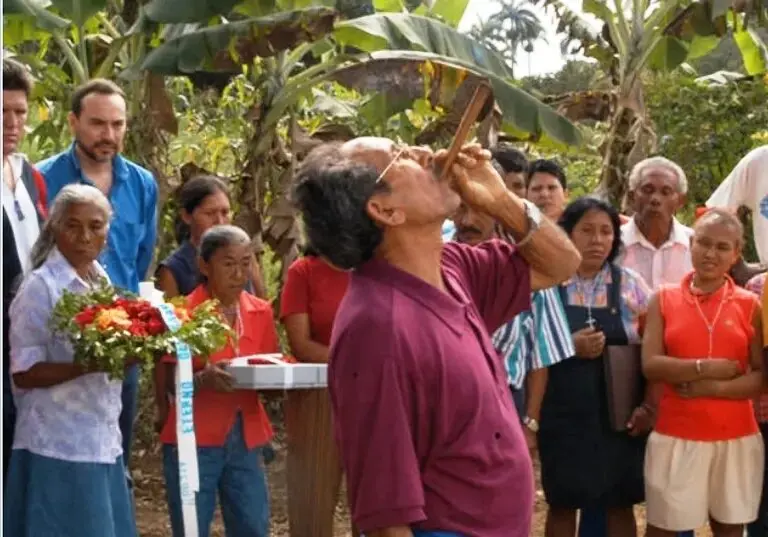
Among Brazil’s indigenous peoples, the Kuarup ceremony in the Xingu reservation stands out. Held a year after a death, it involves ceremonial dances. During the ritual, shamans and family must remain calm, refraining from tears to properly pay homage. The tribe prays aloud, receives guests from other villages with fish and manioc, decorates tree trunks, and uses body paint and feathers for dances and combats. Researcher Heloisa Da Costa explains this ceremony symbolizes the end of one cycle and the start of another, inviting ancestors to welcome the new spirit while the living reflect on life’s harmony.
Ecuador blends indigenous, African, and Catholic customs. In Otavalo, a Kichwa community, a purification ritual involves bathing the deceased in water with rosemary and carnations. The used water is thrown far away, symbolizing eternity and new beginnings. Funeral soups are essential, and the gathering doubles as a fundraiser for the family. Family members narrate the year’s major events so the departed knows all that transpired. The Taita Maestro leads Catholic prayers in Kichwa.
A unique tradition here is the Chunkana, or funeral games, held on the last night of an adult’s wake. This ludic ritual, the main game of Imbabura province, involves winners and losers who must perform a penance. Researchers from the Technical University of the North in Ibarra have recorded about 70 variants of these playful atonements, most tied to daily tasks. Practitioners cite nine sacred reasons for the ritual, believing it ensures the soul’s transition to Chayshuk pacha (Paradise).
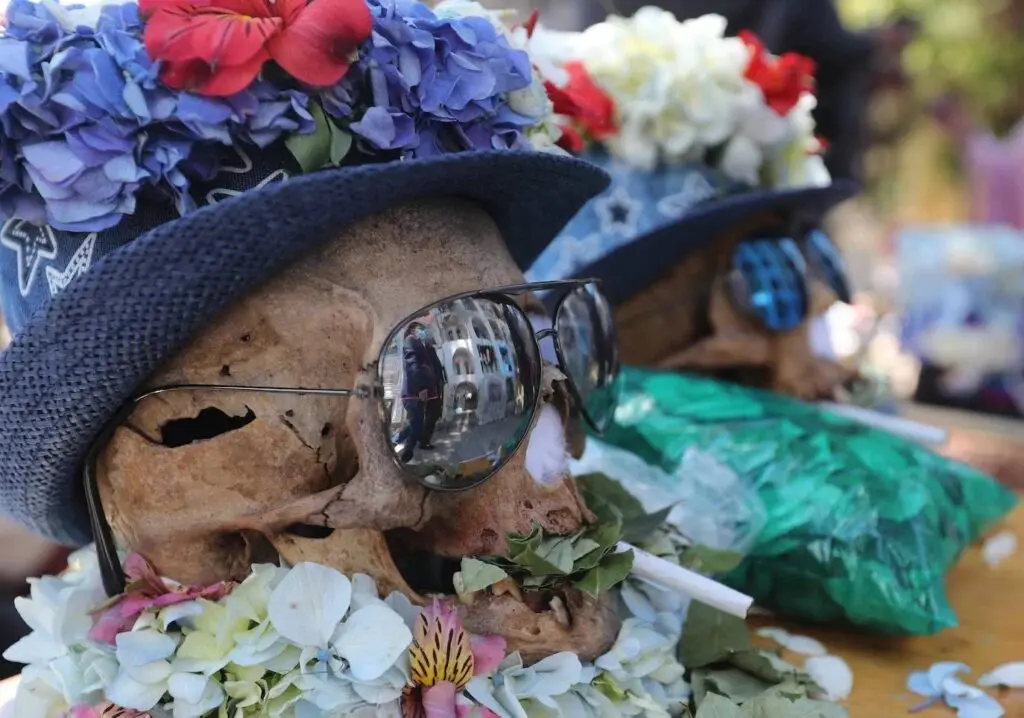
Bolivia presents some of the region’s most distinctive traditions. During the Festivity of All Saints, families believe the dead return to spend a day with loved ones, offering flowers, sweets, t’antawawas (bread figurines of the deceased), and special dishes—sometimes with mariachi visits. More uniquely, the ñatita (venerated skull) tradition blends indigenous and Catholic beliefs every November 8th. Families who keep a ñatita consider it a protective, miraculous household member, decorating it with flowers, lit cigarettes, and other offerings. This practice asserts that death is not an end but a spiritual continuity.
Historical Evolution and Social Dimensions
Funeral rituals also mirror social structures and historical change. In Argentina, the custom evolved significantly. In 1908, a push began to have the state recognize November 2nd as a day to remember the “Fallen for the Fatherland,” layering national memory onto the religious date. This holiday was suspended during the military dictatorship to prevent gatherings in cemeteries that could turn into anti-regime protests, a fate similar to Carnival, as noted by journalist Gerardo Di Fazio.
Social stratification is often evident in burial grounds. The location of a tomb—central vaults for the wealthy, periphery for the humble—sends a clear post-mortem social message. In some areas, discriminatory practices excluded those who died by suicide from consecrated ground, burying them face down in unmarked graves. Notably, Rosario features a “Cemetery of Dissenters” for non-Catholics.
Argentine mourning customs, influenced by Spanish and later English protocols, were rigid. Widows faced up to two years of strict mourning, limited to church and direct family visits, adorned only in black or with mourning jewelry like lockets containing the deceased’s hair. The famed Teatro Colón in Buenos Aires, inaugurated in 1910, even included special grilles for women in mourning to attend performances unseen.
The Cuban Spectrum: From Satire to Business
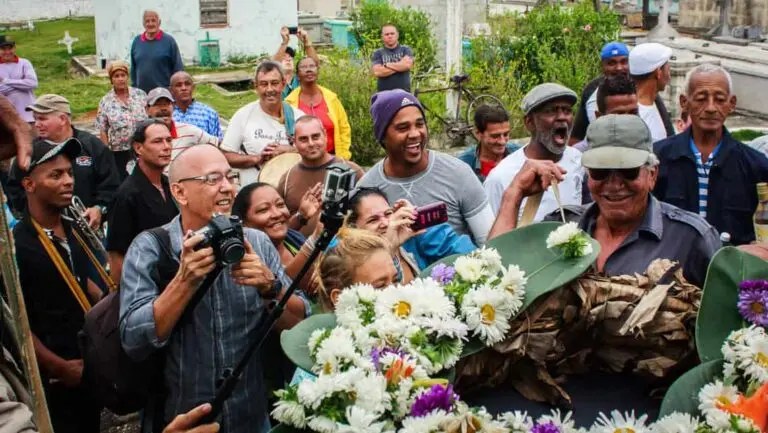
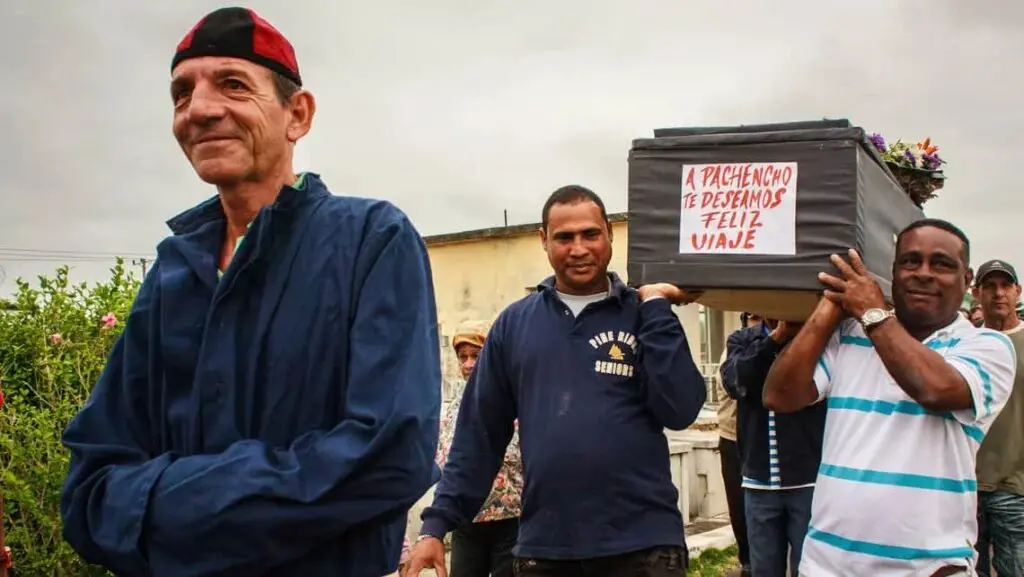
Cuba’s relationship with death encompasses satire, syncretism, and commerce. The tradition of Pachencho’s Wake in Santiago de las Vegas, west of Havana, is a prime example. For three decades, residents have performed a mock funeral for a mythical character named Pachencho, who “resurrects” to the rhythm of conga and swigs of rum. The farcical procession, complete with a fake widow and priest, is a joyous, satirical festival with death.
The representation is based on a 1901 Cuban theatrical piece titled “El velorio de Pachencho,” which humorously staged the vicissitudes of a man who pretended to be dead. After the real death of ‘Blanco,’ a well-known shoemaker who long played Pachencho, other residents assumed the role masterfully. To infectious Cuban music, Pachencho sits up in his coffin, especially if he spots an acquaintance, smiling and waving.
Some trace the tradition to the 1882 founding of a cultural center, others to the popular 1970s play. Locals insist it dates to 1937 with the Piquete Santiaguero carnival group, which would end festivities with a symbolic, joyous burial procession. The celebration concludes with a dance, drums, rum, and flowers tossed into a symbolic grave, followed by the satirical phrase, “Pachencho, we are nothing.”
Historically, Cuban wakes blended Spanish and African influences. In Andalusia, a child’s death was a “happy ascent to heaven” celebrated with a party, a practice reinforced by enslaved Africans. Historian Emilio Roig noted that wakes in earlier times could become “true orgies,” turning a mournful fact into a reinforced festive event.
The funeral business itself became a competitive enterprise in Cuba. Agents scouted hospitals and neighborhoods for imminent deaths. There were tales of burials being withheld until payment was secured. The Rivero family dominated the mid-20th century trade, owning funeral homes, flower shops, wreath factories, and nearly a thousand property titles in Havana’s Colón Cemetery. Their empire replicated the city of the living within the necropolis, with luxurious pantheons mirroring affluent neighborhoods like Miramar and Vedado.
The Enduring Mystery
The Cuban historian Emilio Roig once mused about the “doctor of the dead,” the best physician who never lost a patient, merely certifying the obvious. He wondered if this doctor had discovered death’s mystery, winking at corpses in complicity. “Do the corpses answer him?” Roig pondered in a 1917 article, suggesting it’s better the secret remains kept, for “what would we do with the truth?”
An 1804 Havana newspaper excerpt captures the paradoxical spirit: facing a wake, a friend encouraged another to enter, saying, “Go on in and have fun, there’s enough for everyone and more to come.” Lexicographer Esteban Pichardo later defined a wake in Cuba as a vigil that, for a poor child, could become pure diversion, and even mentioned “wakes” for stews or roast pork—pretexts for late-night eating and dancing.
Ultimately, from the sitting dead of Puerto Rico to the dancing pallbearers of Cuba and the venerated skulls of Bolivia, Latin American funeral rituals embody a vibrant, profound spirituality. They assert that death is not a cold end but a transition woven into community, memory, and celebration. As Chilean writer Isabel Allende wrote in The House of the Spirits, through the spirit of Clara: “Do not invoke death; she will come in her own time…” Until then, these rituals ensure the departed live on in the stories, laughter, and unique customs of those they left behind.
From teleSUR English via This RSS Feed.