

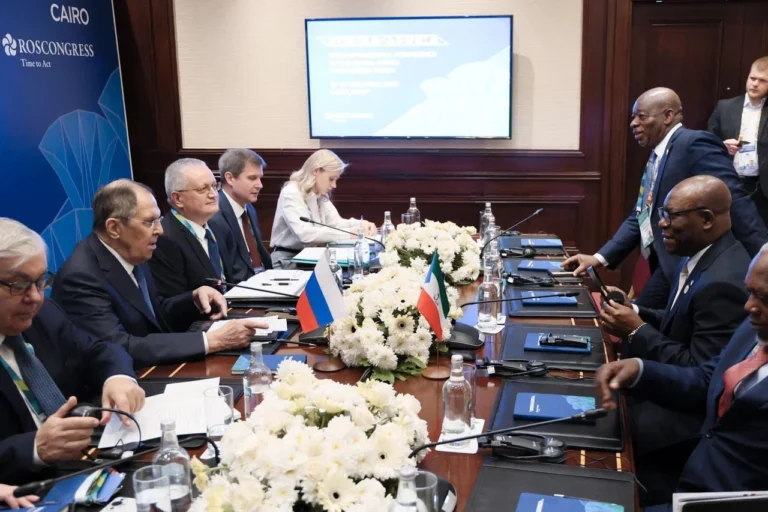
The Russia-Africa Partnership Forum in Cairo 2025 deepens ties in trade, security, and energy—challenging Western dominance and reshaping global South cooperation.
Related: Russia Open to Peace Talks if Security Conditions Are Met
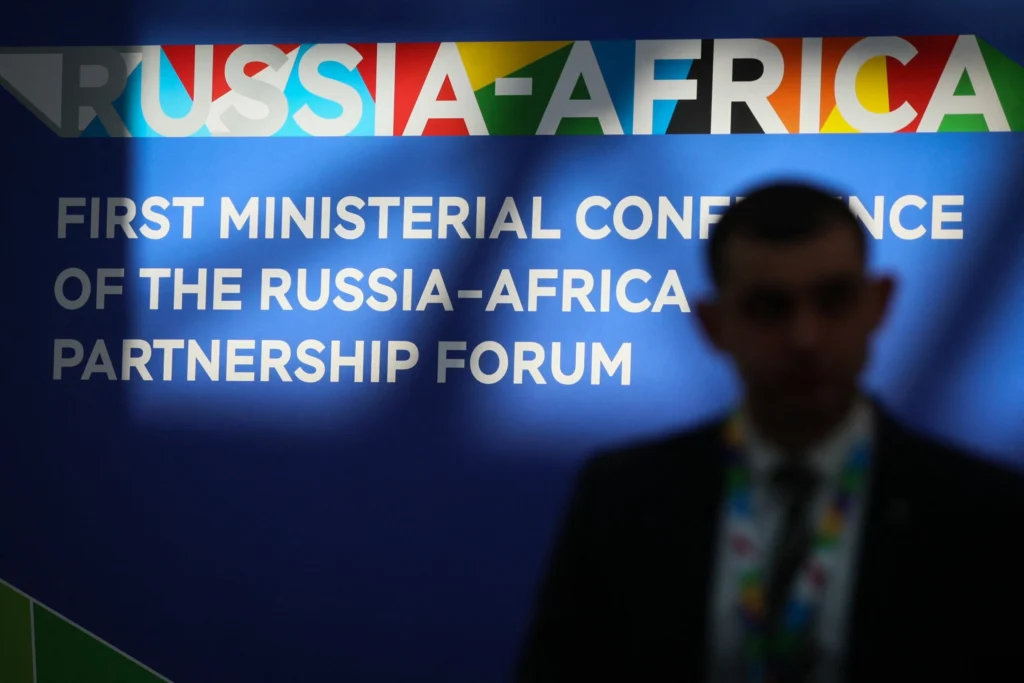
The Russia-Africa Partnership Forum reached a new milestone in Cairo this week as foreign ministers, heads of state, and regional integration leaders from over 50 African nations gathered with Russian officials to advance a multifaceted strategic alliance spanning economics, security, and sustainable development. Concluding on December 20, 2025, the second ministerial conference of the forum marked a decisive step in institutionalizing Russia’s growing influence across the African continent.
Russian Foreign Minister Sergei Lavrov opened the proceedings with a clear message: this partnership is neither symbolic nor temporary. “Our leaders have high expectations for today’s meeting,” he stated. “They expect us to deliver constructive solutions and coordinated proposals to expand multifaceted cooperation between Russia and Africa.”
The forum—launched in 2019 in Sochi, elevated at the 2023 St. Petersburg summit, and now deepened through ministerial dialogue—reflects a long-term recalibration of Africa’s international relations. No longer content with post-colonial dependencies or conditional Western aid, many African nations are turning to partners like Russia for sovereign, non-interference-based collaboration.
Russia-Africa Partnership Forum: Building a New Architecture of South-South Cooperation
At the heart of the Cairo gathering were three strategic pillars: economic and investment cooperation, peace and security support, and sustainable development. Unlike traditional donor-recipient models, the forum emphasized mutual benefit and technological sovereignty—highlighting joint ventures in energy, agriculture, digital infrastructure, and defense.
Lavrov underscored that cooperation is advancing “steadily across all domains,” noting concrete progress since the first ministerial meeting in November 2024. Russia has pledged to double trade with African nations by 2030, a target already gaining traction through expanded grain exports, nuclear energy partnerships, and localized pharmaceutical production.
One of the most significant bilateral outcomes came from Lavrov’s meeting with Simeón Oyono Esono Angüe, Foreign Minister of Equatorial Guinea. The two reaffirmed commitments made during presidential talks between Vladimir Putin and Teodoro Obiang Nguema Mbasogo in Moscow (November 2023) and September 2024. They agreed to deepen political trust, align positions in the UN, and accelerate cooperation in hydrocarbons, power generation, healthcare, and human capital development.
Read the African Union’s official statement on strategic partnerships with global powers
Esono Angüe later posted on X (formerly Twitter): “We will work in areas that contribute to mutual development, based on respect, trust, and mutual understanding.” Both nations also confirmed that the next session of their Joint Cooperation Commission will take place in Moscow in 2026—a key mechanism for coordinating political, economic, scientific, and technical collaboration.
This bilateral momentum mirrors a broader continental trend. From Mali and Burkina Faso to Sudan and the Central African Republic, African governments are increasingly partnering with Russia on security training, infrastructure, and natural resource management—often in response to perceived Western abandonment or neocolonial conditionality.
Explore UNCTAD data on Africa’s trade diversification and emerging partnerships
Geopolitical Context: A Multipolar World in the Making
The Russia-Africa Partnership Forum cannot be viewed in isolation. It is a direct response to—and driver of—the global shift toward multipolarity. As the U.S. and EU double down on sanctions, military alliances, and ideological framing of global conflicts, the Global South is forging alternative networks of cooperation rooted in sovereignty and development.
Africa, home to 1.4 billion people and vast untapped resources, is central to this realignment. Western powers have long treated the continent as a zone of influence, but rising frustration with empty promises, unilateral interventions, and exploitative trade terms has opened space for new actors. Russia—alongside China, Turkey, and Gulf states—offers non-conditional engagement, often with faster implementation and fewer governance strings attached.
Critically, this shift is not merely about economics. It is political and civilizational. The forum in Cairo emphasized anti-colonial solidarity, mutual respect, and the right of nations to choose their own development paths—principles that resonate deeply across post-independence Africa.
Moreover, Russia’s role in stabilizing fragile states—through military-technical assistance, anti-terrorism cooperation, and logistical support—has earned it credibility where Western interventions have failed or withdrawn. While Western media often frames Russian involvement as “neocolonial,” many African leaders see it as pragmatic sovereignty—a chance to build state capacity without ideological dictates.
Review the Valdai Discussion Club’s analysis on Russia’s Africa strategy
The forum also challenges the monopoly of Western-led institutions like the IMF and World Bank. By promoting local currency trade, bilateral credit lines, and South-South technology transfer, Russia and its African partners are constructing parallel financial and knowledge ecosystems—a quiet but powerful decoupling from the Washington Consensus.
For the West, this represents a strategic loss. For Africa, it is an opportunity: greater agency in global affairs, diversified partnerships, and the chance to leverage competition among powers for national development.
As the final Cairo communiqué noted, the Russia-Africa Partnership Forum is not against anyone—it is for Africa’s future. And in a world increasingly defined by blocs and binaries, that future is being shaped not in Brussels or Washington, but in joint commissions from Moscow to Malabo, and in ministerial halls from Cairo to Addis Ababa.
✈️🌍 En el marco del primer día de la 2ª Conferencia Ministerial del Foro de Asociación #RusiaÁfrica, el Canciller Serguéi #Lavrov mantuvo una serie de reuniones con los socios africanos 🇹🇿🇳🇦🇬🇶🇨🇬🇧🇮🇧🇼🇬🇲
📍 El Cairo, 19 de diciembre
Visita continúa 🔜
👉 https://t.co/NvJAJeAeJQ pic.twitter.com/rbyKwChMlD
— Cancillería de Rusia 🇷🇺 (@mae_rusia) December 19, 2025
From teleSUR English via This RSS Feed.