

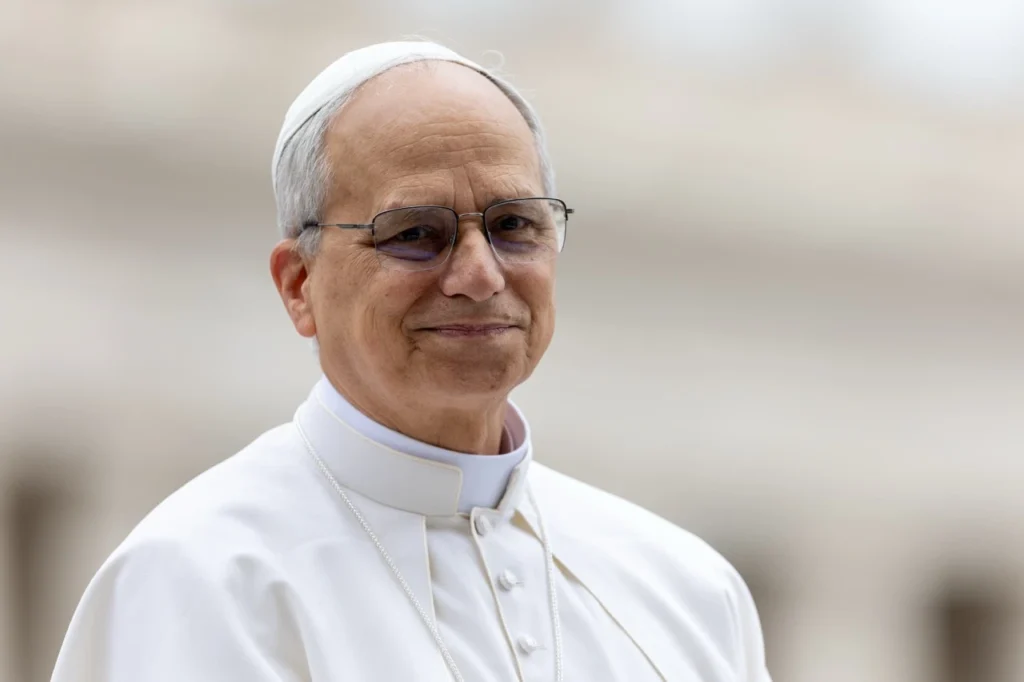
The Pope Leo XIV consistory on January 7–8, 2026, marks a pivotal moment for Church communion, prayer, and global Catholic leadership after the Jubilee of Hope.
Related: Pope Leo XIV Calls for Ceasefire and Dialogue Between Thailand and Cambodia
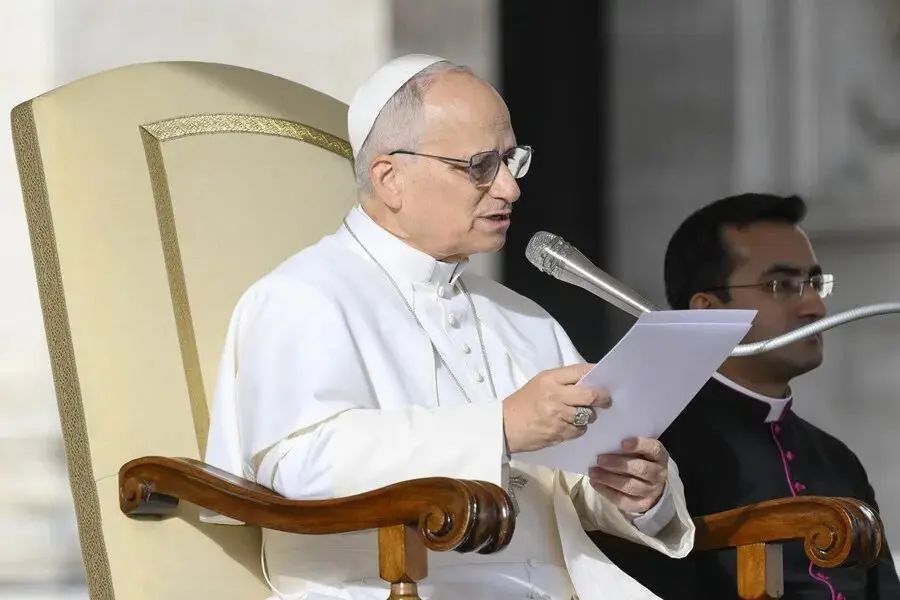
El papa León XIV, hoy desde la Plaza de San Pedro del Vaticano. EFE/EPA/Vatican Media
The Pope Leo XIV consistory, set for January 7 and 8, 2026, in Vatican City, will be the first extraordinary gathering of cardinals under the new pontiff’s leadership—a moment charged with spiritual significance and institutional weight. Announced by the Holy See on Saturday, the two-day assembly aims to deepen communion between the Pope and the College of Cardinals while fostering collective discernment on the Church’s mission in a rapidly changing world.
This historic consistory follows immediately after the closing of the Jubilee of Hope, a year-long holy celebration that concludes on January 6 with the symbolic shutting of the Holy Door at St. Peter’s Basilica. The timing is deliberate: as one sacred chapter ends, another begins—not with spectacle, but with fraternal dialogue, shared reflection, and prayer.
According to the Vatican press office, the consistory will be “characterized by moments of communion and fraternity, as well as times dedicated to reflection, sharing, and prayer.” These elements, the statement adds, are intended to “favor common discernment and offer support and counsel” to Pope Leo XIV as he exercises his role as shepherd of the universal Church.
Pope Leo XIV Consistory: A Return to Synodal Fraternity
Unlike ordinary consistories—typically convened to approve canonizations or create new cardinals—this extraordinary consistory serves a more pastoral and strategic purpose. It echoes Pope Francis’s 2022 extraordinary meeting, which focused on reforming the Roman Curia and strengthening collegial governance. Yet under Leo XIV, the emphasis appears to shift toward spiritual cohesion and unity amid global challenges.
“The consistory is situated within the life and mission of the Church,” the Vatican clarified, “and its purpose is to reinforce communion between the Bishop of Rome and the cardinals, who are called to collaborate in care for the good of the universal Church.”
This framing reflects a broader trend in recent papal leadership: moving away from centralized authority toward synodal discernment—a process where bishops, clergy, and even laity contribute to Church direction through listening and dialogue. Pope Leo XIV, who assumed the papacy in late 2025 following the death of his predecessor, has signaled continuity with this vision while placing renewed emphasis on doctrinal clarity and global solidarity.
Notably, this will be Leo XIV’s second consistory overall, after presiding over an ordinary session on June 13, 2025, focused on canonization causes. But the upcoming extraordinary gathering carries greater symbolic weight, as it gathers the Church’s highest-ranking advisors not to decide procedural matters, but to pray, reflect, and walk together in service of a world grappling with war, inequality, ecological crisis, and spiritual disorientation.
Read the Vatican’s official statement on the consistory (Holy See Press Office)
The event also underscores the evolving role of cardinals in the modern Church. Once primarily princes of the Church with political influence, today’s cardinals are increasingly expected to be pastoral leaders, bridge-builders, and voices for the marginalized—from Africa and Asia to Latin America and conflict zones in Eastern Europe. Their counsel during this consistory could shape Leo XIV’s priorities for the next phase of his pontificate, including potential reforms to Church governance, missionary strategy, and engagement with secular societies.
Geopolitical Context: The Catholic Church as a Global Moral Actor
The Pope Leo XIV consistory arrives at a time when religious institutions are being called upon to mediate escalating global tensions. With wars raging in Ukraine, Gaza, and Sudan, democratic backsliding in multiple regions, and rising xenophobia, the Catholic Church remains one of the few global entities with moral authority, transnational infrastructure, and diplomatic reach.
The Vatican’s network of nuncios (ambassadors) in over 180 countries allows it to function as a discreet but influential peacemaker—recently facilitating prisoner exchanges and humanitarian corridors. A unified College of Cardinals, aligned with the Pope’s vision, strengthens this capacity.
Moreover, as secularism advances in the West and religious nationalism surges elsewhere, the Church faces internal pressures. In Europe and North America, debates over liturgy, gender, and doctrine have deepened divides. In the Global South, meanwhile, Catholicism is growing rapidly—yet often with demands for greater autonomy and cultural relevance.
The consistory offers Leo XIV a chance to balance these dynamics—affirming universal teachings while empowering local Churches to respond to their unique contexts. It also signals to the world that the Vatican remains committed to dialogue over division, even as other global institutions fracture.
Explore the role of the Holy See in international diplomacy via the United Nations
Critically, the meeting occurs just months before the 2026 Synod on Synodality’s final assembly, a landmark process launched under Pope Francis to reimagine Church governance. The January consistory may serve as a strategic preview, allowing cardinals to align on key themes—such as lay participation, ecological justice, and digital evangelization—before broader consultations conclude.
For observers beyond Catholicism, the event is a reminder that spiritual leadership still shapes geopolitics. When the Pope and his cardinals speak with one voice on issues like climate action, migration, or nuclear disarmament, their words carry weight far beyond the pews.
In this light, the Pope Leo XIV consistory is not merely an internal Church affair. It is a global moral gathering—one that could influence the ethical direction of international discourse in the years ahead.
Review historical context of papal consistories from the Vatican Secret Archives
A Pontificate Defined by Communion
Pope Leo XIV, whose chosen name evokes both the reforming spirit of Leo XIII and the ecumenical legacy of John XXIII, has made “communion” a cornerstone of his early papacy. In his first Christmas Urbi et Orbi message, he spoke of the Church as “a house of open doors, not closed borders,” and called for “a revolution of tenderness” in response to global indifference.
The January consistory embodies this vision. By inviting cardinals not just to advise, but to pray and discern together, Leo XIV reaffirms that leadership in the Church flows not from power, but from shared spiritual journeying.
As the bells of St. Peter’s echo on January 7, the world will be watching—not for declarations or decrees, but for a quieter, more profound signal: that even in an age of fragmentation, unity remains possible when rooted in faith, humility, and mutual care.
Si terrà nei giorni 7 e 8 gennaio 2026. A riferirlo @HolySeePress. Si tratterà di due giornate all’insegna della preghiera, della riflessione e della condivisione per offrire sostegno e consiglio al Pontefice#VaticanNewsIT
Leggi qui ⬇️https://t.co/M0uoXryqvM
— Vatican News (@vaticannews_it) December 20, 2025
From teleSUR English via This RSS Feed.