

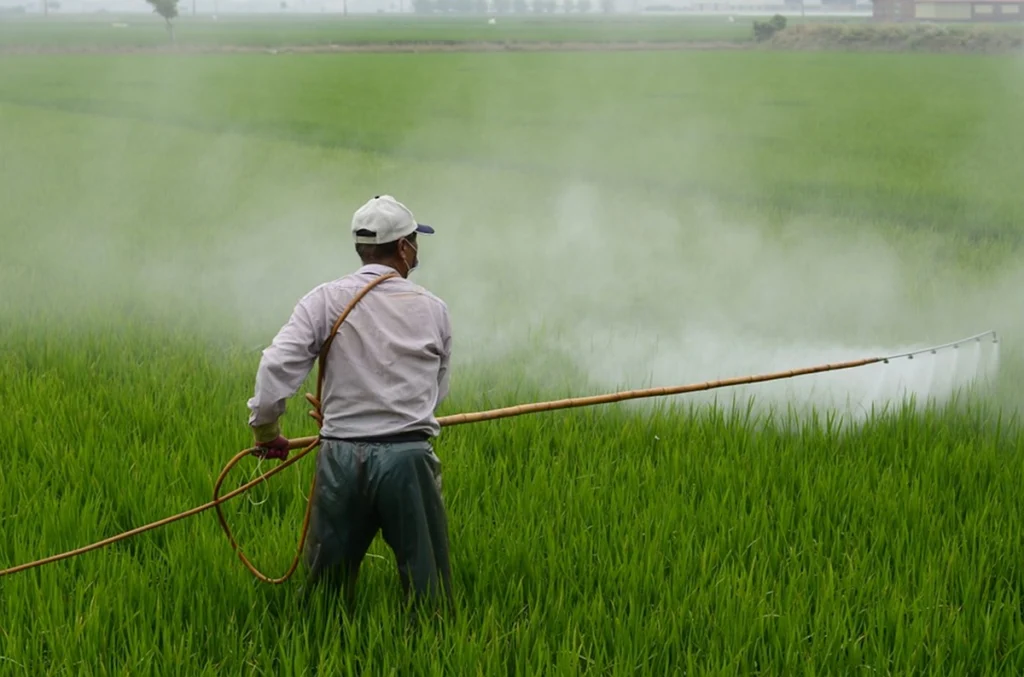
In 2024, the market for this herbicide reached US$352 million in this country.
Experts urged Mexico to ban glyphosate herbicide after discovering flaws in an article that served as an excuse for the agribusiness sector for 25 years. The article lacks scientific rigor, which raises alarms about its safety for human health.
RELATED:
Mexico Expands Measures Against Cattle Screwworm
Transnational corporations such as Bayer-Monsanto, Syngenta, and DuPont market glyphosate, which the World Health Organization (WHO) classified as a possible carcinogen in 2015. Used in Mexico since 1980, this herbicide is commonly applied to crops such as corn, citrus, sorghum, cotton, sugar cane, avocado, soybeans, and agave.
Producers use it for weed control to reduce costs, as well as for cleaning rural roads, which increases their economic dependence. Silvia Ribeiro, research coordinator for the Biodiversity Alliance, remarked that the most cited study was false and that Mexico should ban the herbicide immediately.
While researchers at the University of Guadalajara found toxic residues in water and people’s urine, more than a thousand scientific studies document kidney, liver, nervous system, and reproductive damage associated with glyphosate use.
In 2005, during the presidency of Vicente Fox, the Biosafety Law for Genetically Modified Organisms, known as the “Monsanto Law,” was passed, which favored genetically modified seeds for large corporations.
Andres Manuel Lopez Obrador attempted to gradually ban glyphosate through two presidential decrees, but failed due to pressure from the agribusiness sector and a lack of proven substitutes.
🚨Glyphosate “Safety” Study Ghostwritten by Monsanto Retracted After 25 Years of Deception
Millions of pounds of glyphosate were approved, defended & sprayed worldwide based on a paper now exposed as fundamentally compromised and scientifically invalid ⬇️
📌Monsanto employees… https://t.co/KxUbb5qZnI pic.twitter.com/ZTG6RFvPFY
— Nicolas Hulscher, MPH (@NicHulscher) December 4, 2025
In 2022, Senators Ana Lilia Rivera and Margarita Valdez proposed reforms to gradually ban pesticides. While Morena Party legislators Fernando Espino and Nancy Sanchez proposed extending the restriction for another three years.
However, the Supreme Justice Court has upheld the suspension of genetically modified corn crops, to which Bayer-Monsanto corporations sought to halt the presidential decree through legal injunctions.
The government of President Claudia Sheinbaum banned 35 pesticides in September, but it excluded glyphosate. The Secretary of Agriculture and Rural Development (SADER) indicated that this was the first of three phases, with further bans planned for 2026, though it avoided providing detailed information.
The Environment Secretariat informed that 86,449 tons of glyphosate were imported in 2019 by five companies that controlled 84% of the Mexican herbicide market and were consolidating their commercial dominance.
In 2024, the Mexican glyphosate market reached US$352 million. Peter Rosset, a former professor from El Colegio de la Frontera Sur, stated that banning the herbicide would be “an economic blow” and set an international example.
At her morning press conference, Mexican President #ClaudiaSheinbaum calls for reflection on the unity of popular movements in #LatinAmerica and cites #Mexico as an example, since its movement is committed to the people, delivers results, and thus gains popular support. pic.twitter.com/gy25fAqtkU
— teleSUR English (@telesurenglish) December 15, 2025
teleSUR: JP
Source: La Jornada
From teleSUR English via This RSS Feed.