

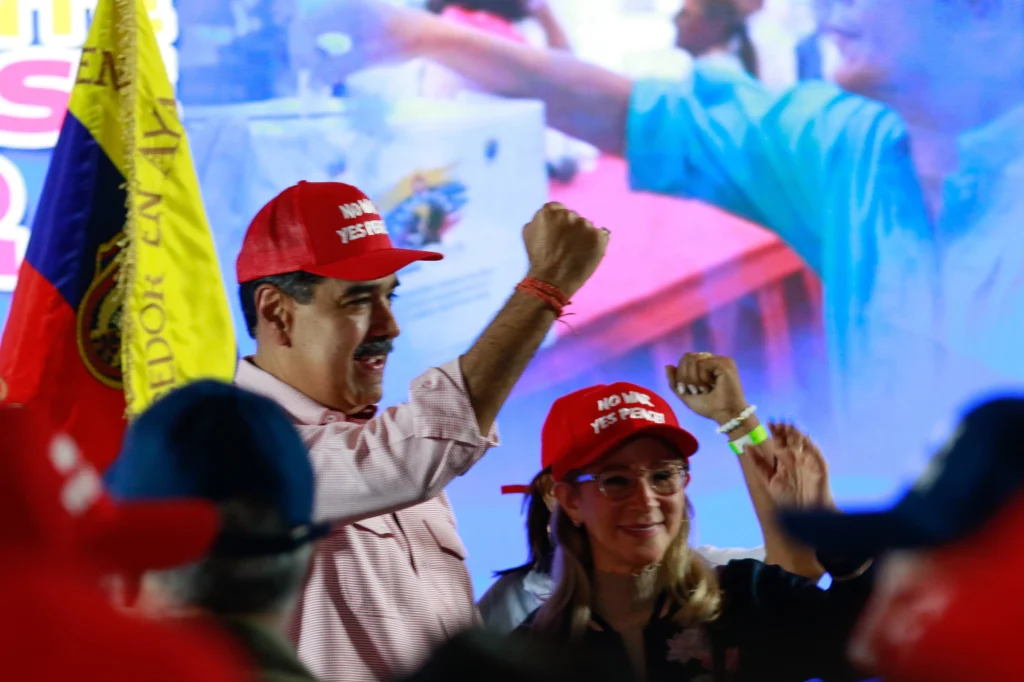
Venezuelan President Nicolás Maduro led this Tuesday the first plenary session of the Constituent Congress of the Working Class, a process he described as “victorious, successful, exemplary, unique and extraordinary,” which, he said, marks a historic rebirth of the Venezuelan labor movement amid a scenario of external aggression and international pressure.
During his address, the head of state underscored that more than 5,000 proposals were systematized following 22,110 grassroots assemblies held in workplaces across the country, a mechanism that enabled the direct and secret election of 66,330 principal delegates and 66,330 alternates, a figure he stated has no precedent in the country’s democratic history.
RELATED:
President Maduro: A Democratization Process of the Labor Movement Like This Has Never Been Seen
“The greatest gift of all is the giant strength this constituent process of the working class has taken on, rising as the backbone of prosperity and guaranteed peace for our country,” Maduro said, stressing that no previous process had reached such a level of direct participation by organized workers.
In this context, the president reaffirmed his political and social identity by stating that he does not come from the economic elites, but from the popular sectors. “I have not been, nor am I, a tycoon or a multimillionaire; I am simply a man of the working class, an ordinary man,” he said, while reiterating his status as “Worker President and Commander-in-Chief of the Bolivarian National Armed Forces,” a statement directed, he noted, “at the oligarchies.”
#Venezuela | More than 1,300 workers gathered in Caracas to take part in the “Great Constituent Congress of the Venezuelan Working Class,” an event whose main objective is the transformation and organization of the country’s labor movement.https://t.co/nWfJRFs8ma
— teleSUR English (@telesurenglish) December 16, 2025
The President insisted that true power does not reside in the presidential office, but in popular organization. “My main mission in life is to build the greatest power, which is not the power of a president, but the power of the people in the streets, governing and leading,” he emphasized, noting that the constituent process has enabled an awakening and a resurrection of the Venezuelan labor movement.
Assessing the first eight weeks of the process, the president stated that the working class has consolidated itself as a central political actor, at a time when Venezuela, he denounced, has been facing for 25 weeks a campaign of multidimensional aggression, including psychological terrorism, economic sabotage, and acts of piracy against Venezuelan oil tankers.
“Venezuela has proven to be a strong country, and we are prepared to accelerate the pace of a profound revolution that gives power to the people fully and without intermediaries,” he said, thanking the solidarity support of social movements and governments that reject interventionist aggressions against the South American nation.
On the organizational front, the head of state called for a second plenary session of the Constituent Congress of the Working Class during the first week of January 2026, with the full participation of elected delegates, in order to approve the 2026 Action Plan. He also proposed extending the work of commissions and grassroots assemblies to deepen participation and consolidate proposals emerging from workplaces.
The Head of State also announced the relaunch of the Venezuelan university system, aimed at turning it into the great training school for leaders of the working class, and instructed the Council of Vice Presidents to immediately receive a workers’ delegation to implement proposals in the economic sphere.
In the area of defense, he reported on the expansion of working-class combat units, made up of nearly one million militiamen in workplaces, and called for an immediate review of the defensive plan, factory by factory and region by region, in coordination with the Bolivarian National Armed Forces.
On the international stage, the president called to defend in all multilateral bodies Venezuela’s right to freedom of trade, particularly oil trade, and denounced U.S. piracy as a threat not only to Venezuela, but to global commerce. “Defending Venezuela’s freedom of trade is defending the freedom of trade of the entire world,” he stated.
🔴 The immediate and unconditional release of the kidnapped crew.
🔴 The immediate return of Venezuelan oil illegally confiscated on the high seas.
🔴 The immediate cessation of any forceful action or interference against the legal commercialization of Venezuelan oil.
🔴 To… pic.twitter.com/TqpTcR4t3H
— teleSUR English (@telesurenglish) December 16, 2025
The Dignatary urged oil workers and international trade unions to activate a permanent global protest against piracy and attempts to impose new letters of marque, while rejecting drug trafficking accusations as “fake news and pretexts for war.”
“They cannot say we have weapons of mass destruction, but we do have the moral authority to say no more Vietnam, Libya, Afghanistan or Iraq. No to an eternal war,” he said, warning that “Nazifascist” right-wing sectors seek to colonize Venezuela in order to seize its strategic resources.
The president closed his address by reaffirming his oath to defend the homeland, peace, and shared happiness, and called to unite forces and consciousness in the face of what he defined as an imperial offensive against Venezuelan sovereignty.
From teleSUR English via This RSS Feed.