

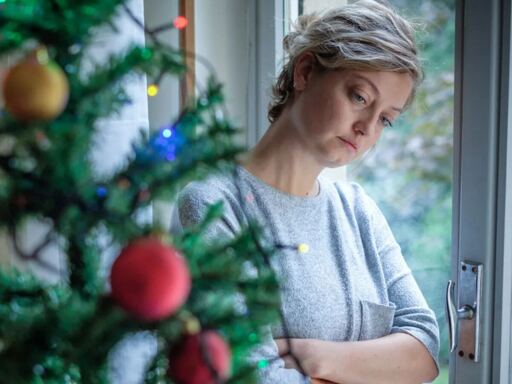
For people with serious disabilities, it’s very common to be alone at Christmas due to social isolation. This can be the result of estrangement, such as disputes in the family or drifting away from key connections due to being stuck at home.
Social isolation
For me, estrangement didn’t result from an argument or family rift but because my disabilities were at the point where they were isolating me at home. So, when my brother remarried and had an instant new family, I couldn’t be a part of it at all.
At Christmas or other celebrations, it means I may spend a short time with my mum and brother before they go off and spend the day celebrating with the rest of the family.
The feelings I have when I’m at home and my family are off celebrating together, are uncomfortable to say the least. I know my social isolation has prevented me from fulfilling my role as part of my extended family.
This is something that can make estrangement even more difficult when a loss of contact with family members can also mean losing contact with their wider and perhaps growing families.
Molly’s story
This happened with Molly, when her sister complained about the care being provided to their mother by Molly and her family. This dispute ballooned into her sister cutting off all contact with Molly and her family as well as her brother.
Molly said:
My sister has decided that because there is no trust in our relationship and that she feels that I hate her and her family, (which is untrue) there is no future together.
I have sent a few emails to try and reconnect, but they have been rejected or unanswered.
Compounding the fall-out with her sister was the spinal-cord injuries (SCI) Molly had sustained at an earlier time.
Molly said her sister viewed her as someone who just ‘sat around all day’. In doing so her sister failed to acknowledge the amount of care Molly and her family had given to their mother, as well as not appreciating the additional challenges Molly faced. One of the these was social isolation. So, losing the contact with her niece and nephew was devastating.
Molly added:
The lack of or non-existent contact has not just impacted on my disability but to my life. Kids bring something special and happiness to your life somehow. Just to chat with them about anything just brings a smile to your face. Trying to understand them is interesting and kind of makes you look at your own way of thinking.
I miss my nephew and niece a lot especially when there are special occasions. I have lots of memories of them. Sometimes when I think about them, the pain in my heart feels so deep.
In terms of the estrangement, overall, Molly says she hopes when her niece and nephew are older, they can decide for themselves about whether to make contact.
These family connections are crucial because many younger disabled people find themselves estranged from friends, who ‘drop-off’ after they become disabled.
The result can be social isolation, which can make it harder to make and maintain new friendships. This can mean celebrations, like Christmas, are particularly difficult for those home alone.
Featured image via the Canary
By Ruth Hunt
From Canary via This RSS Feed.
non-disabled people seem to be ethically bankrupt. as soon as you’re disabled, everyone is quick to abandon ship so they don’t have the responsibility of accomodating you.