

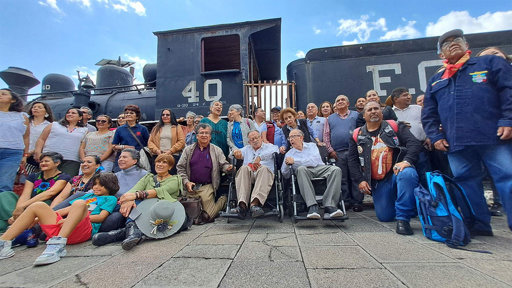
This article by Luis Hernández Navarro originally appeared in the December 16, 2025 edition of La Jornada, Mexico’s premier left wing daily newspaper.
A railroad worker by choice, for Salvador Zarco Flores, “the train is poetry, it is life. It is history, it is everything.” A political prisoner of the 1968 student movement, upon his release from Lecumberri Prison in 1971, he attended a meeting at the UNAM Faculty of Philosophy, thanked his fellow prisoners for their solidarity in securing his freedom, and never returned to the classroom. Instead, he didn’t rest until he found work as a railroad worker.
Prison and work were his schools. Prison taught him many lessons about the good and bad of human nature. There, he says, we are all naked. He also discovered the “blessed value of manual labor.” The railroads and the working class allowed him to meet men who were generous beyond measure, to the point of saying “enough!” Dedicated men. Men who would give their lives for a cause. He found that proletarian solidarity is a matter of flesh and blood, not just ideas or books.

A great admirer of the Chinese Revolution and the Russian people, on his wedding night in Morelia, he went into a used bookstore and found O. Piatnitsky’s book, Breaking the Night: Memoirs and Revelations of a Bolshevik. He read it nonstop until dawn.
In 1967, while at university, he joined the Spartacus Communist League (LCE). He was first assigned to the oil workers’ branch and then reassigned to the railway workers’ branch. He was impressed by the union. The workers sheltered the activists, guided them so they wouldn’t get lost, and told them which path to take.
In the streets, during the 1968 protests, young people demanded the release of Demetrio Vallejo, leader of the 1958-59 workers’ uprising, who had been imprisoned for 11 years, four months, and one day. Vallejo, along with Ho Chi Minh and Emiliano Zapata, was a figure revered by the students. A detachment of railway workers, complete with banners, was present in Tlatelolco on October 2, 1968.
In prison, Jerónimo (that was his nom de guerre) began to study the history of the guild and fell in love with that brotherhood. “This is where I belong!” he told himself. In Lecumberri, he befriended the railroad worker Cayetano Horta, detained in Tlalnepantla, whom he called “my general.” He was in charge of cleaning the cellblock in exchange for financial assistance from the political prisoners.
Jerónimo began working for Ferronales on the tracks, first in Hidalgo and then in Veracruz. He, his wife at the time, and their two eldest children lived in a makeshift camp trailer, which included a bedroom, dining room, living room, bathroom, and kitchen. They cooked on makeshift wood-burning stoves. The track maintenance crews lived there, performing the heaviest and lowest-paid work outdoors. They were responsible for keeping the tracks in the best possible condition to ensure the safety of the trains. Their privacy was limited. Their private lives were almost entirely public.

He worked there for a year, until he joined the workshops, a key point for organizing the workers’ struggle. The workshop workers were the backbone of the union. When he and his family returned to the city, a man who was a natural leader of the crew told him: “I’m asking you to do something: send me a photo and some works by Mao Zedong.”
A locomotive mechanic and electrician, unyielding to the corrupt union bosses, he discreetly and naturally organized a reformist union movement from the ground up. He led Section 15 and the oversight committee, while also supporting the demands of local residents and promoting independent unionism in various factories, reading groups, and film clubs. Over time, Zarco and Demetrio Vallejo became close comrades in the Railroad Workers’ Union Movement.
In 1997, Salvador was laid off along with about a hundred other workers. An uneven resistance against the privatization of the railway system began. It was impossible to stop it. The sale of the industry stripped the country of strategic assets, placing them in the hands of foreigners and unscrupulous businessmen, and facilitated the destruction of the collective bargaining agreement, mass layoffs, the dismantling of the union, and the cancellation of services.
Faced with inevitable defeat, Salvador, along with a group of workers, focused on preserving the historical memory and culture of the railroad workers and the industrial heritage of the former state-owned company. Under his leadership, on May 1, 2006, the Railroad Workers Museum was inaugurated in the old La Villa station, near the Basilica of Guadalupe. They didn’t even have “a nail to display.” With the support of Teresa Márquez, the National Museum of Mexican Railroads loaned them a 601 locomotive and other pieces for their first exhibition about the many and varied trades of the railroad workers.

Gradually, the museum has built its own collection through donations, purchases, loans, and other arrangements. It has organized exceptional exhibitions such as From Nonoalco to Tlatelolco 1958-1968, dedicated to the railway workers’ struggle and the life of Demetrio Vallejo. Furthermore, the institution is a vibrant cultural center, an open space for other groups to carry out activities, such as the Teodoro Larrey Book Club.
The name of the book club has a long history. In 1900, in Puebla, a handful of railroad mechanics met in a room of a boarding house rented by Teodoro Larrey. There, the Mexican Mechanics Union was born, the first railway workers’ resistance organization. It sought to end the exploitation of Mexican workers. Salvador Zarco is a worthy heir to both Teodoro Larrey and Demetrio Vallejo. The formidable and effective work he has carried out in recent years at the helm of the museum and in the recovery of the historical and cultural heritage of the railroad workers deserves proper recognition.
-

Salvador Zarco: The Train & A Life
December 16, 2025December 16, 2025
The locomotive mechanic, trade unionist and communist helped found the Railroad Workers Museum after fighting the neoliberal privatization of Mexico’s railways.
-

Cultural Promoters: Demand for Zaco’s Resignation at Railway Workers Museum is “Arbitrary”
December 16, 2025
The trade unionist was fired by Mexico City’s Ministry of Culture, who still have yet to recover sculptures of Fidel Castro and Che Guevara that were stolen by ultra-right wing mayor Alessandra de la Rojo Vega.
-
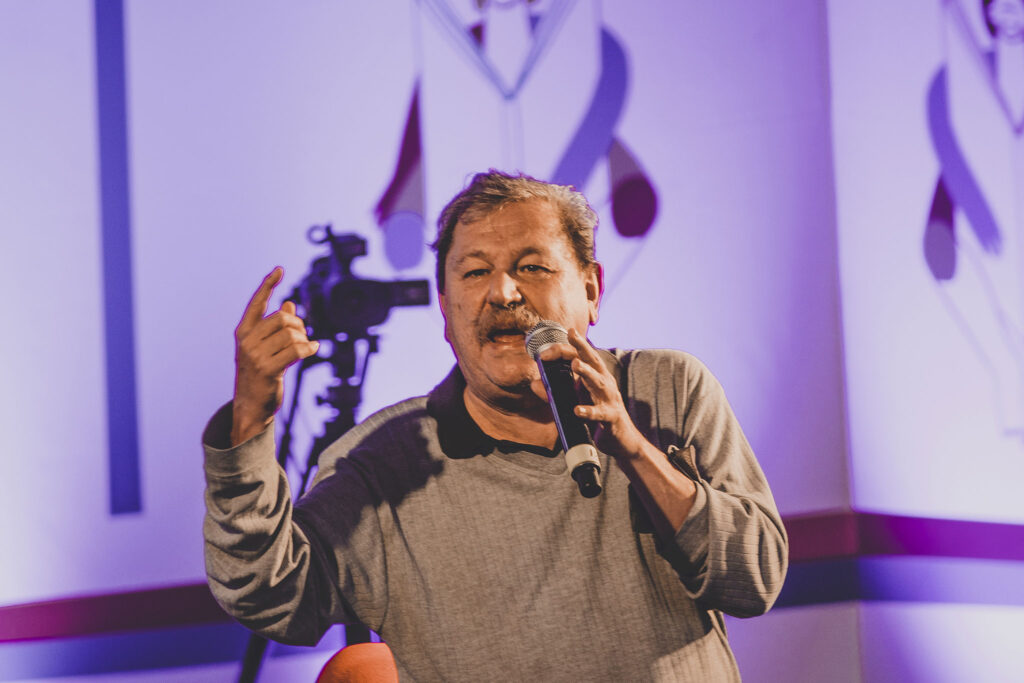
Taibo II: Suppressing Self Criticism in 4th Transformation More Dangerous Than a Rupture
December 16, 2025December 16, 2025
In an interview, the writer and Morena founder emphasized the pursuit of unity at all costs can be counterproductive, as it hinders the purging of those who replicate the practices of “old politics.”
The post Salvador Zarco: The Train & A Life appeared first on Mexico Solidarity Media.
From Mexico Solidarity Media via This RSS Feed.