

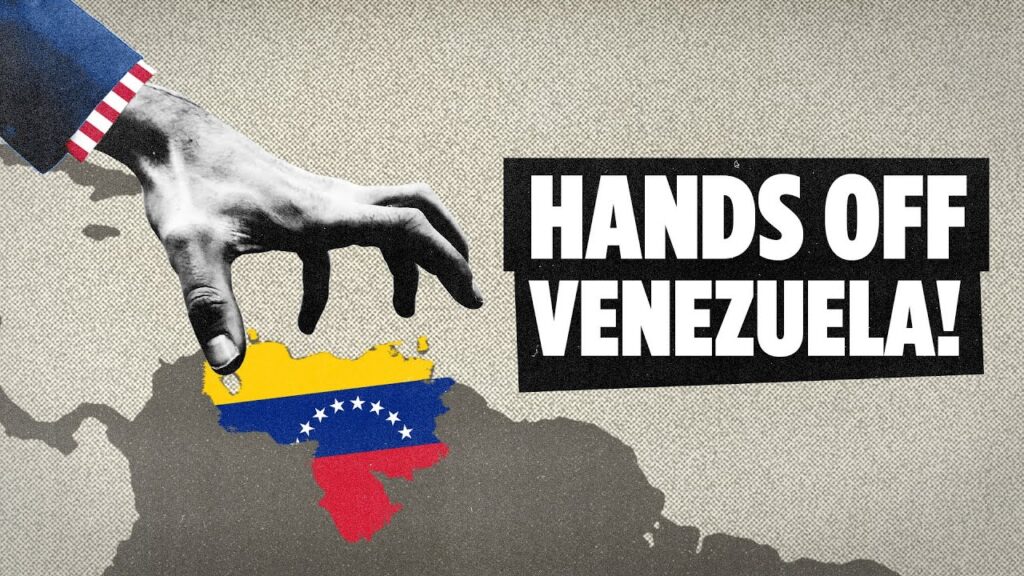
Polls and civil society activism demand an end to the destabilizing foreign policy.
Donald Trump’s aggressive campaign against the Bolivarian Republic of Venezuela, characterized by escalating sanctions, maritime blockades, and thinly veiled threats of military intervention, is facing a formidable and growing resistance, not from a foreign power, but from deep within the United States political and military establishment itself.
RELATED:
Venezuelan Workers Convene Constituent Congress in Caracas
From the halls of Congress to retired military command, a unique coalition of voices is uniting to condemn the administration’s “endless war” mentality. They expose the campaign as a dangerous, unconstitutional, and potentially disastrous move driven by a desire for regime change and the theft of Venezuela’s sovereign resources.
Bipartisan US Resistance Halts Trump’s Illegal War
The most concrete challenge to President Trump’s war drive is that lawmakers from opposing parties have joined forces to protect the U.S. Constitution and stop an unauthorized foreign conflict. This bipartisan effort, led by the introduction of the War Powers Resolution, is a rejection of the Executive Branch’s push for imperial overreach.
This crucial resolution, championed by Senators Tim Kaine (Democrat) and Rand Paul (Republican), explicitly seeks to block the administration from using U.S. Armed Forces in or against Venezuela without an official declaration of war from Congress.
On the Republican side, Senator Rand Paul of Kentucky has provided a conservative voice of sanity against interventionism. Paul was clear in his condemnation of the administration’s actions, such as the seizure of Venezuelan oil tankers, which he directly called an “initiation of war”.
He questioned the entire premise of the deployment, stating that the American government should not be in the business of “going looking for adversaries and beginning wars” and emphatically argued that the question of who leads Venezuela does not constitute a vital American interest worthy of risking soldiers’ lives.
On the Democratic side, Senior lawmakers have focused their fire on exposing the administration’s stated rationale—disrupting drug trafficking—as a fundamental deception.
Senator Chris Van Hollen (D) argued that the seizure of an oil tanker carrying sanctioned oil proved the administration was being dishonest. He called the drug narrative a “big lie” and stated unequivocally that the military escalation was demonstrably about one thing: “regime change—by force”.
Other key senators, including Adam Schiff, called the tanker seizure a “very dangerous escalation and a prelude to potential conflict”. The collective message from this bipartisan front is that the Trump administration is attempting to use the tragedy of drug abuse as a cynical cover for a war of choice to seize a foreign nation’s sovereign oil resources.
🚨 BREAKING: Sen. Tim Kaine just announced he’s moving in the Senate to rein in Donald Trump’s war powers amid the escalating Venezuela crisis.
A sitting U.S. senator preparing guardrails in real time because he fears the President may overreact militarily is not normal, it’s a… pic.twitter.com/CaCavNIofq
— Brian Allen (@allenanalysis) December 1, 2025
US Military Experts Warn Against Venezuela Intervention
The opposition to war is not limited to politicians. Crucially, it extends to military and intelligence veterans who have assessed the practical, strategic, and legal consequences of intervention.
Former high-level U.S. officials and military leaders have openly condemned the legal basis for the administration’s aggressive actions. A former Chief of the Joint Chiefs of Staff (a top military position) publicly expressed strong doubts about the legality of seizing Venezuelan oil tankers on the high seas.
This senior former military officer argued that this action, carried out by the Navy, could be viewed under international law as an act of “state-sponsored piracy”. This grave legal accusation reinforces the anti-imperialist argument that the entire campaign is a lawless resource grab, or a “war for oil”.
Likewise, retired U.S. Army Colonel Manuel Superville and other security analysts have warned against the ultimate danger of the aggressive deployment of U.S. forces in the Caribbean—the largest naval buildup in the region since the 1962 Cuban Missile Crisis.
The Colonel stated that a large-scale invasion is unrealistic with the current limited forces. However, he issued a stark warning about the risk of escalation, cautioning that a minor military incident or “accident,” such as the downing of an aircraft by Venezuelan forces, could become the spark needed to justify a much more severe and concentrated U.S. attack.
“These boats are 2000 miles away from the US. They cannot travel more than 100 miles”
Rand Paul explaining the insane – and murderous – policy of the Trump administration regarding Venezuela. pic.twitter.com/5wNc7bCsG2
— S.L. Kanthan (@Kanthan2030) October 31, 2025
Rejecting War as a Distraction from Domestic Crisis
For the progressive wing of the American political landscape, the campaign against Venezuela is not merely a foreign policy error but a profound betrayal of the social contract.
Led by figures like Senator Bernie Sanders, the left’s opposition reframes the aggressive actions as a cynical political maneuver intended to distract the working-class people of the U.S. from their own devastating economic and social struggles.
Senator Sanders, an Independent from Vermont, has been one of the most vocal critics, unequivocally labeling the aggressive military mobilization a “relentless march to war” that is both “illegal and unconstitutional”.
His opposition is rooted in a fundamental challenge to presidential power: if the U.S. wants to start a war with a nation that has not attacked it, the Constitution demands that Congress, not the President, must authorize it.
Sanders made his stance personal, publicly opposing the deployment of the Vermont Air National Guard to the Caribbean, which he directly linked to a possible intervention in Venezuela. He warned that millions of Vermonters and other U.S. citizens do not want to be entangled in “yet another war” that would only further “destabilize another region”.
The core of the progressive argument is that Trump is using foreign conflict as a political shield. Sanders detailed the crushing internal crises facing U.S. citizens that the administration should be addressing:
“Health care costs are skyrocketing. Housing costs are skyrocketing. Food costs are skyrocketing.”
— Senator Bernie Sanders
The moral gravity of the situation was heightened by the possibility of war crimes. Democratic Senators, including Tim Kaine, publicly raised alarm over U.S. military strikes on vessels in the Caribbean that allegedly killed multiple individuals. Kaine stated that follow-up strikes on people who had survived an initial attack could potentially “rise to the level of a war crime if it’s true”.
The Trump administration’s bellicose conduct toward Venezuela and other leaders in Latin America has little to do with drug trafficking, says historian Alejandro Velasco. It’s an effort “to get rid of leftist governments in the region,” he says. https://t.co/MMNHJMSVJx
— Democracy Now! (@democracynow) December 13, 2025
Popular Consensus Against Intervention
The political opposition in Congress and the moral outcry from the left are not isolated incidents; they reflect a clear and powerful consensus among the American people who overwhelmingly reject military intervention in Venezuela.
Public opinion polls reveal a fundamental disconnect between the belligerent policies of the Trump administration and the anti-war sentiment of the masses.
Recent polling data exposes a massive popular mandate against war. A YouGov survey found that a staggering 70% of Americans oppose the U.S. taking military action in Venezuela.
This overwhelming majority includes large segments of both major political parties, demonstrating that the appetite for a new foreign war simply does not exist among the populace.
The Streets Demand “Hands Off Venezuela” and Denounce War Crimes
The final pillar of opposition to the Trump administration’s imperial war drive comes from the American people themselves, mobilized through civil society organizations. This on-the-ground activism provides a visible, moral front that aligns the progressive movement with the constitutional resistance in Congress and the strategic warnings from military experts.
Civil society groups and anti-war organizations have channeled the popular opposition to military intervention into a focused, national movement. Pacifist groups such as ANSWER and Code Pink took the lead, coordinating a “National Day of Action” that saw protests and demonstrations in more than 65 cities across the United States.
This widespread, national mobilization provided a physical manifestation of the anti-war consensus revealed in public opinion polls, proving that the demand to avoid conflict in Latin America is not a fringe issue but a core demand of the American people.
The central, unifying slogan of the movement has been the unambiguous demand: “Hands off Venezuela”. This powerful, anti-imperialist message directly challenges Washington’s centuries-old doctrine of intervention in Latin America.
The protesters’ actions demonstrate solidarity with the Venezuelan people and their right to national sovereignty, demanding an immediate end to all military interference, sanctions, and economic aggression.
HANDS OFF VENEZUELA
NOW: We are outside of the White House protesting against the Trump administration bombing boats in the Caribbean and the Pacific & threatening to attack Venezuela. pic.twitter.com/xRtO1hpfqf
— CODEPINK (@codepink) December 6, 2025
Aligning with Legal and Ethical Complaints
Crucially, the civil society movement has mirrored the legal and ethical arguments being voiced in the Senate. Protesters explicitly condemned the Executive’s actions—particularly the aggressive maritime operations and seizure of resources—as “direct military aggression” and “evident war crimes”.
In summary, the internal resistance against the war drive on Venezuela is multifaceted and powerful. It includes a bipartisan bloc in Congress, a strategic warning from the military-intelligence community, a moral rejection from the progressive left, an overwhelming popular mandate from the public, and an active mobilization on the streets.
Sources: teleSUR – Democracy Now – The Hill – BBC – Washington Post – CodePink – The Real News – WOLA
From teleSUR English via This RSS Feed.