

We are currently facing a loss of faith across the political spectrum in the ability of government to do anything effective. This has long been dogma on the Right, perhaps most famously embodied in Ronald Reagan’s mantra: “The nine most terrifying words in the English language are ‘I’m from the government and I’m here to help.’” This dogma manifested, for example, as Donald Trump and Elon Musk’s Department of Government Efficiency (DOGE), which promised to modernize the federal government by importing wiz-kid technocrats wielding AI, like a young programmer known by the online moniker “Big Balls.” DOGE simply became a conservative wrecking ball for a new generation, decimating government in DC and nationwide.
But a similar paralysis has overcome the Left through its decades-long fight against corporate and government exploitation. Two recent books, Abundance by Ezra Klein and Derek Thompson and Why Nothing Works by Marc Dunkelman, have addressed this deadlock in public policy and are trying to restore confidence in government’s administrative capacity and bureaucratic efficiency. These qualities don’t attract a mass constituency and win elections on their own, but their absence hampers the ability for government to engage in bold efforts that do.
In that sense, bureaucratic efficiency isn’t quite a political concern itself. You don’t need a political affiliation or ideology to be a bureaucrat. In fact, it’s generally regarded as good if you don’t have either. But if your work becomes political, and simultaneously your efficiency is subject to doubt, then basic government is suspect and day-to-day administration becomes problematic, in which case you can forget about being trusted to undertake a large project that will require large amounts of money and exert sweeping powers.
We are now in a period where our nation faces many and deeply-layered crises that require large-scale, even massive responses. Climate change, serial pandemics, political polarization, extreme economic inequality, and even the threat of nuclear war require government action. Can we trust government to take such action boldly, efficiently, and effectively? Can we trust it in the process to safeguard individual rights and liberties? To gain a better perspective on this predicament, we might look back to a time when government did very big, very expensive things effectively, with reasonable efficiency, without graft and corruption, and without trampling on civil liberties.
In 1933 a vast economic depression put a quarter of the labor force out of work; dust storms, floods, and soil erosion ravaged the landscape and uprooted large segments of the rural population; air and water pollution threatened to cause multiple epidemics in cities; and a world war was about to break out. These multiple crises were met with the most creative outpouring of public policy initiatives in our history. Hope and faith replaced desperation and misery, and great things were accomplished. The rediscovery of those accomplishments should restore our faith in our collective agency. We did it once; we can do it again.
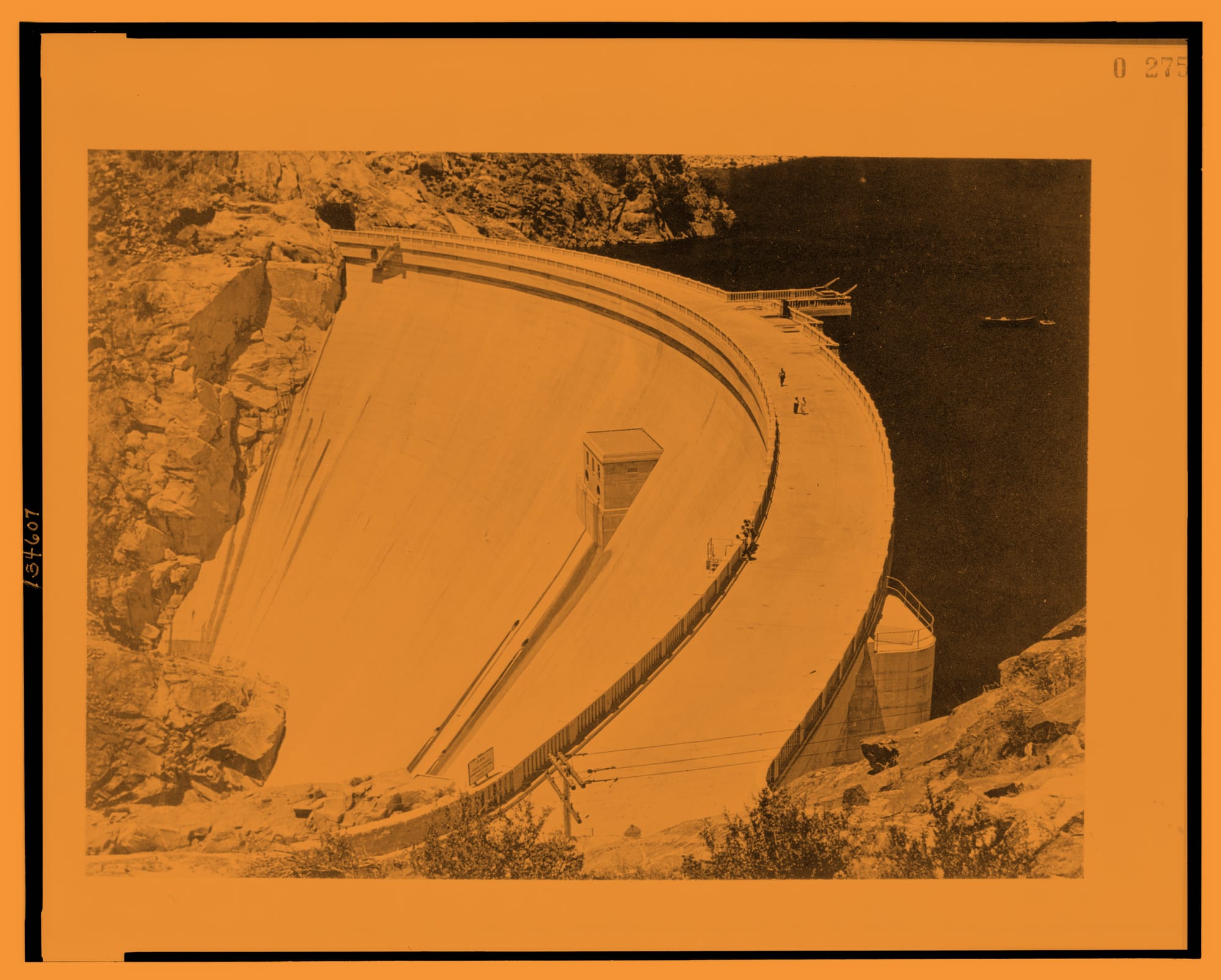
This incredible patchwork of programs, each with its own strengths and weaknesses, successes and failures, was the Franklin Roosevelt Administration’s attack on the Great Depression. It was known, of course, as the New Deal. A look at any one of the more than a dozen agencies that built things will give you some idea of what an energetic government can do. One such program deserves reconsideration in our current political moment, for its scope and its bureaucratic efficacy: the Public Works Administration, or PWA.
From Damage via This RSS Feed.