

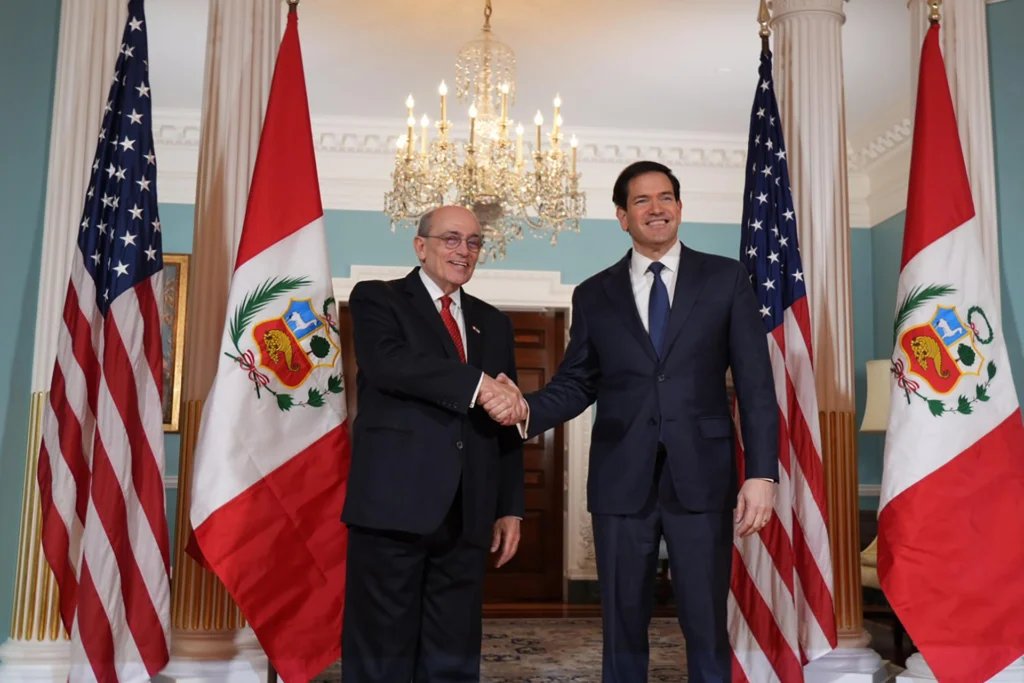
Peru Government has authorized the entry of U.S. military personnel, armed with combat weapons, for the entire year 2026 to conduct joint training exercises with Peruvian forces, a move that aligns with the potential U.S. designation of Peru as a “major non-NATO ally.”
Peru’s Congress and Executive Power have approved the entry of U.S. military personnel for the entirety of 2026, permitting them to carry combat weapons while conducting joint training exercises with Peruvian armed forces and police.
RELATED: Peruvian Congress Is the Most Corrupt Institution: PROETICA
This decision, formalized by a congressional resolution on December 4, signals a strategic alignment with U.S. security interests, despite concerns from critical sectors regarding national sovereignty and regional implications.
The move comes as the U.S. government under Donald Trump has notified its Congress of its intention to designate Peru as a “major non-NATO ally“, further solidifying bilateral defense ties. The resolution, which was officially published in government media, details that U.S. Department of War military personnel will be stationed in Peru from January 1 to December 31, 2026.
Met today with Peruvian Foreign Minister Hugo de Zela @CancilleriaPeru to advance joint efforts to disrupt transnational criminal organizations in our region, boost cooperation on critical minerals, and strengthen security cooperation. pic.twitter.com/j1j6j8OZ5d
— Secretary Marco Rubio (@SecRubio) December 6, 2025
These contingents will rotate every three to six months, ensuring a continuous presence of U.S. troops throughout the year. The designated units will include elite forces such as members of U.S. Special Forces, Navy SEALs, civil affairs specialists, and military intelligence support staff.
This extensive presence aims to enhance the capabilities of Peruvian forces through specialized training, support, and assistance in security and defense matters, according to official statements.
The joint exercises includes institutions like the Joint Intelligence and Special Operations Command (Cioec, in Spanish), the Joint Special Force (FEC, in Spanish), the Naval Special Operations Forces (FOES, in Spanish), and the Air Force Special Forces Group (Grufe, in Spanish). Additionally, brigades from the Army -specifically the first, third, and sixth Special Forces Brigades- will be involved.
The National Police of Peru will also contribute, with units such as the Directorate of Special Operations (Diroes, in Spanish), the Anti-Drug Directorate (Dirandro, in Spanish), and the Special Group Against Organized Crime (Grecco, in Spanish) participating.
Strategic Alignment and National Sovereignty Concerns
The decision to permit the sustained presence of U.S. troops on Peruvian territory reflects a discernible shift in the Peruvian Government’s foreign policy, aligning more closely with U.S. interests.
While local authorities justify this action by emphasizing the supposed benefits of specialized training and logistical support from the highly capable U.S. armed forces, critical sectors within Peru and the region have voiced significant concerns. These critics warn about the potential implications for national sovereignty, questioning whether such an extensive foreign military presence could compromise Peru’s independence and decision-making capabilities.
They argue for the imperative of guaranteeing that national sovereignty remains uncompromised, especially in a context where regional powers are increasingly asserting their autonomy. The debate surrounding this authorization highlights a delicate balance between perceived security benefits and the fundamental principle of self-determination.
For proponents, the enhanced military cooperation is a necessary step to combat transnational threats, improve security capabilities, and access advanced military technology. However, for those concerned about sovereignty, the long-term presence of foreign troops, especially with combat weapons, raises questions about potential geopolitical implications and the erosion of independent national policy.
This resolution is closely followed Foreign Minister Hugo de Zela’s confirmation that the U.S. Government had informed its Congress of the intention to designate Peru as a “major non-NATO ally.”
De Zela clarified that this designation is a political gesture acknowledging Peru as a reliable partner in security and defense matters and explained that this measure would grant Peruvian Armed Forces a “privileged” position, providing enhanced cooperation and access to facilities within the framework of its military relationship with the United States.
Concurrently, President Jose Jeri held a working meeting at the Government Palace in Lima with a delegation from the FBI and other U.S. security experts as part of the process to develop a new national citizen security plan, marking the first of several consultative sessions planned for December, involving representatives from the Ministries of Foreign Affairs, Interior, and Defense, as well as the National Police.
From teleSUR English via This RSS Feed.