

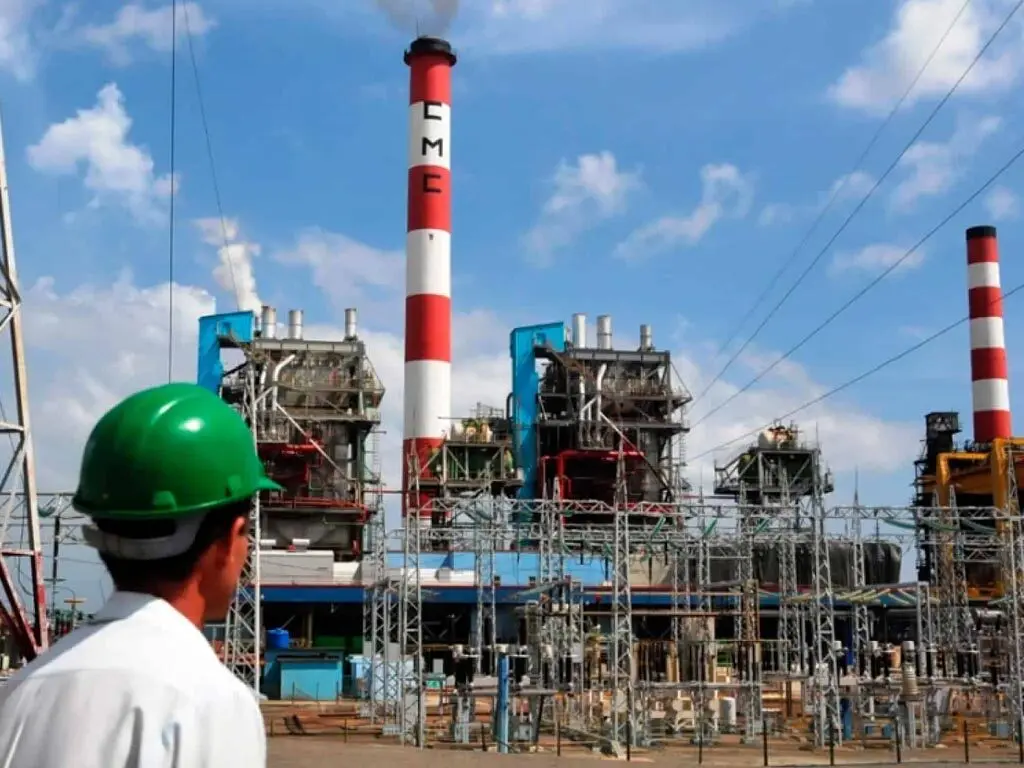
Cuba thanked the Bolivarian Alliance for the Peoples of Our America (ALBA-TCP) for approving an International Energy and Electricity Mission to help recover its thermoelectric power plants amid a severe nationwide energy crisis, which Cuban officials attribute partly to the ongoing U.S. economic blockade.
The Bolivarian Alliance for the Peoples of Our America-Peoples’ Trade Treaty (ALBA-TCP, in Spanish) launched an International Energy and Electricity Mission on December 14, 2025, to support member nations, particularly Cuba’s National Electric System (SEN), which has been severely impacted by the protracted United States blockade.
RELATED: ALBA-TCP Summit Final Statement: “Nothing Will Stop the Course of History”
The initiative emerged from the XXV ALBA-TCP Summit, celebrating the organization’s 21st anniversary. Venezuelan President Nicolas Maduro proposed the mission, emphasizing its cooperative “spirit”, akin to the successful “Mision Milagro”, a Cuban-Venezuelan health program that has restored vision for millions in Latin America.
President Maduro clarified that while the mission benefits 9 ALBA-TCP countries, its immediate focus is on Cuba, where the U.S. blockade has significantly hampered the island’s ability to optimize its electrical infrastructure.
As its primary task, this mission will “extraordinarily support the people of Cuba in their fight against the blockade and its impact on all energy and electricity matters”, he stated.
Following the approval of the summit’s final declaration, the Venezuelan leader instructed his Minister of Electricity, Jorge Marquez, to prioritize this crucial mission.
The Blockade’s Devastating Economic and Social Impact
The blockade against Cuba, enforced since 1962, has inflicted economic losses exceeding $2.1 trillion, according to a report presented by the Cuban Ministry of Foreign Affairs last October, considering current prices and the dollar’s performance against gold in the international market.
The report underscores the profound disparity in resources; for instance, the revenue lost in just 60 days of the blockade, approximately $1.6 billion, would be sufficient to cover the fuel needed for an entire year of electricity generation across the island.
Moreover, $250 million, lost over merely 12 days, could fund the annual maintenance of Cuba’s entire National Electric System. A single month of blockade, costing the nation $600 million, could finance a national investment plan in solar energy to generate 1,015 megawatts, as various reports indicate. This extensive financial drain directly obstructs Cuba’s efforts to develop and maintain its energy infrastructure, perpetuating the challenges faced by its electrical grid.
Currently, Cuba’s SEN remains in a critical state, experiencing deficits that often exceed 1,800 megawatts (MW) against peak demands of 3,450 MW. In response, the Cuban government has presented a Government Program for SEN Recovery to its Parliament, outlining a path towards energy sovereignty. However, the program acknowledges that results in reducing blackouts will be gradual due to the severity of the situation.
The prolonged power outages, a direct consequence of the U.S. blockade, profoundly impact daily life, affecting food preservation, work, and the general well-being of the population, particularly the elderly and those with chronic illnesses.
in this sense, the creation of the ALBA-TCP energy mission represents a concrete step towards regional solidarity in mitigating these humanitarian and economic challenges imposed by the blockade.
Cuba Thanks ALBA-TCP for Energy Mission Amidst Crisis
Cuba’s government extended profound gratitude to the Bolivarian Alliance for the Peoples of Our America (ALBA-TCP) for approving an International Energy and Electricity Mission.
The Cuban Foreign Minister promptly shared the nation’s appreciation via social media, emphasizing the alliance’s enduring commitment to solidarity and cooperation.
This agreement solidifies ALBA-TCP’s role as a crucial platform for regional support, particularly in the face of what member states consistently describe as imperial threats and interventionist attempts by the United States.
Agradecemos la decisión de la XXV Cumbre del @ALBATCP, por iniciativa del Presidente Nicolás Maduro, de crear la “Misión internacional especial de energía y electricidad en apoyo al pueblo de #Cuba”.
Constituye una nueva demostración de la esencia de la Alianza como mecanismo… pic.twitter.com/1pR0yi4KLD
— Bruno Rodríguez P (@BrunoRguezP) December 14, 2025
Text reads: “We appreciate the decision of the XXV Summit of @ALBATCP, on the initiative of President Nicolas Maduro, to create the “Special International Energy and Electricity Mission in support of the people of Cuba”. It is a further demonstration of the essence of the Alliance as a mechanism that places solidarity and cooperation among fraternal peoples at the heart of its work.”
Cuba has been grappling with a profound energy crisis since the middle of 2024, characterized by frequent and prolonged power outages impacting daily life and economic activity across the island. These disruptions stem primarily from recurrent breakdowns in the nation’s aging thermoelectric power plants, many of which are decades old and in a precarious technical state due to years of accumulated use, as acknowledged by Cuban authorities.
Adding to this critical situation, Cuba also faces a significant shortage of fuel reserves essential for powering these vital electricity generation facilities, a reality recently confirmed by the Minister of Energy and Mines, Vicente de la O Levy.
The U.S. economic, comercial and financial blockade against Cuba further exacerbates this crisis, severely limiting the island’s access to international resources, spare parts, and credit lines that would be vital for upgrading and maintaining its national electro-energy system. This external pressure compounds the internal challenges, creating an urgent need for the kind of regional support now offered by ALBA-TCP.
ALBA-TCP: Solidarity Against Blockade
The creation of the International Energy and Electricity Mission underscores ALBA-TCP’s foundational principles of solidarity and mutual assistance among its member nations.
The summit participants unanimously rejected what they termed U.S. attempts to interfere in the continent under the pretext of anti-drug efforts, reinforcing a collective stance against external pressures and for sovereign development.
This mission represents a tangible demonstration of how the Bolivarian Alliance aims to counteract geopolitical adversaries through practical cooperation and unwavering support for its members.
The collective commitment reflects a shared vision of sovereignty and self-determination, positioning the alliance as a bulwark against external pressures and a champion of Latin American integration. Cuba’s gratitude and the alliance’s swift action highlight the deep bonds and strategic alignment that define ALBA-TCP’s approach to regional challenges, prioritizing the welfare of its peoples above all else.
From teleSUR English via This RSS Feed.